A retrieval system returned the right embedding, the right similarity score, and a completely wrong answer. The chunk it surfaced shared vocabulary, naming conventions, even architectural patterns with the query — but it came from the wrong repository. Nothing crashed. Nothing timed out. The system just lied with perfect confidence, and I did not catch it for two days.
That is the most dangerous failure mode in vector search: plausible neighbors from the wrong scope. The embedding math was fine. The rows were valid. The search logic was simply assembling too many decisions in too many places, and by the time the request reached PostgreSQL, the database had to guess which parts belonged together.
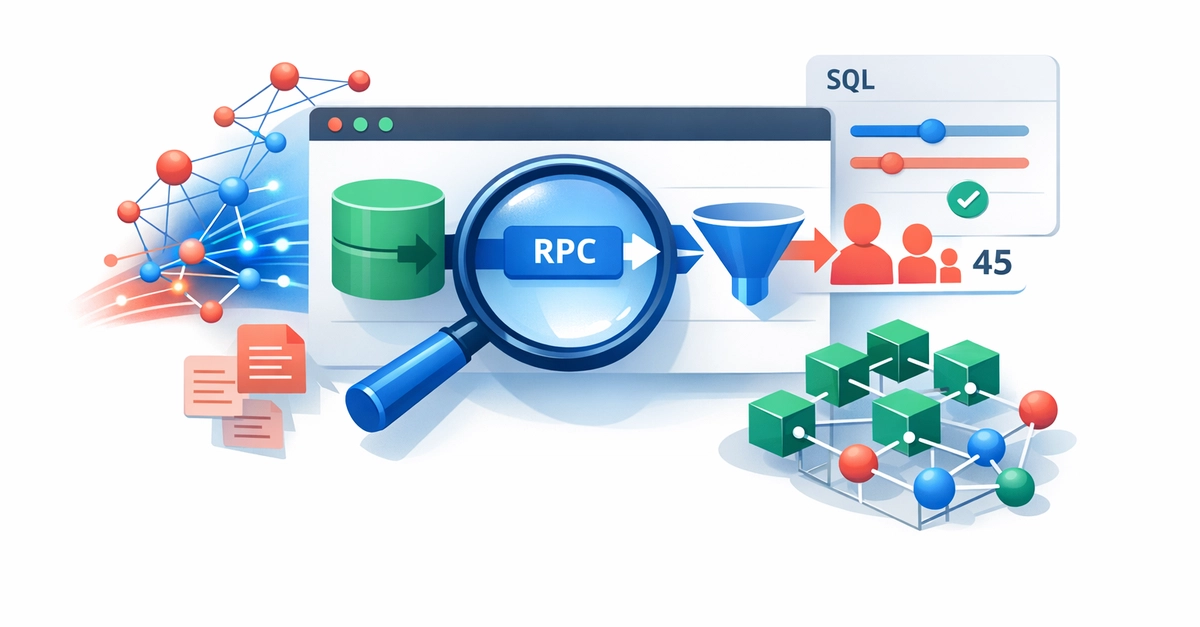
I fixed the problem by making the RPC the single source of truth. The caller sends the query embedding, the candidate count, and the JSONB filter together. The SQL function receives those same values together. The index is built for the same embedding column the function reads. Once those pieces move as one unit, the path stops drifting.
flowchart TD
query[Query embedding] --> payload[RPC payload]