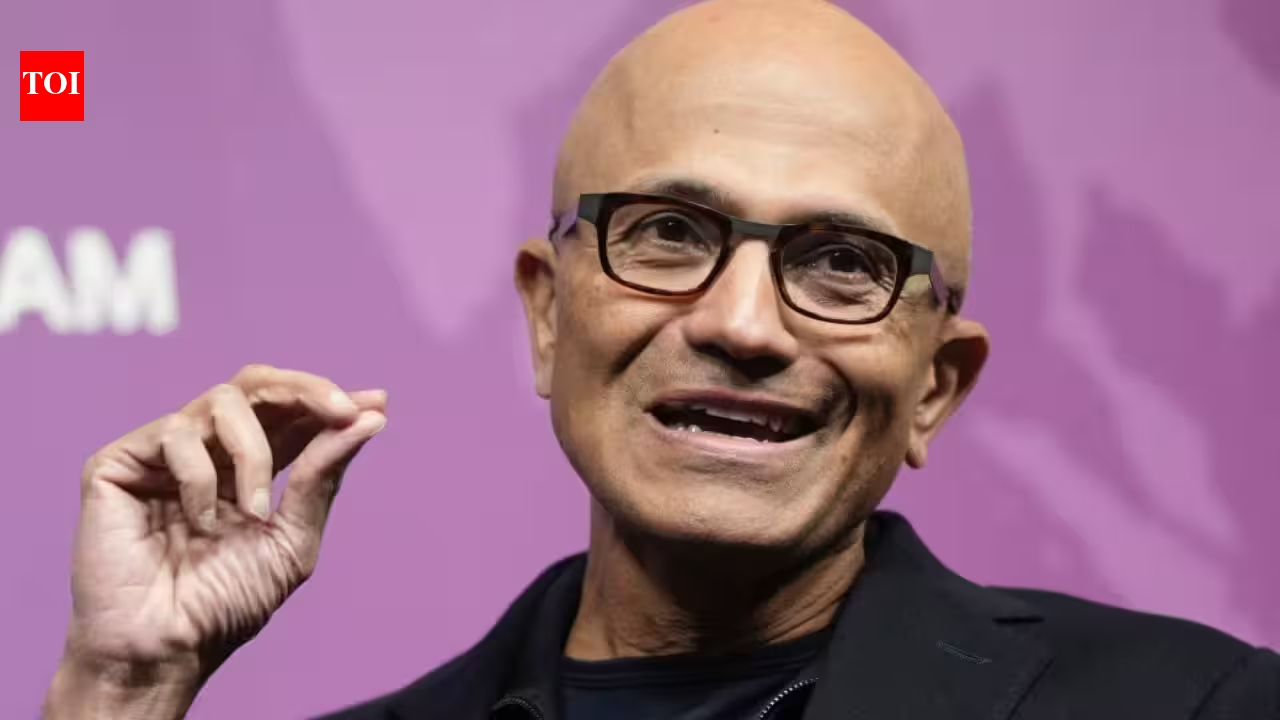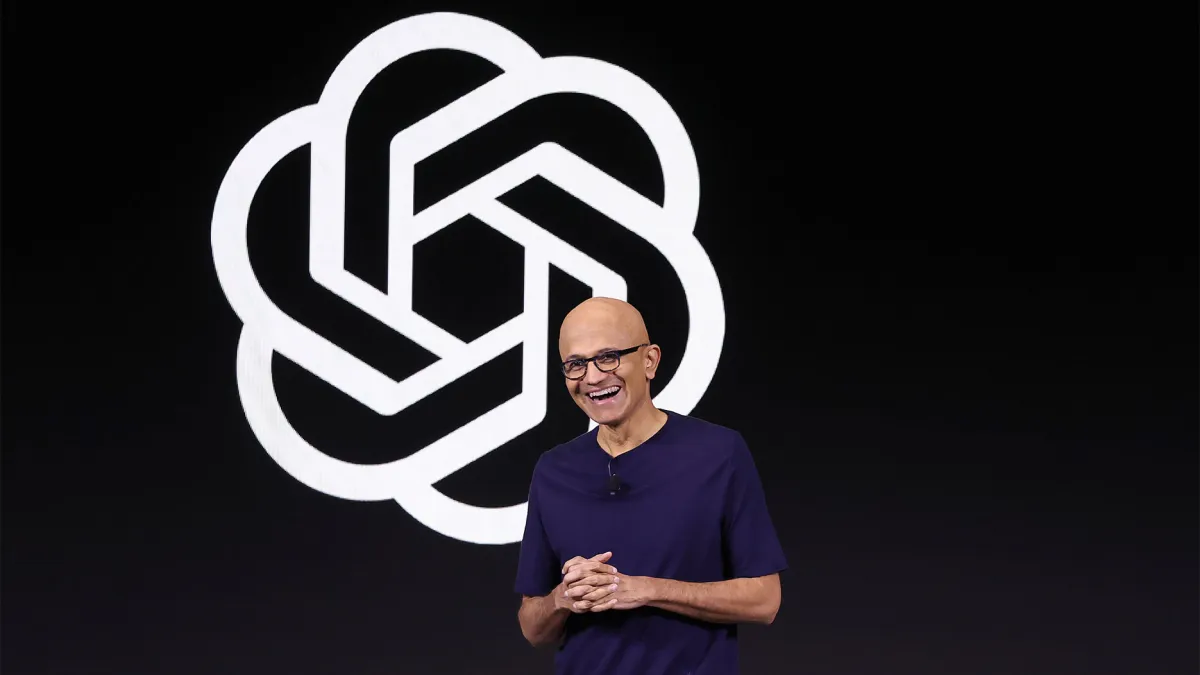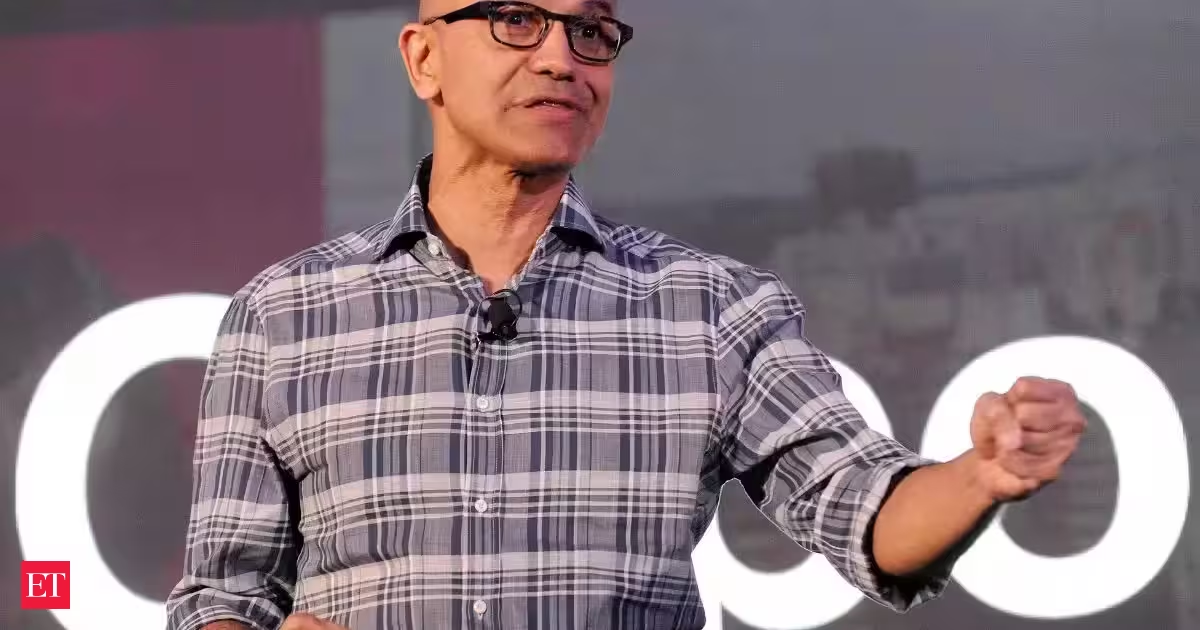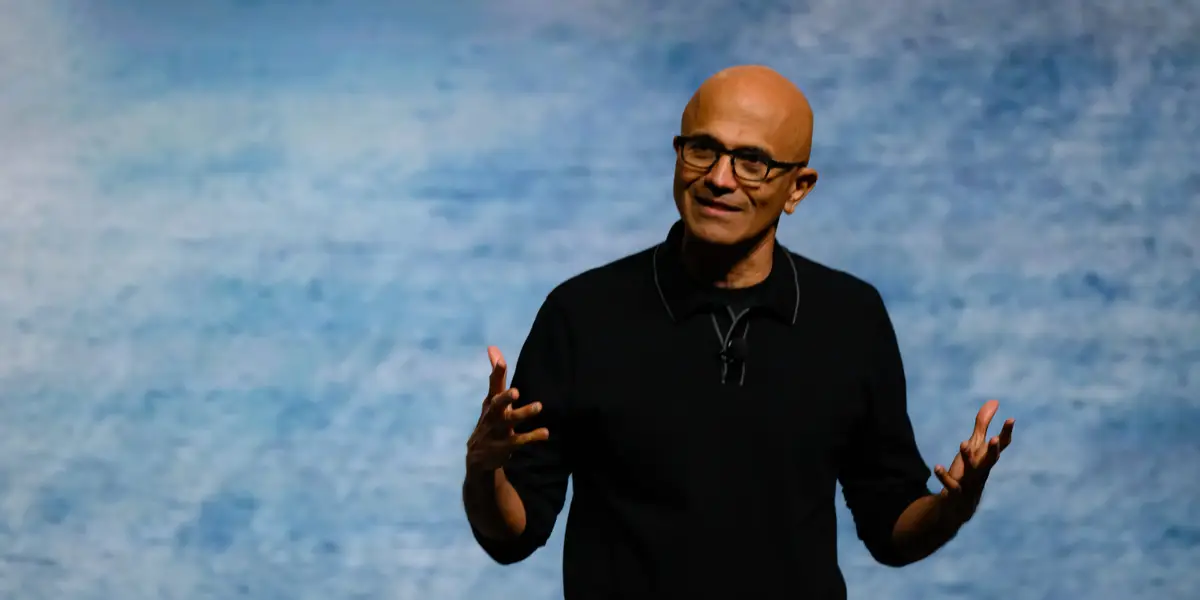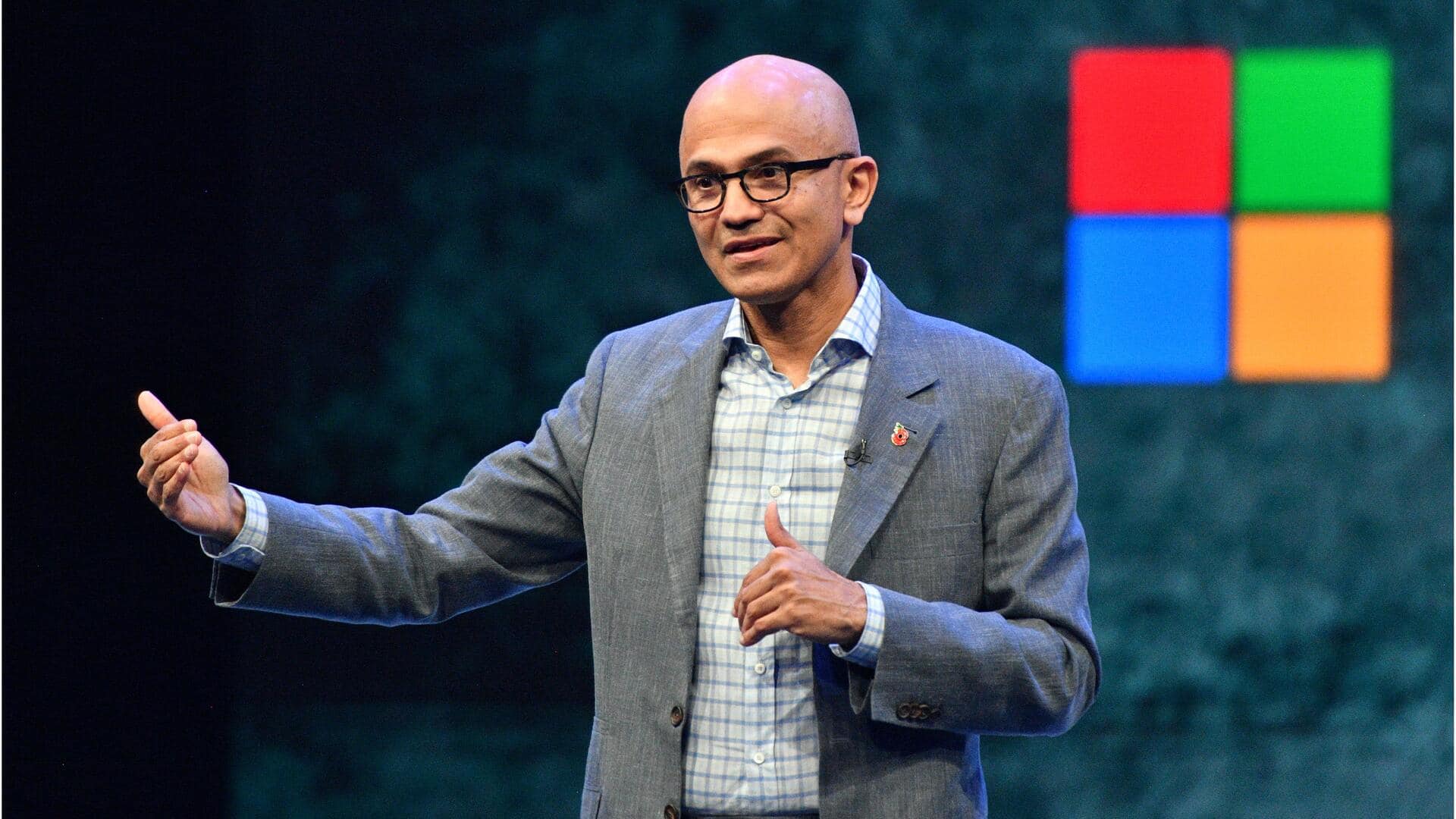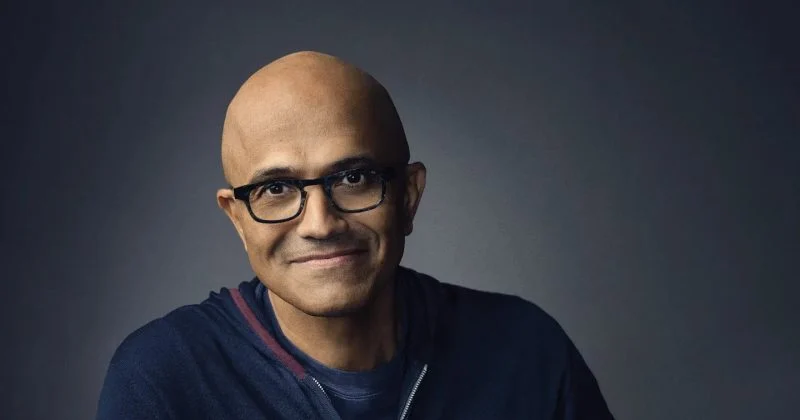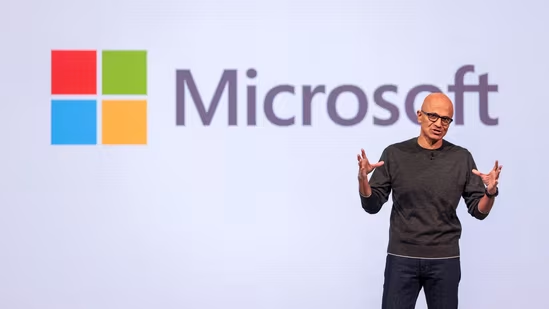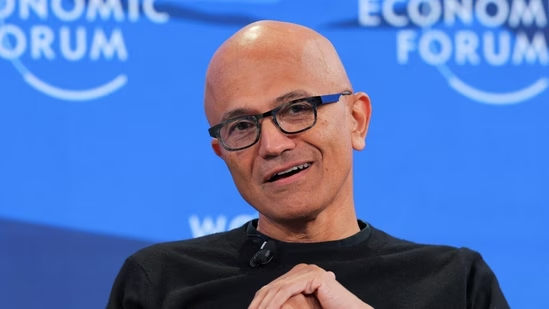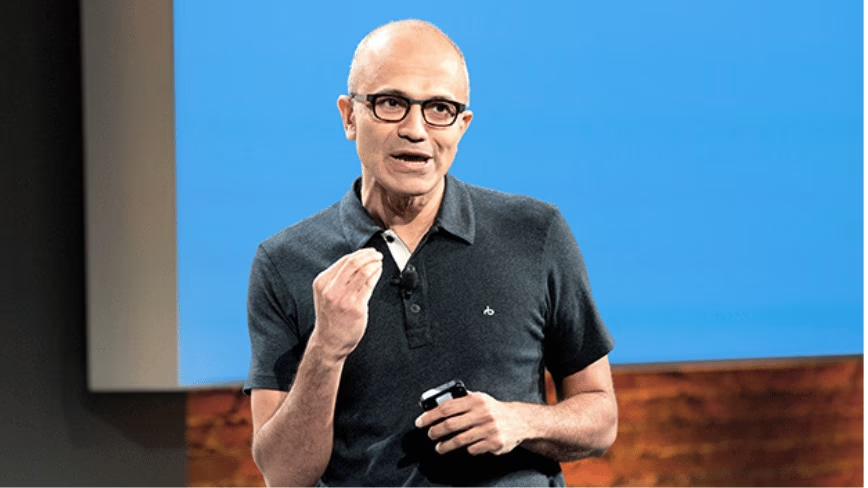
Microsoft CEO Satya Nadella said trust in US AI technology and a strong technology ecosystem will help American AI companies stay ahead of Chinese rivals. Nadella made the comments during an interview on CNN's GPS on CNN, which aired on Sunday.Sam Altman warns AI monopolies are "very bad" as Satya Nadella says trust, open ecosystems and US AI leadership will help beat Chinese AI competition. (Pexel/Representative image) (Pexel)Fareed Zakaria asked Nadella whether Chinese AI models such as Moonshot AI's Kimi K3 have an advantage because they are much cheaper while still meeting most business needs. Nadella replied that the US has followed an "ecosystem approach" to strengthen its digital and AI industry.Satya Nadella backs US AI ecosystemNadella said, “It's been about trust in our technology, right? So, for example, if you take the Chinese models, guess where these models run? They run on a lot of the hyperscalers — that are American — all over the world.” He explained that many Chinese AI models operate on cloud infrastructure provided by large American technology companies.Nadella mentioned Chinese AI models are open-weight, allowing US companies to monitor, test and further train them. He said many people misunderstand how the US became a global technology leader. Nadella said, "We became competitive because we took our technology, we built a rich ecosystem where others could participate, in other countries, and trust our stewardship of this ecosystem." He added, "And as long as that remains, we will absolutely be competitive, and we will win", according to Business Insider.Chinese AI models reshape competitionMicrosoft has a major financial interest in the US AI race because it owns about 27% of OpenAI's for-profit public benefit corporation. American AI companies are facing growing competition from Chinese AI developers that are releasing advanced AI models. Last year, Chinese AI company DeepSeek launched a powerful AI model that triggered a nearly $1 trillion sell-off in technology stocks.Also read: Nvidia's $750 billion AI deals spark AI bubble fears as OpenAI financing raises circular financing concernsDeepSeek's emergence was seen as one of the first major signs that China could compete with US AI at a much lower cost. In July, Moonshot AI launched its Kimi K3 model, attracting attention for its coding, reasoning and knowledge capabilities. Business Insider said Kimi K3's performance has been compared with AI models from Anthropic and OpenAI. Meanwhile, OpenAI CEO Sam Altman said his biggest concern is not AI becoming too powerful, but too much AI power ending up in the hands of a few companies.Sam Altman warns of AI monopoliesAltman said, "I think the fight of the current moment is: Are we going to head to a world of AI authoritarianism or liberty?" He also said, "Every time that humanity has traded off its liberty for safety, it's been a long-term net loss." Altman added, "We are going to put this in the hands of people. We're going to empower them. We are going to let society express its ideas and use this technology in the way they want", according to Business Insider. Altman's comments are notable because OpenAI is one of the few companies that controls some of the world's most advanced AI models.Fight over open-source AI growsOpenAI's AI models are proprietary, meaning the company does not make its technology open-source. Altman's remarks came as Silicon Valley and Washington debate how much of advanced AI models should be publicly accessible. The launch of Moonshot AI's open-source Kimi K3 model sparked fresh discussions in the US over access to Chinese AI technology. Some US officials have called for restrictions on Chinese AI models after Kimi K3's release.At the same time, some investors and startup founders warned that restricting Chinese AI models could reduce global competition in AI development. The debate also includes US export controls that decide which countries and companies can buy the most advanced AI chips and computing resources, according to Business Insider. These export controls give Washington significant influence over who can build the most advanced AI systems.Microsoft, Meta, Nvidia, OpenAI, Google and several other major technology companies signed a letter asking the US government not to restrict open-source AI. Anthropic was the only major frontier AI company that did not sign the letter or publicly support it. According to Business Insider, Anthropic has consistently argued that increasingly powerful AI systems require stronger safeguards and tighter regulation.US AI trust vs China AI challengeAltman said avoiding excessive concentration of AI power has always been a key part of his long-term vision for artificial intelligence. He said, "For so long now, I have felt focused on this singular goal of abundant intelligence and a belief that incredible human prosperity will come from that, as long as we don't have a weird power concentration and kind of a new authoritarianism", according to Business Insider.Together, Nadella's and Altman's remarks highlight two different but connected concerns in the AI race—Nadella argues that trust and an open technology ecosystem will keep the US competitive, while Altman warns that concentrating AI power in the hands of a few companies could be "very bad."
Sam Altman warns against ‘very bad’ AI monopolies as Satya Nadella makes big statement
Sam Altman warns AI monopolies are "very bad" as Satya Nadella says trust, open ecosystems and US AI leadership will help beat Chinese AI competition. | Business News
TL;DRAI
Nadella argues US AI prevails via trusted open ecosystems where Chinese models run on American cloud infrastructure. Altman warns AI monopolies are "very bad." For tech leaders: choosing between proprietary US and open Chinese models now exposes critical regulatory and geopolitical risk.
842 words~4 min read