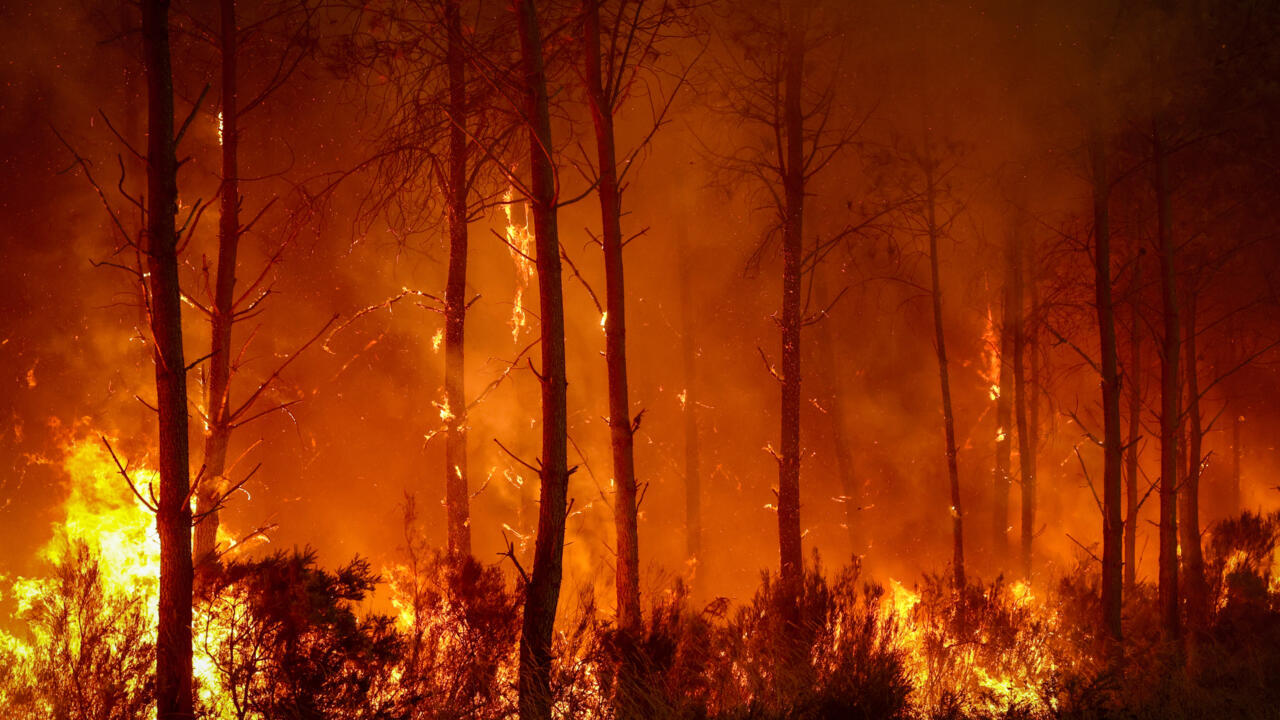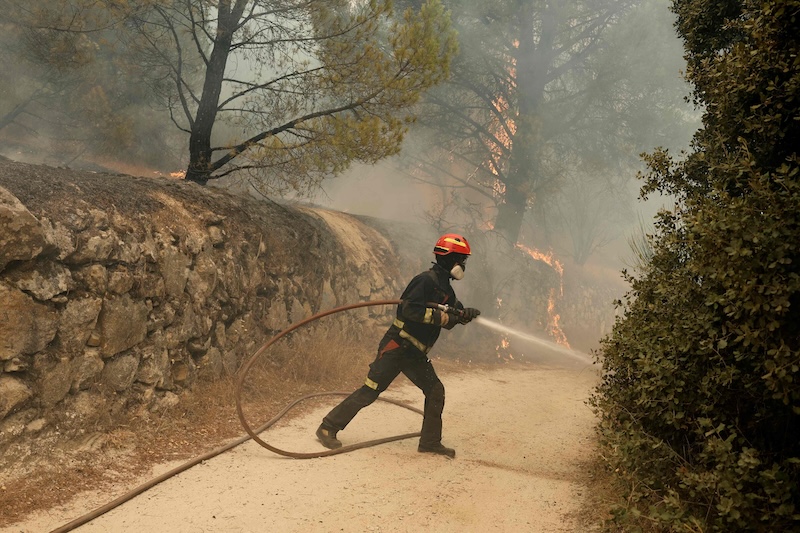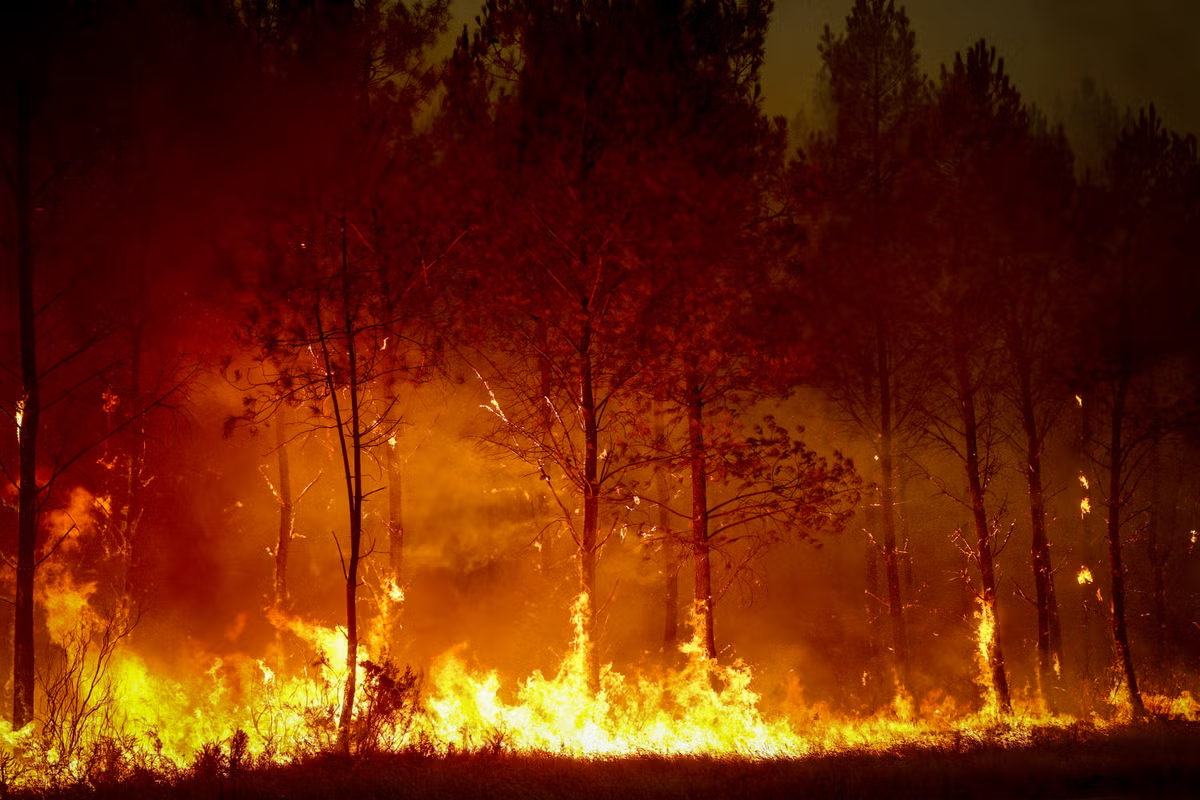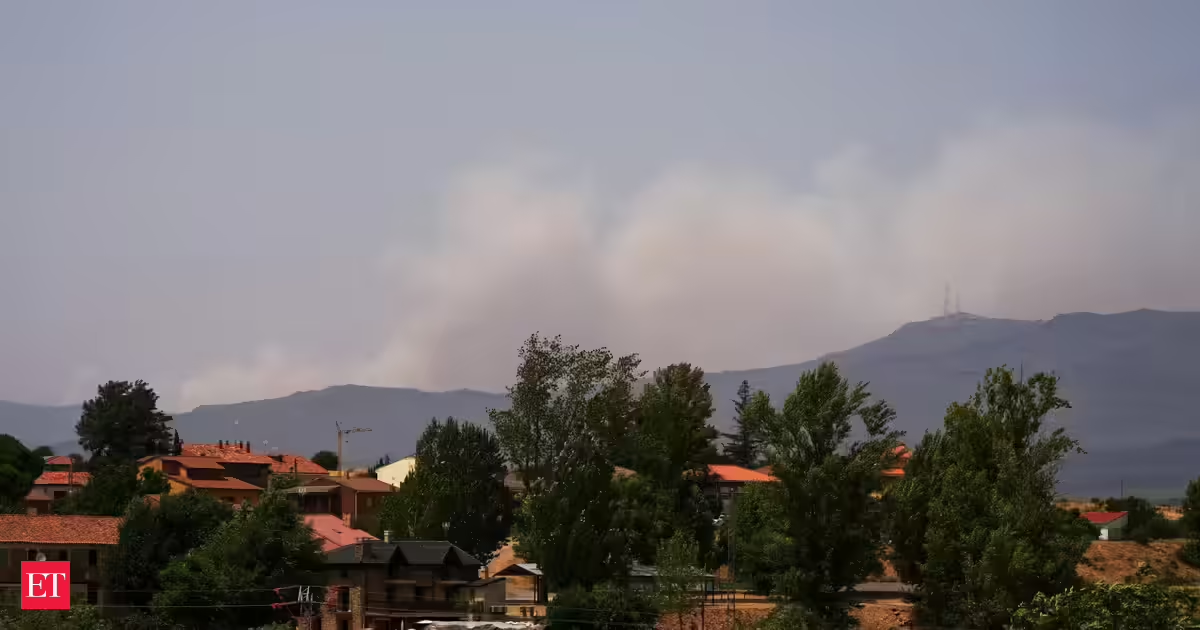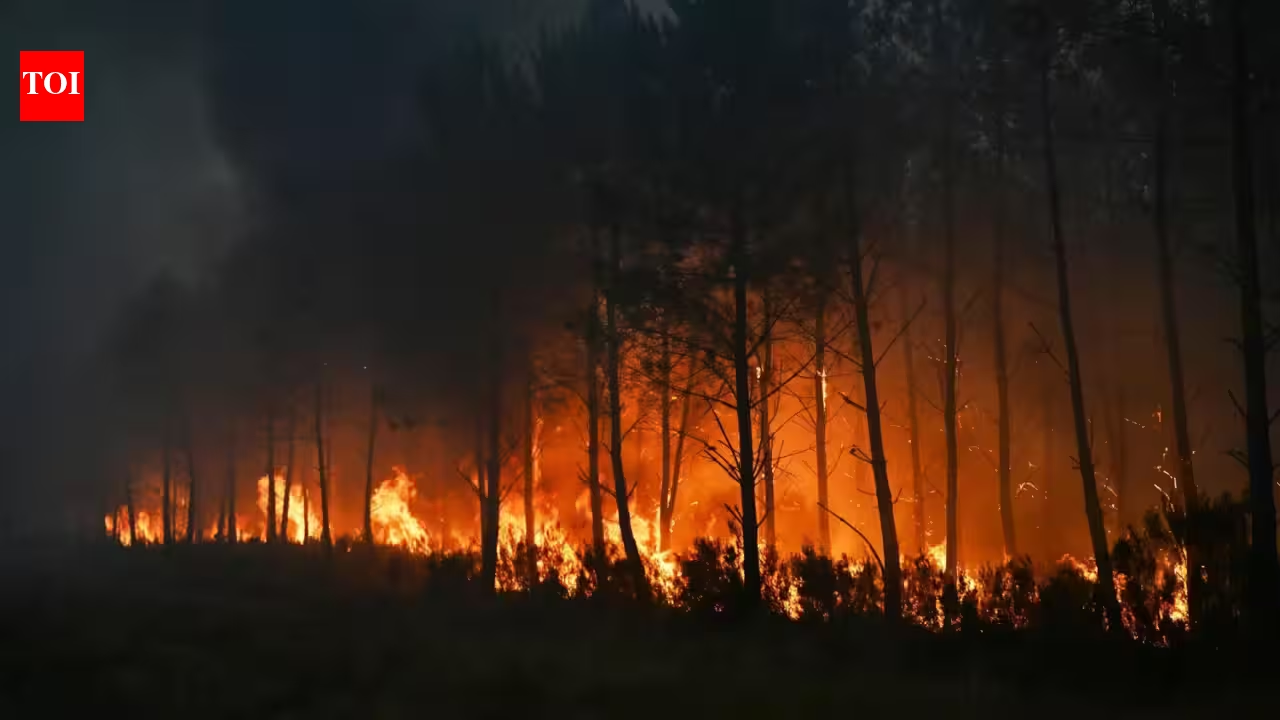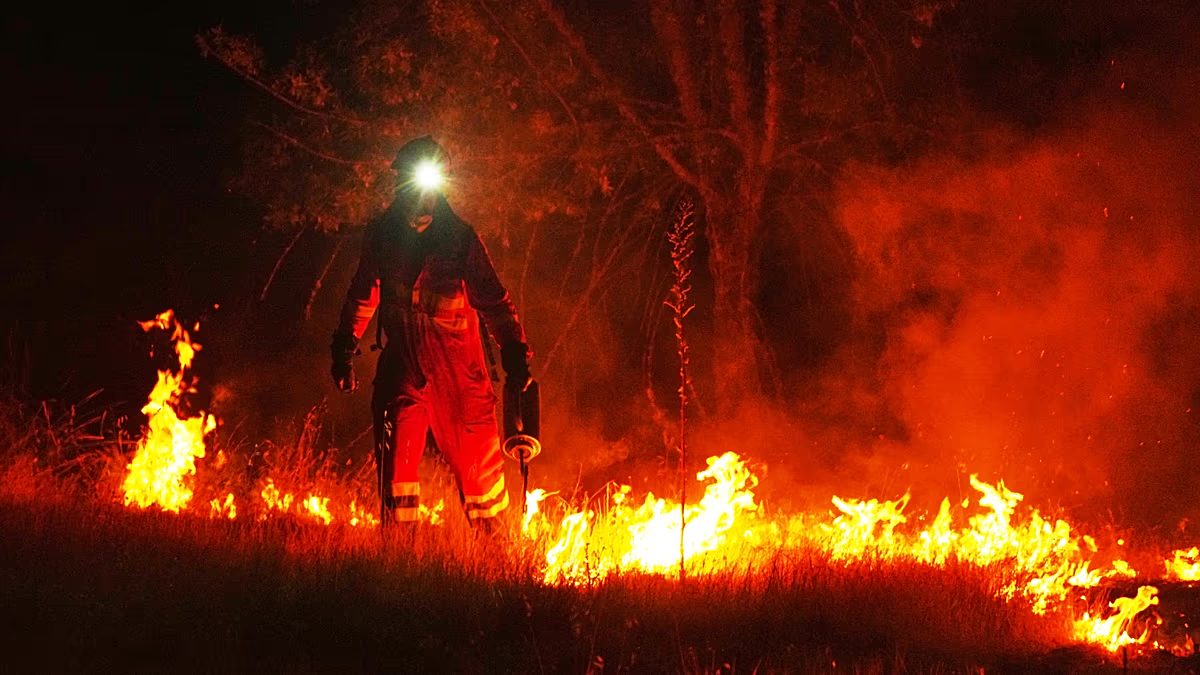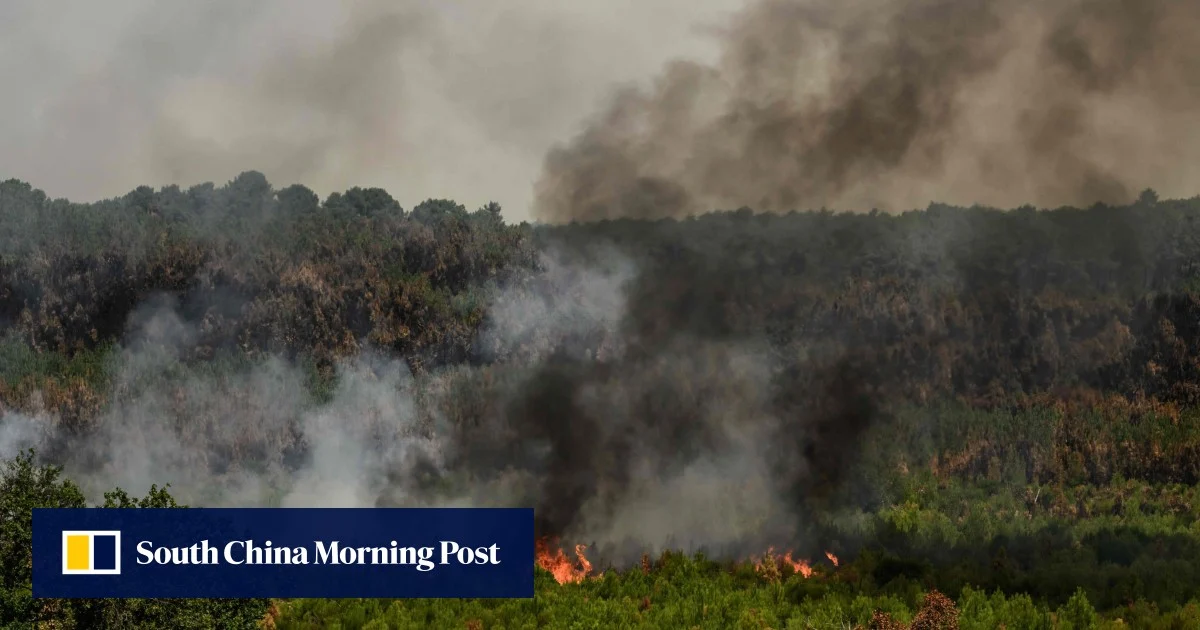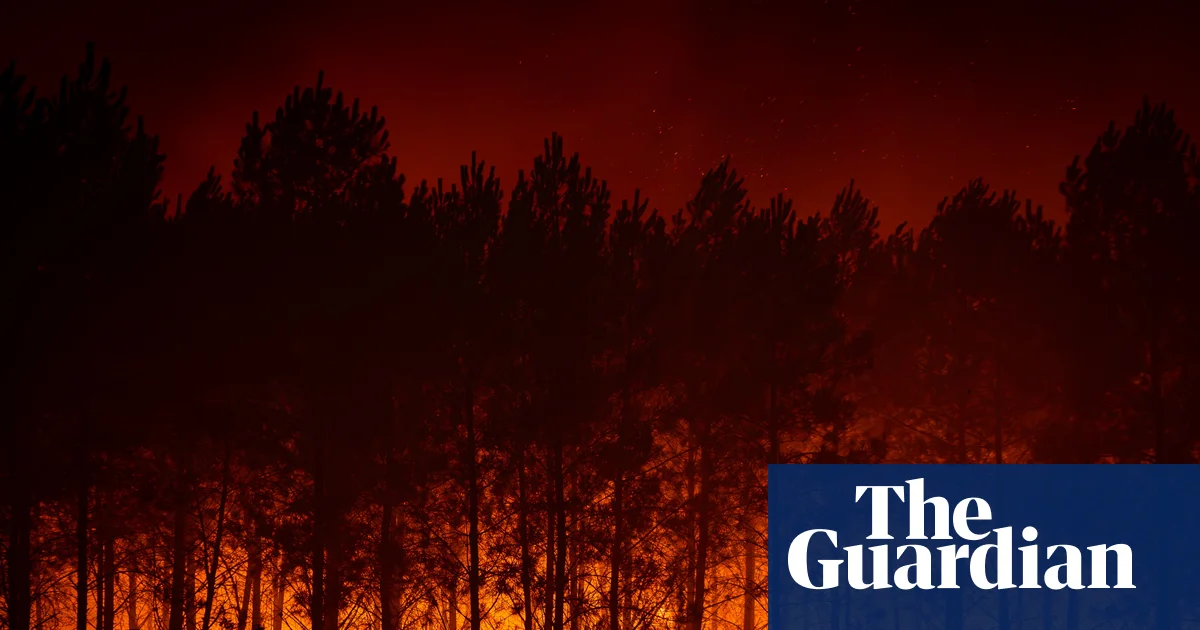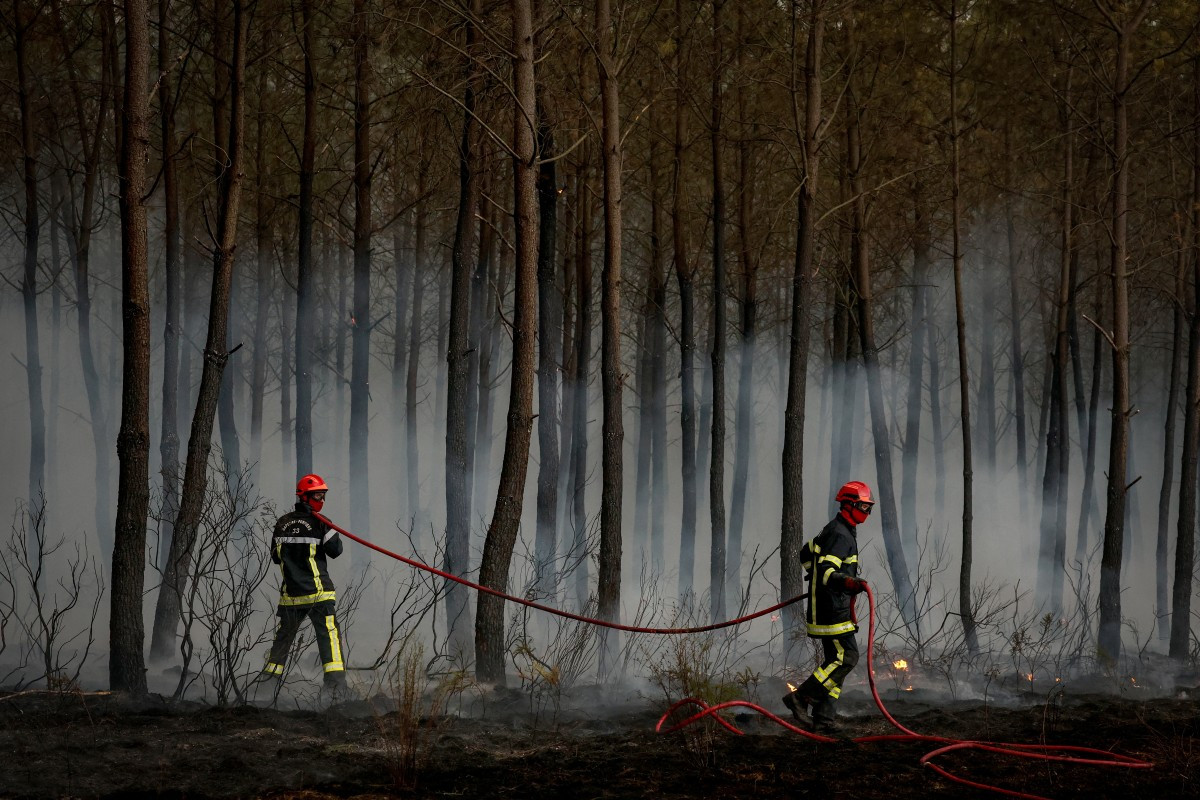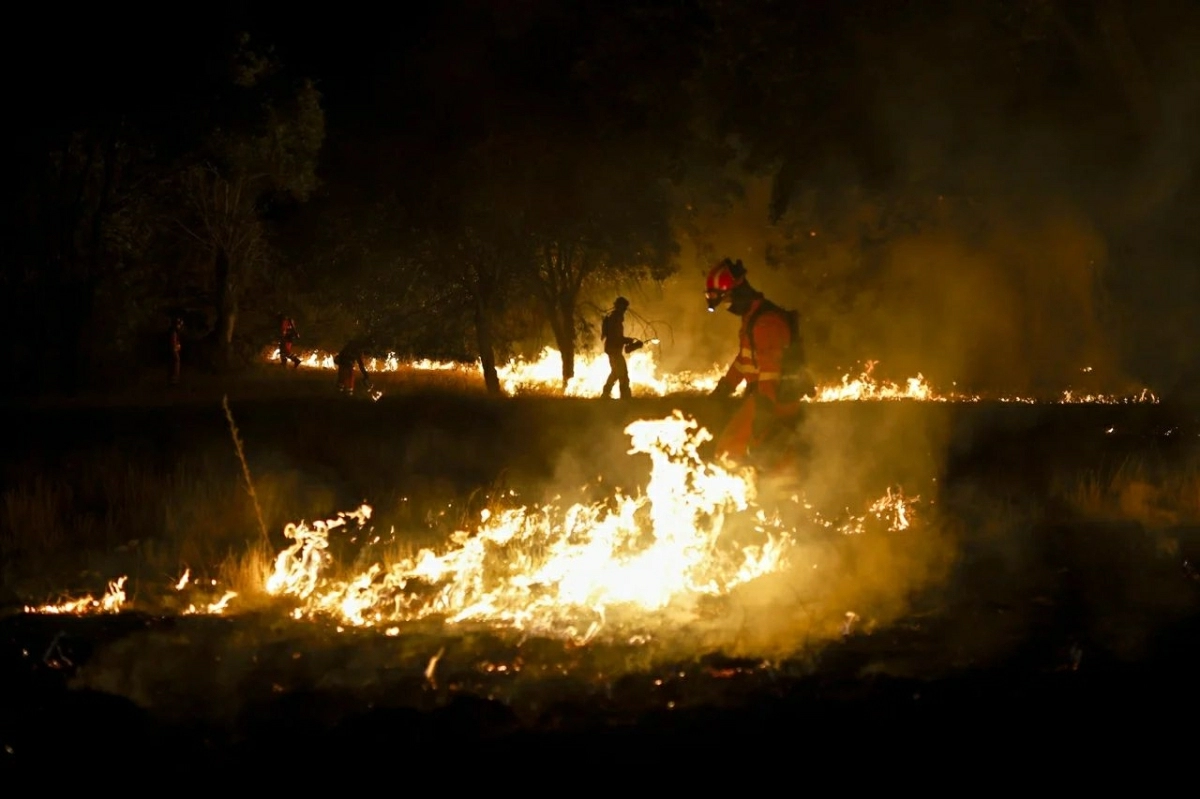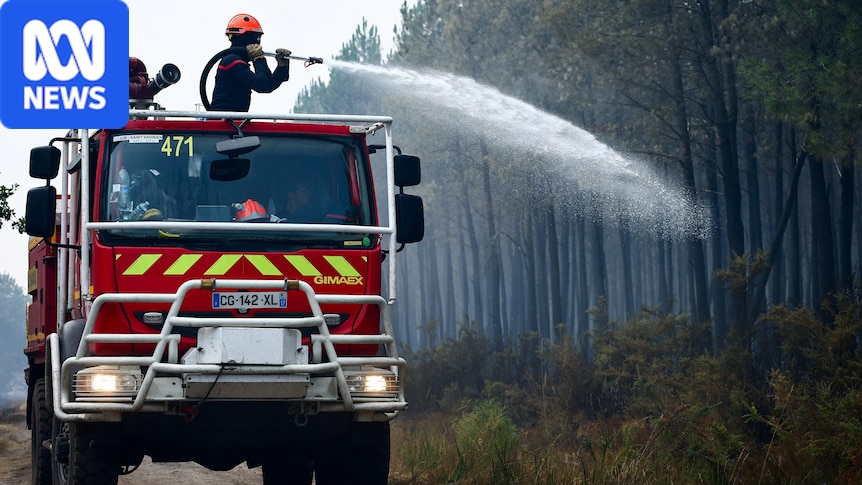
Firefighters are racing to subdue massive wildfires in France and Spain before a new heatwave hits Europe. Crews were battling blazes threatening the French city and wine region of Bordeaux and in areas to the west of Madrid. About 220,000 people, including tourists and local residents, have been evacuated in France, while further south in Spain around 100,000 have been told to leave their homes or seek shelter, authorities said.Firefighters battle a blaze in San Martin de Valdeiglesias, Madrid. (Reuters: Ana Beltran)Another heatwave is expected to hit in both countries later this week, in what has been a blisteringly hot and dry summer across Western Europe.Firefighters faced an especially dangerous situation in Vall d'Uixó, in the eastern Castellon province, where the ground contains old ordnance from the Spanish Civil War that explodes when the flames reach the area, Chevi Bolumar, fire chief of the Valencian Regional Government, told public broadcaster TVE.Firefighters battle a wildfire near Marcheprime, outside Bordeaux. (AP: Emma Da Silva)The French blazes, which broke out last week near the Atlantic coast, are now only 15 kilometres from entry points to the main metropolitan area of Bordeaux."This is a fire of a size never seen before," Jerome Steffe, mayor of Cestas. Cestas is one of the suburbs just outside the main Bordeaux city area.French President Emmanuel Macron was due to visit the region later in the day, his office said.Locals suffer 'emotional loss' The spread of the large fires converging in central Spain slowed overnight, authorities said, but the blaze in the Castellon province raged out of control as the weather agency warned of another potential heatwave this week."What we're experiencing isn't a succession of isolated events," Prime Minister Pedro Sanchez said."It's the most painful expression of a climate emergency that is making sixth-generation wildfires more ferocious, heatwaves more frequent, and our territory more vulnerable," he said.The so-called sixth-generation fires are the most extreme and uncontrollable category of forest blazes, capable of generating their own weather and destroying thousands of hectares per hour. Many scientists blame such fires and heatwaves on human-driven climate change.Maria Angeles Serrano, an evacuee in Castellon, said she was particularly upset about the impact on nature. "Material damage is one thing, but that can be repaired, so to speak. What really hurts is the emotional loss.”Heat set to build again this week The wildfires around Bordeaux in southwestern France have delivered a shock to the regional economy, Finance Minister Roland Lescure said on Monday, local time. The region is one of the centres of French wine production and a major centre for tourism."It's like a clap of thunder for an area which could have done without this," Mr Lescure told reporters.In central Spain, three separate fronts remained active in the mountains northwest of Madrid. Authorities estimate that a combined 77,000 hectares have burnt so far across the provinces of Madrid, Toledo and Avila. The one in Avila has been classified as the biggest wildfire in recent Spanish history.France has been dropping fire retardant as wildfires rage near Marcheprime, outside Bordeaux. (AP: Emma Da Silva)"Today and tomorrow are absolutely crucial days in tackling this wildfire. From Wednesday onwards, weather forecasts become significantly more unfavourable for firefighting operations, but we remain confident," said Spanish Interior Minister Fernando Grande-Marlaska.France faced a similar situation, with slightly easier conditions on Monday, local time, before temperatures rise again to as high as 37 degrees Celsius (98.6 degrees Fahrenheit) later this week in the Bordeaux area, according to France's weather office.French Interior Minister Laurent Nunez said the fire had not spread overnight but the danger had not passed."It isn't contained. I absolutely do not want to sound reassuring. That is not my intention. We must remain very focused and very determined," he said.In both Bordeaux and Avila, July high temperatures have averaged 32 degrees Celsius (90 degrees Fahrenheit), almost 6C above the month's normal high between 1961 and 1990, according to the Reuters Climate Monitor.Response under scrutiny The scale of this summer's wildfires in Europe is putting pressure on firefighting resources and raising questions about how to respond.Under the European Union's civil protection mechanism, Greece and Italy have each sent two Canadair water-bombing aircraft to Spain, while Portugal has deployed more than 100 military personnel and equipment.Two more planes were due to arrive from Turkey, Spain's interior ministry said.Switzerland is supporting France by sending two Super Puma helicopters and their crews after a request from Paris.Reuters
France and Spain race to curb wildfires before new heatwave arrives
Spanish Prime Minister Pedro Sanchez highlighted the impact of climate change, saying the wildfires were "more ferocious" and "heatwaves more frequent".
734 words~3 min read