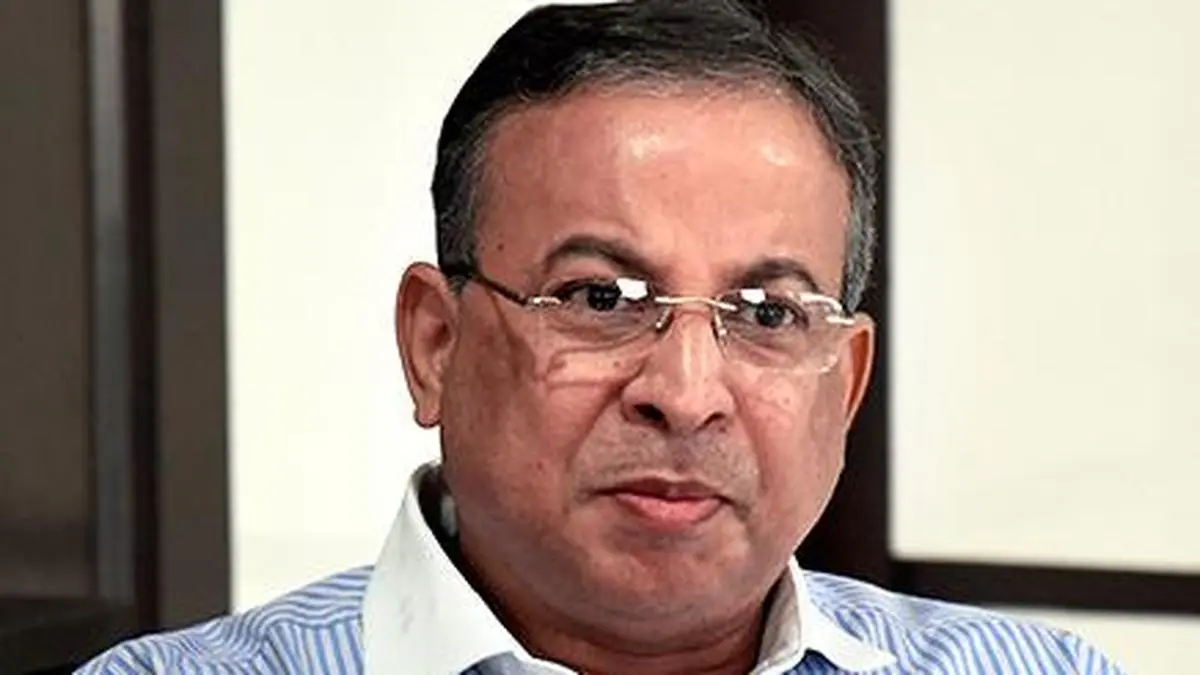
File picture: Praveer Sinha, CEO and Managing Director, Tata Power Co. Ltd
| Photo Credit:
Tata Power will begin construction of its ₹6,600-crore, 10-GW photovoltaic wafer and ingot manufacturing facility in Odisha from October this year, while simultaneously advancing plans to enter the nuclear power sector by shortlisting sites in three states, the company’s top management said on Monday.“Our 4.3-GW cell and module plant is operating at full capacity. We are not expanding that. We are setting up a wafer and ingot plant in Odisha, for which we have already got land and various other preliminary activities, including environmental clearances, water and other approvals are being tied up. We expect to start work by October,” Tata Power Managing Director and CEO, Praveer Sinha, told reporters after the company’s first-quarter earnings.The company expects the first phase of the project to become operational in January 2028. The greenfield facility, which will complete Tata Power’s backward integration into the solar manufacturing value chain, will be implemented in two phases of 5GW each at a total investment of about ₹6,600 crore. While the first phase is targeted for commissioning in January 2028, the second phase will follow around six months later.The company had earlier announced plans to set up the project in Andhra Pradesh, but eventually selected Odisha. Explaining the change, Sinha said the state’s incentive package, lower power costs and ready availability of land made it a more attractive destination. “Based on the type of incentives and support that we have been provided in terms of lower cost of power and other benefits, it was decided to set up in Odisha. Also, the land was available. A Tata Steel SEZ was to come up in Gopalpur, so that land was already acquired and available and that’s why we could take up work quickly and we zeroed in on Gopalpur,” he said.The company has already signed an MoU with Gopalpur SEZ for 128 acres of land, while site development and environmental clearance activities are currently underway. Tata Power said its existing 4.3-GW solar cell and module manufacturing facility is operating at full capacity. During the June quarter, TP Solar achieved its highest-ever quarterly production, manufacturing 1,001 MW of modules and 862 MW of solar cells, helping the segment post a nearly four-fold increase in profit.Nuclear plans gather paceAlongside its solar manufacturing expansion, Tata Power is preparing for its long-awaited entry into nuclear power generation, with land identification progressing in Madhya Pradesh, Odisha and Gujarat. “We are in an advanced stage of finalising land in three states, namely, Madhya Pradesh, Odisha and Gujarat. Preliminary site-related activities such as soil testing and geotechnical tests are being conducted in all these locations and we expect to take forward these projects in six to eight months,” Sinha said.The company is evaluating multiple reactor configurations depending on the government’s final policy framework. “NPCIL has a 220-MW Bharat Small Reactors on which they are working. They normally come in pairs. Similarly, they have a standard 700-MW reactor. So we are looking at all these,” Sinha said. Each of the proposed sites could eventually house either two 220-MW Bharat Small Reactors or two 700-MW reactors, depending on the final project configuration, he said. The management, however, said project execution would depend on the notification of rules enabling private sector participation in nuclear power generation following legislative changes announced by the Centre. “We expect all these rules will be notified in the next two months,” Sinha said. The government has proposed opening up India’s nuclear power sector to greater private participation as part of its broader strategy to expand nuclear generation capacity to support the country’s clean energy transition and long-term energy security. The company currently has an operational and under-construction renewable portfolio of 12 GW and is expanding across solar manufacturing, battery storage and pumped hydro projects as part of its long-term growth strategy. Published on July 27, 2026