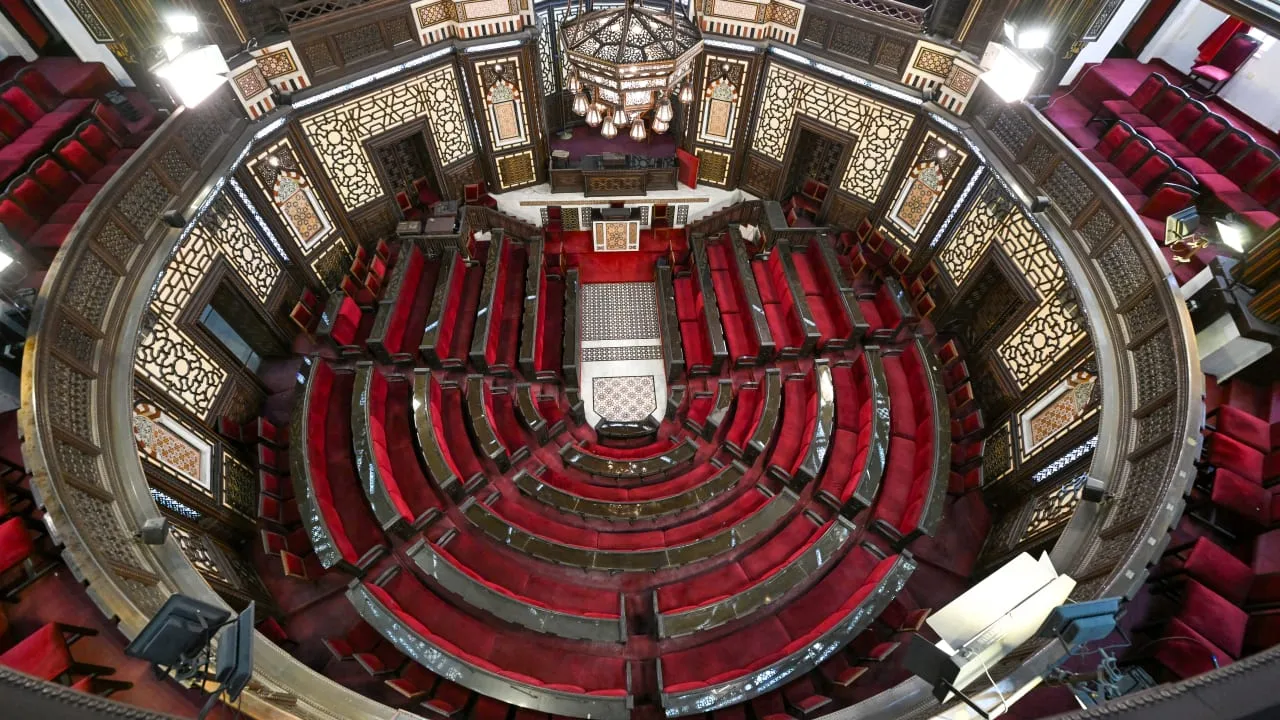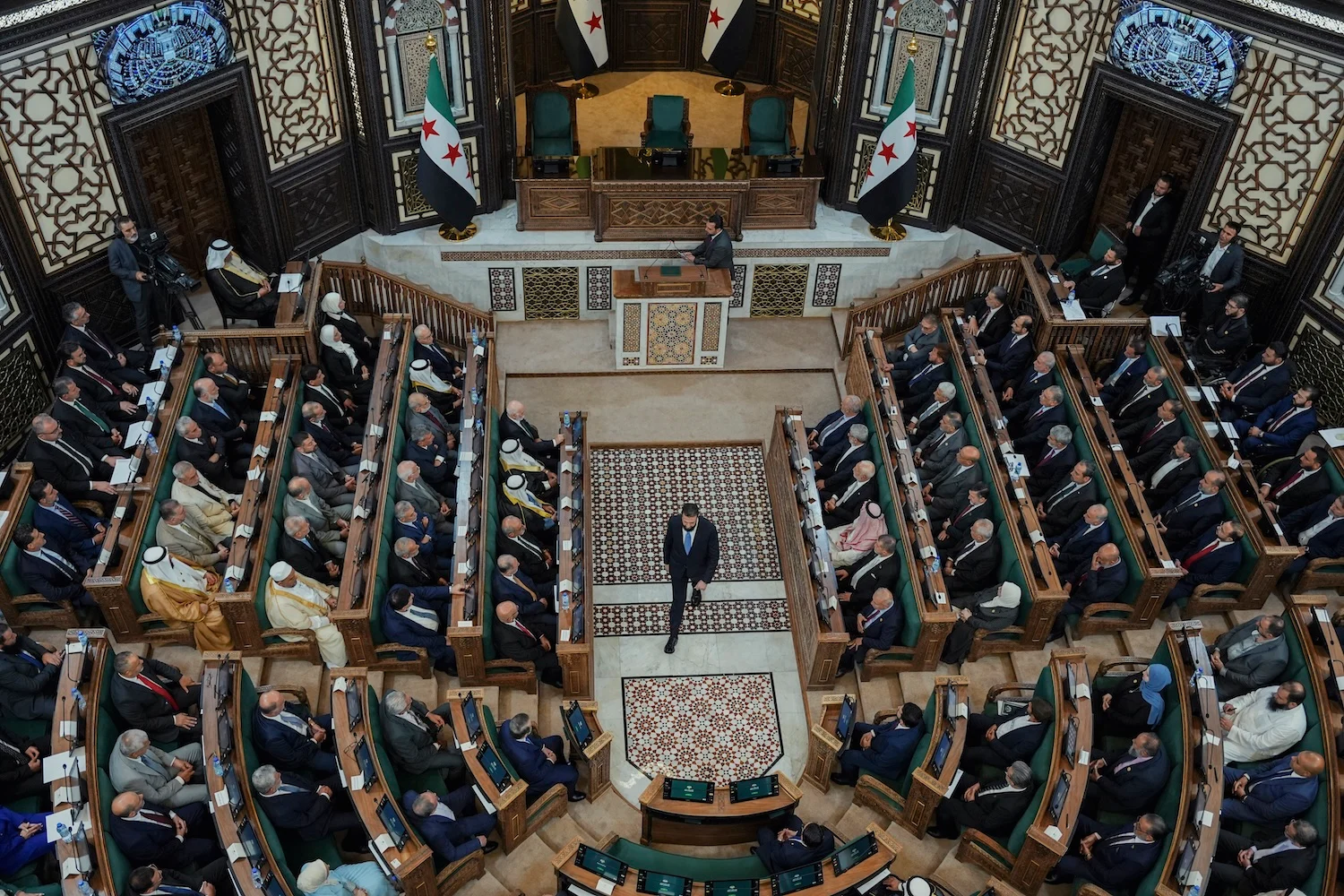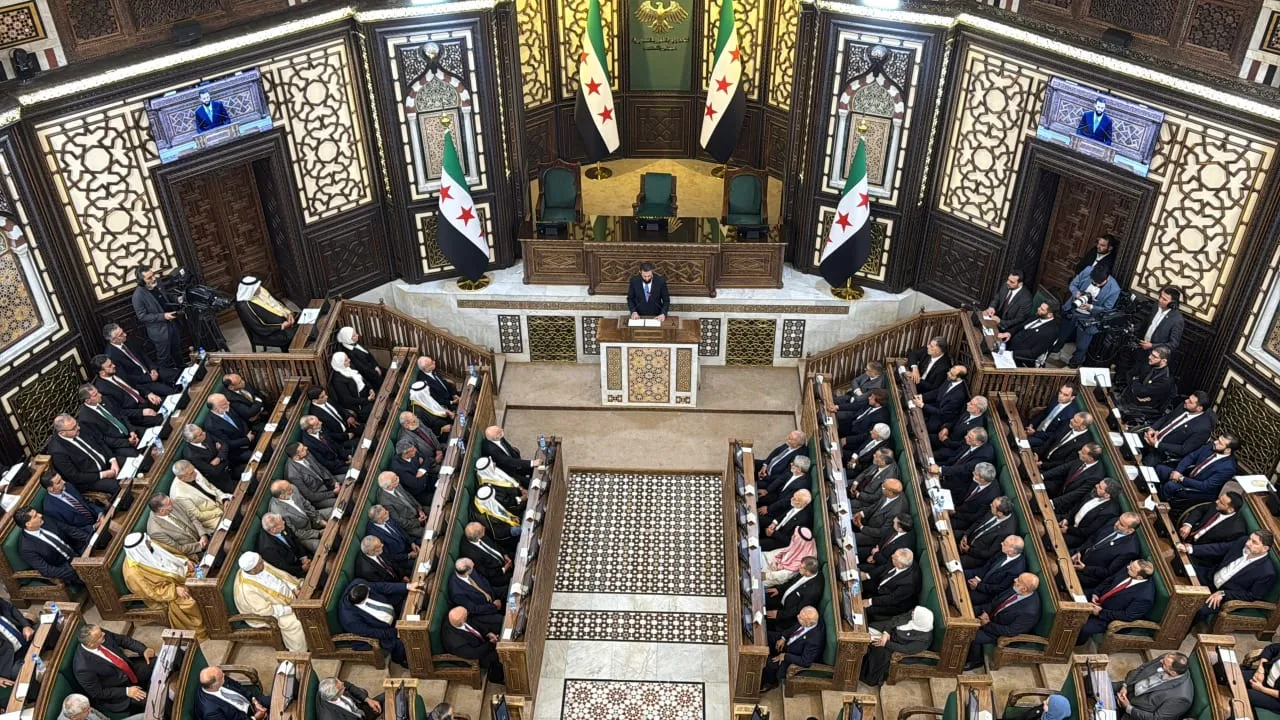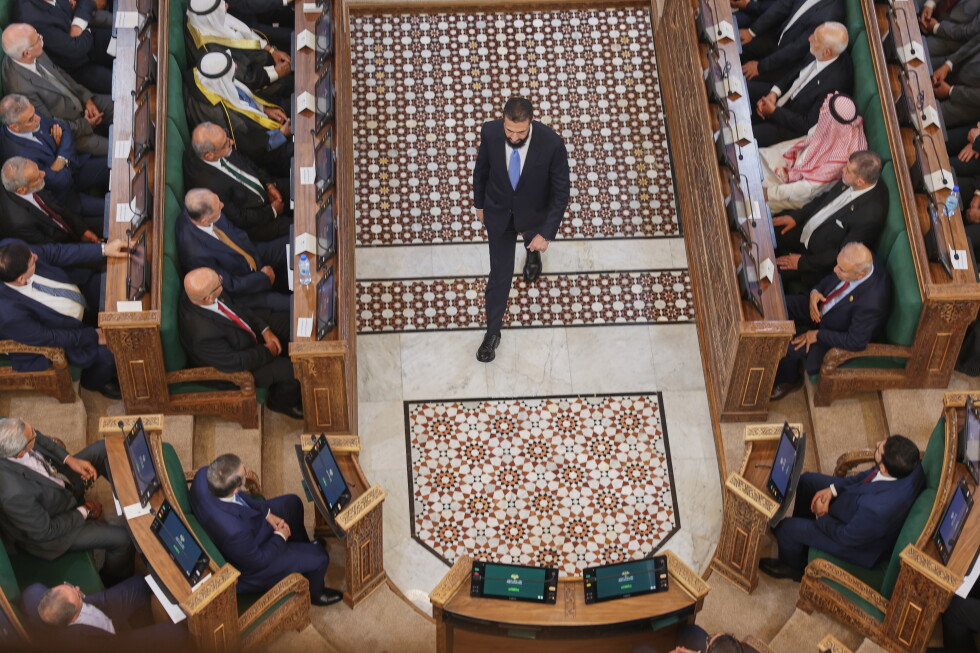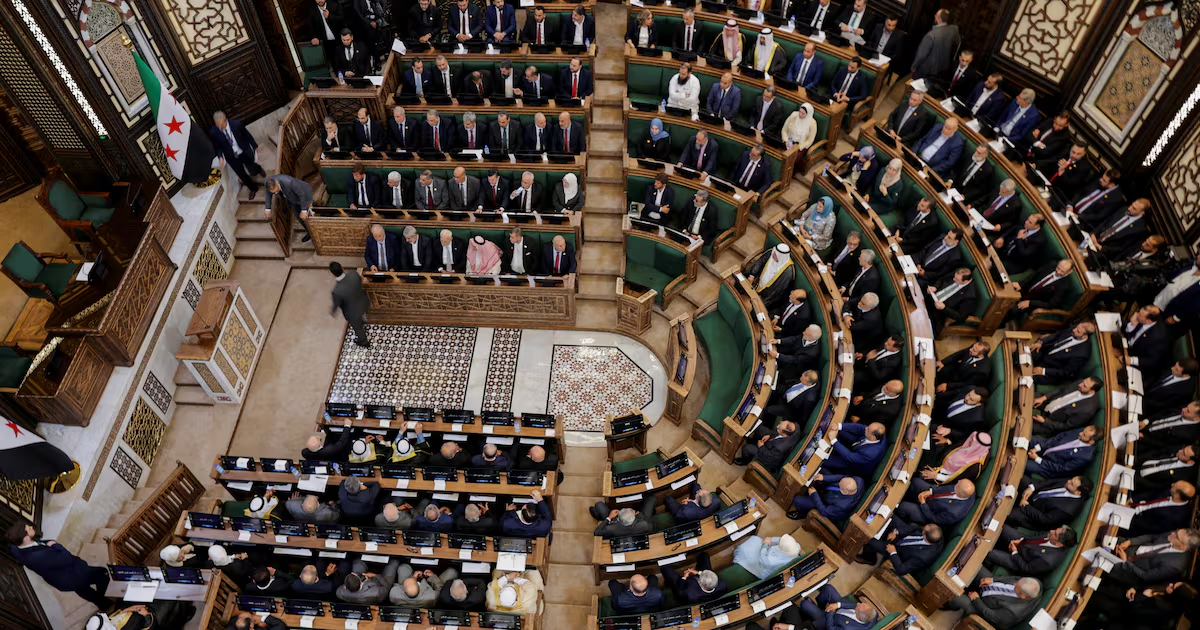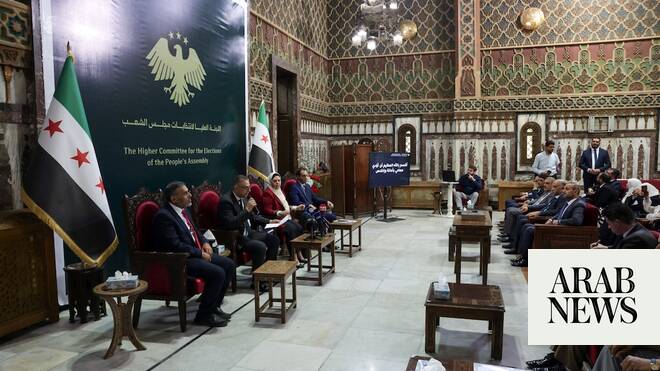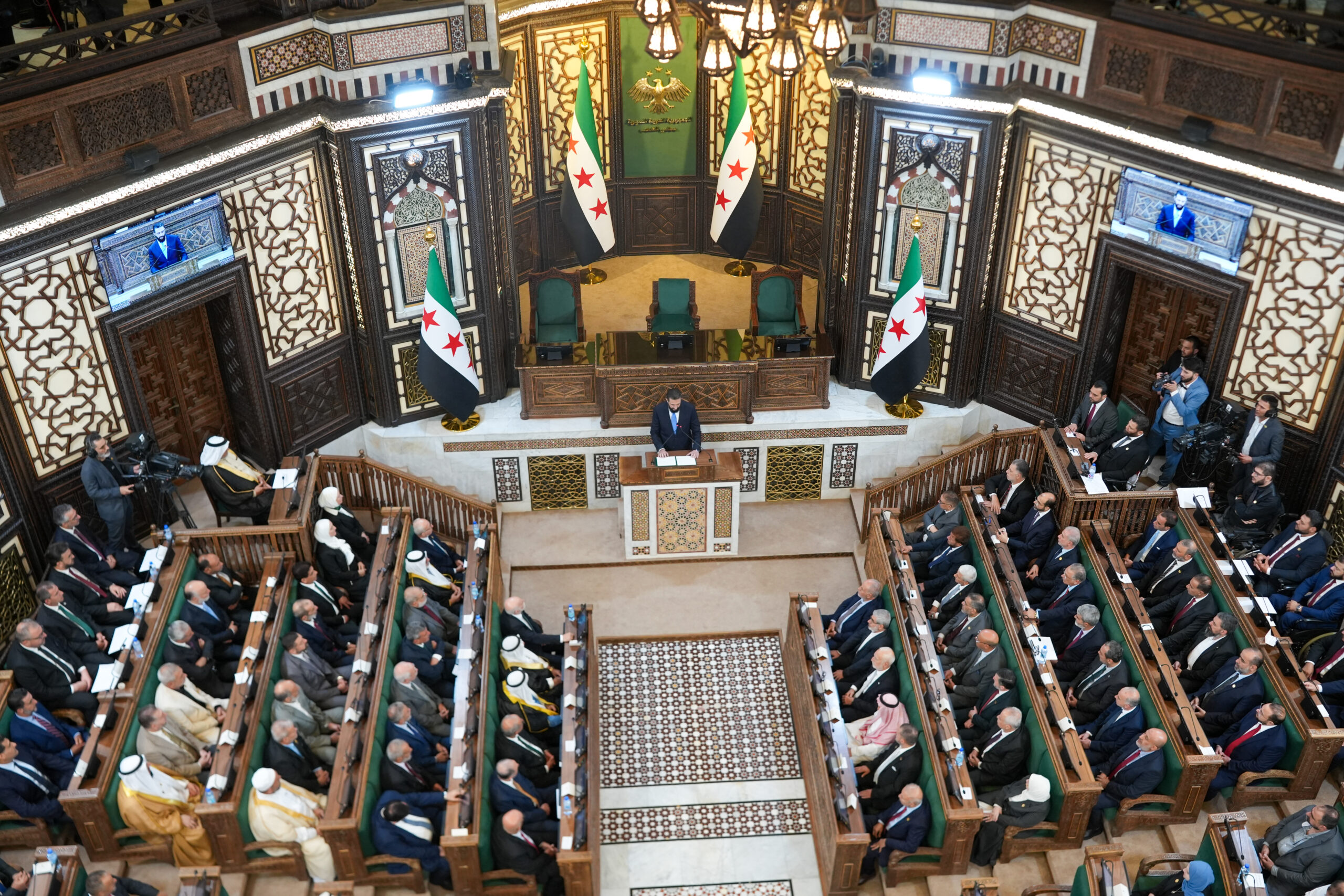
Syria’s leadership views the new parliament, which convened for the first time this month, as a mechanism to rebuild the country’s institutions, rather than to check the presidency’s power. Nonetheless, the chamber could help democratize the new political order by providing different communities greater access to the state and offering a formal channel to express and negotiate disagreements, if the authorities give members room to dissent and influence legislation.
Syria’s first post-Assad People’s Assembly met on July 12, in a capital still reeling from a bombing that killed ten people days earlier. President Ahmed al-Sharaa asked its members to make the chamber “a model of responsibility and competence, and to contribute to establishing a culture of dialogue, the rule of law, and respect for institutions.” His remarks reflect the role he appears to envision for the legislative body at this stage: to fill the massive legal and institutional vacuum plaguing Syria’s transition, rather than to establish a genuine check on his power or to serve as an arena for open political competition. The design of the chamber gives him good reason to believe his wish will be fulfilled and little reason to expect trouble.