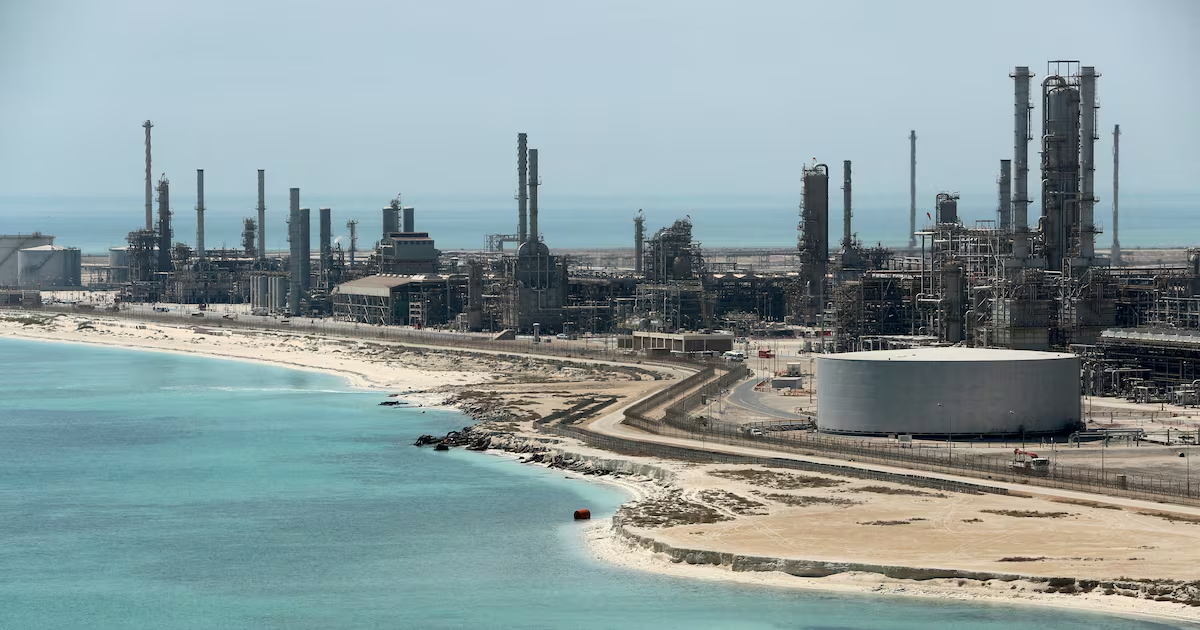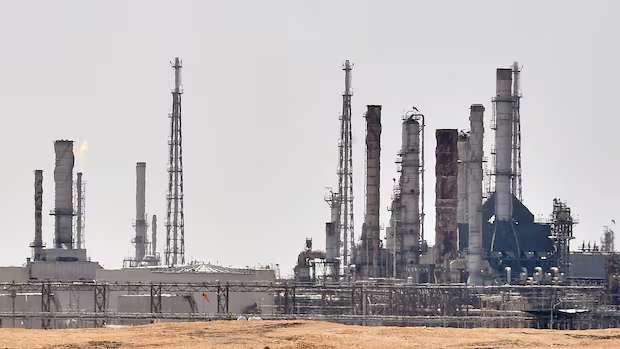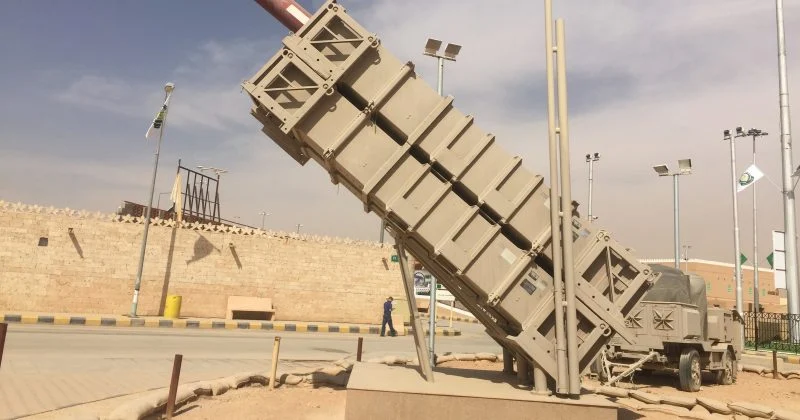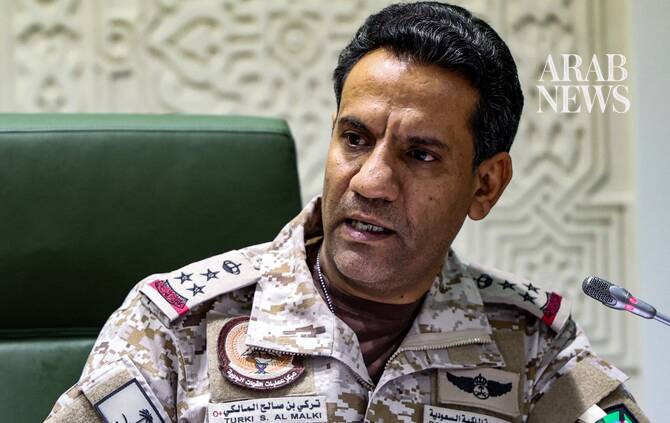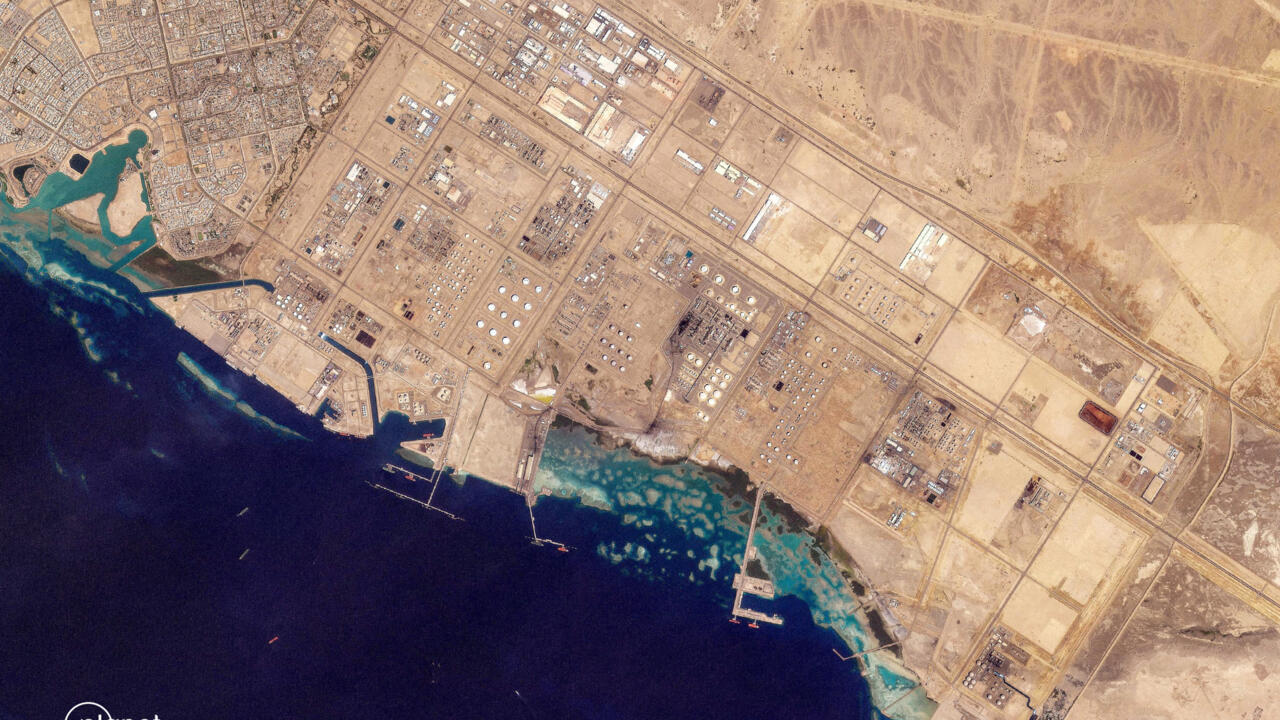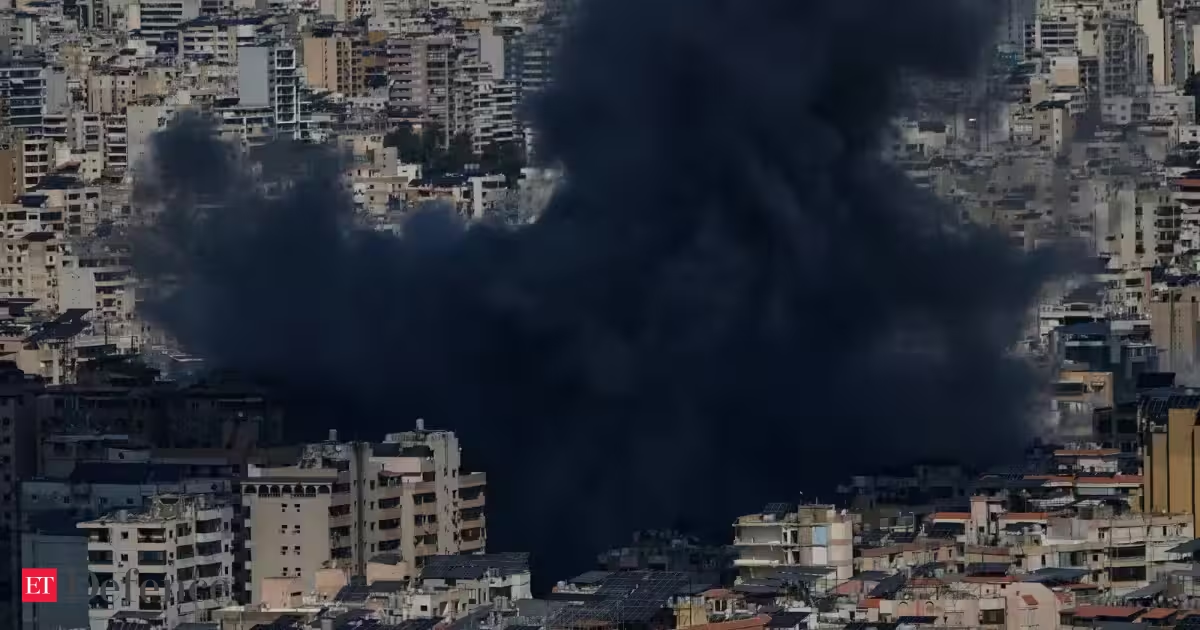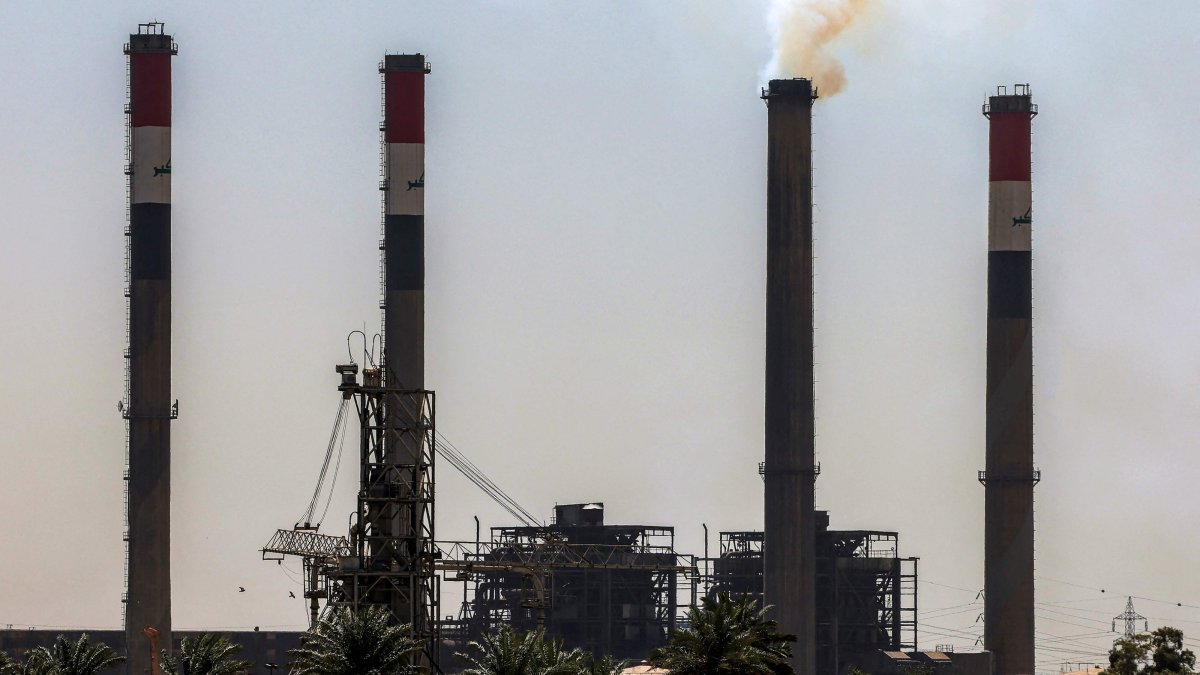
Saudi Arabia and Jordan said on Monday that their air defences intercepted and destroyed drones targeting their territory, underscoring continued regional threats despite a temporary pause in hostilities between Iran and the US.Saudi Arabia's Ministry of Defence said several drones targeting oil facilities in the Eastern Province and the capital Riyadh were intercepted and destroyed before reaching their targets.Military spokesman Maj Gen Turki Al Malki said the drones originated from Iraqi territory and accused Iranian-backed militias of carrying out the attacks.He described the attempted strikes as “terrorist” attacks targeting Saudi energy infrastructure and said the kingdom reserves the right to defend itself and respond “at the appropriate time and place”.No casualties or damage were reported, and Saudi authorities did not disclose the number of drones intercepted.Last week, Yemen's Iran-backed Houthi rebels claimed attacks on Aramco facilities in the Saudi cities of Jizan and Yanbu on Saturday, after announcing a blockade on Saudi shipping that risks worsening the economic fallout of the war. In Jordan, the armed forces said the Royal Jordanian Air Force shot down two drones targeting the kingdom.“The interception and downing operation resulted in no casualties or material damage,” a military source told Petra news agency.Jordanian authorities did not identify the source of the drones.The incidents occurred as Iran and the US refrained from attacking one another for a third consecutive night. US Ambassador to the UN Mike Waltz said President Donald Trump was giving diplomacy “some space”, while a White House spokesman said Washington still retained military options if Iran resumed attacks against shipping or regional allies.A ship crosses the Bab El Mandeb strait off the coast of southern Yemen. AFPInfoIran's military has said it suspended retaliatory operations against US forces and bases in the region following Washington's decision to pause strikes.In the two weeks before the pause began on Friday, Iran claimed responsibility for attacks on US military facilities in several regional countries, including Kuwait, Bahrain and Jordan.Jordan also announced tests of its national emergency mobile alert system across multiple governorates as part of efforts to strengthen crisis preparedness.Iran said on Sunday that intermediaries continue to relay messages from the US regarding regional developments, but stressed that there are currently no direct or indirect negotiations between Tehran and Washington.Foreign Ministry spokesman Esmaeil Baghaei dismissed reports that Iran had requested talks with the US in Pakistan or Qatar, describing such claims as a recurring “news-making tactic” by opposing parties.“Such a thing is not in line with our approach at all,” Mr Baghaei said during a weekly press briefing.Play00:37US troops disable tanker trying to breach ports blockadeHe reiterated that Iran viewed diplomacy as a tool to protect its national interests and had never rejected diplomatic engagement in principle. However, he said Tehran would not take steps that could be misinterpreted while the US continued what he described as hostile actions against Iran.“Our focus is on defence when the other side is engaged in acts of harassment and aggression against Iran,” he said.“Yes, the mediators may convey messages from the American side to us about the current developments in the region,” he said. However, he added that Iran was not currently engaged in any negotiations with the US.The US has justified its most recent rounds of strikes as a defence of commercial shipping in the Strait of Hormuz, after Iran sought to assert control over the sea lane. Sources told The National last week that mediators were trying to convince the US and Iran to clarify “ambiguous language” in June's interim peace deal. The text called for Iran to "make arrangements using its best efforts" for the safe passage of commercial vessels. Iran now says the Strait of Hormuz remains closed and that recent talks with Oman on shipping arrangements have not altered that situation. Mr Baghaei said Iranian and Omani officials held talks on Friday and Saturday that focused on maritime traffic management in the strategic waterway.“There were useful discussions on how to manage shipping in the Strait of Hormuz,” Mr Baghaei said.He stressed, however, that the talks should not be interpreted as part of any negotiations involving Washington.“The situation in the Strait of Hormuz has not changed and it remains closed, and these talks have nothing to do with the US,” he said.Iran’s Fars news agency reported on Monday that six ships were prevented from transiting the Strait of Hormuz after allegedly attempting to use an unauthorised route in the waterway.Citing an unnamed Iranian official, Fars said the vessels had switched off their navigation and positioning systems and were attempting to pass through what Tehran described as an “illegal and unsafe” route south of the strait, allegedly encouraged by the US military.The official said the ships were returned to the Gulf under the “management of Iran”, while one of the vessels suffered an accident during the incident.
Saudi Arabia and Jordan intercept drones as tensions persist despite Iran-US pause | The National
Riyadh says drones originated from Iraqi territory and accused Iranian-backed militias of carrying out the attack
800 words~4 min read