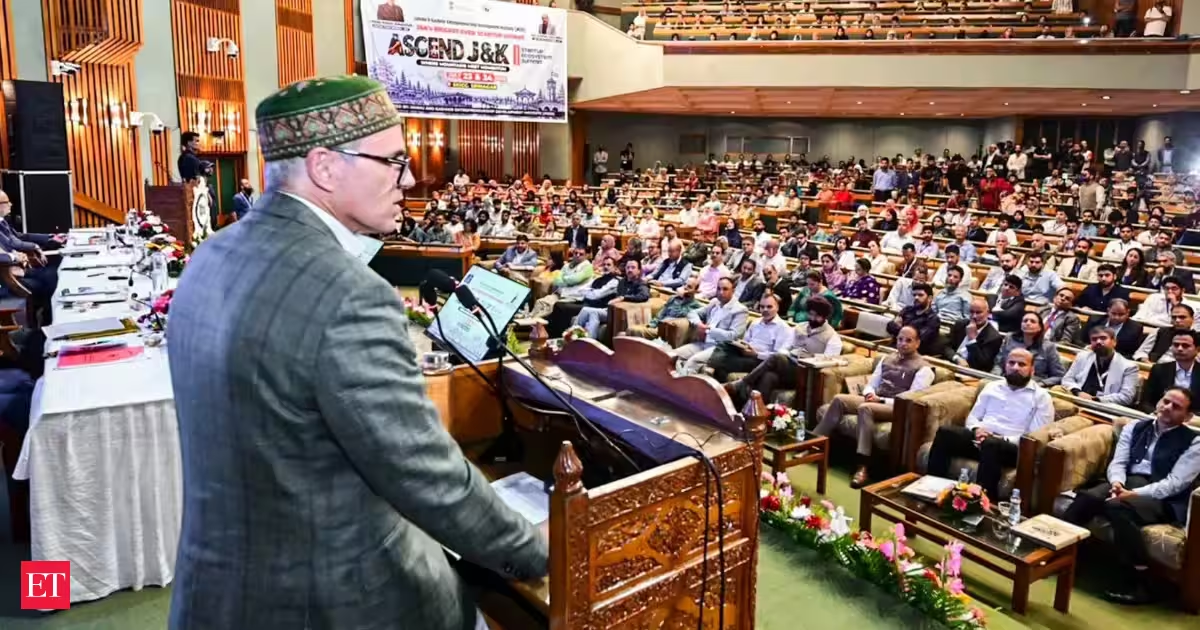
Jammu and Kashmir Chief Minister Omar Abdullah speaks during the launch of the curtain raiser of the first International Film Festival of Jammu & Kashmir, IFFJK 2026, in Srinagar
| Photo Credit:
The first International Film Festival of Jammu & Kashmir (IFFJK) has received around 400 entries from more than 25 countries, providing an early indication of the international interest that the Union Territory hopes to build on as it seeks to revive its historic association with cinema.The response comes as Jammu and Kashmir prepares to host the four-day festival from September 7 to 10, with the administration seeking to use the event as a platform to reconnect the region with the global film community and attract filmmakers and production houses.For J&K, however, the larger question is whether the festival can translate this interest into sustained filmmaking activity and help develop an ecosystem that goes beyond the screening of films.Connection with industry The region has long been associated with the Indian film industry, with its landscapes featuring in several popular movies over the decades. The administration is now seeking to renew that relationship by positioning J&K as a destination where filmmakers can not only shoot but also find the local talent and services required to support film production.Speaking at the curtain-raiser event, Chief Minister Omar Abdullah said the festival represented an effort to revive and strengthen the longstanding connection between Jammu and Kashmir and the Indian film industry. He recalled the Valley’s prominent role in Indian cinema, saying there was a time when a film was rarely considered complete without featuring Kashmir in some form. The international response to IFFJK could provide momentum to that effort. A large number of entries from overseas filmmakers gives the festival an opportunity to showcase J&K to a wider global audience and create new connections between the region and the international film industry.Beyond scenic locations But attracting productions on a sustained basis could require more than scenic locations.“First the availability of logistics—, production crews, equipment, accommodation and other support services—will be important factors for filmmakers deciding where to shoot. Second, ease of obtaining permissions and the time and cost involved in organising a production are also likely to influence those decisions”, said a local filmmaker. He,however, said that the festival could become a starting point for a wider effort to strengthen the local filmmaking ecosystem, particularly by creating opportunities for young people to acquire skills.