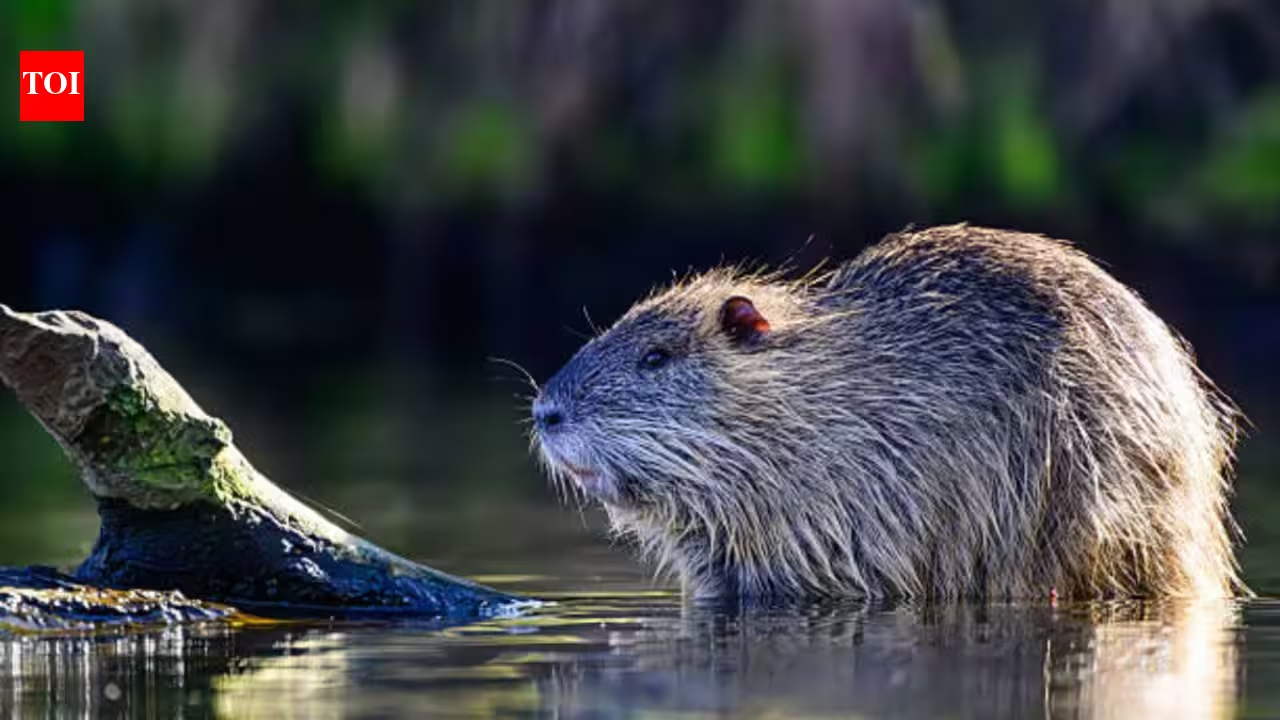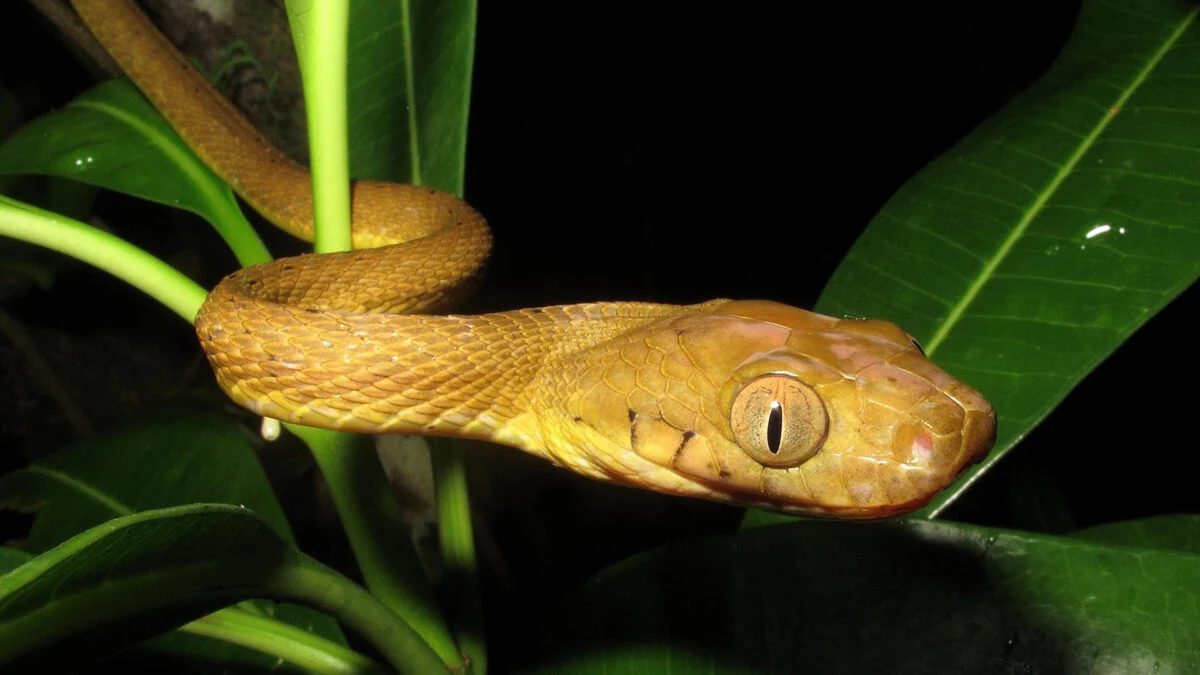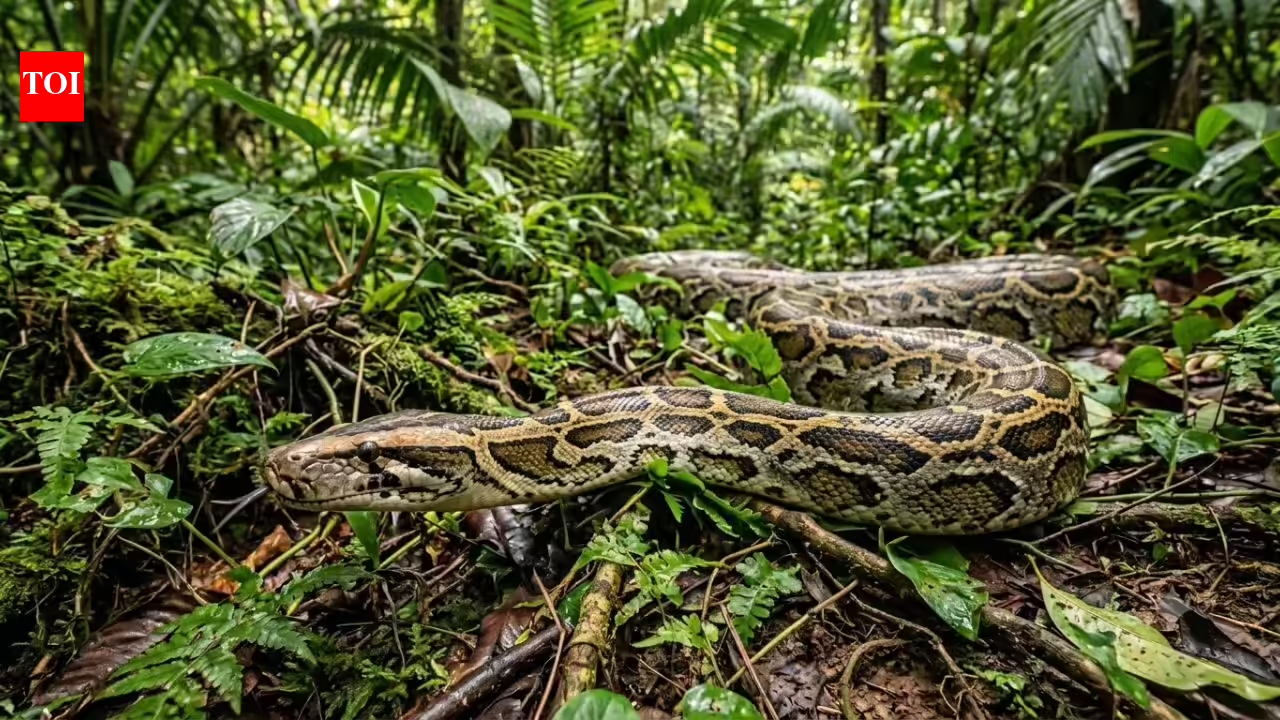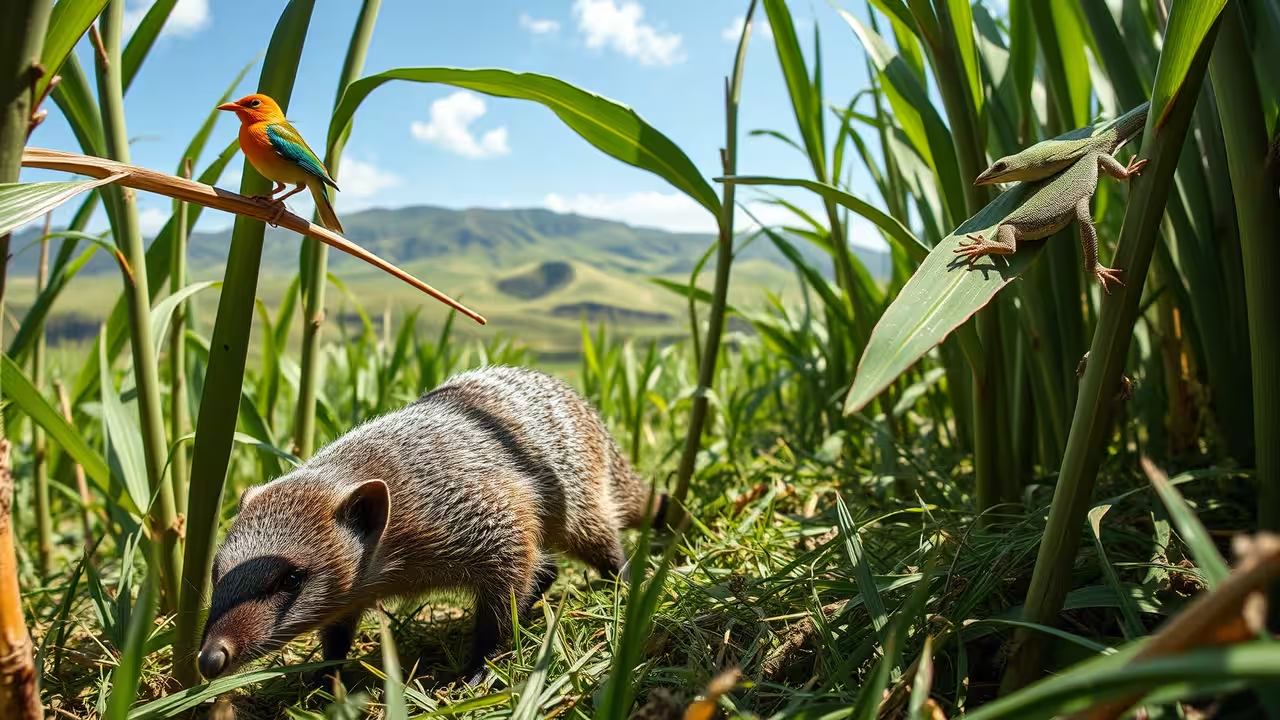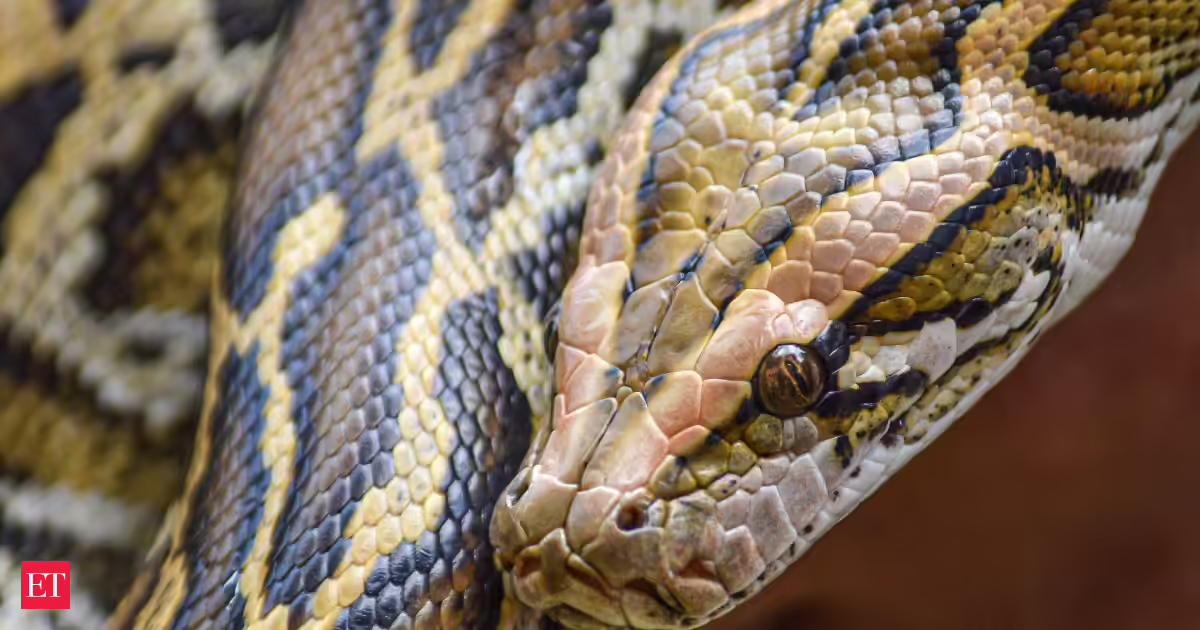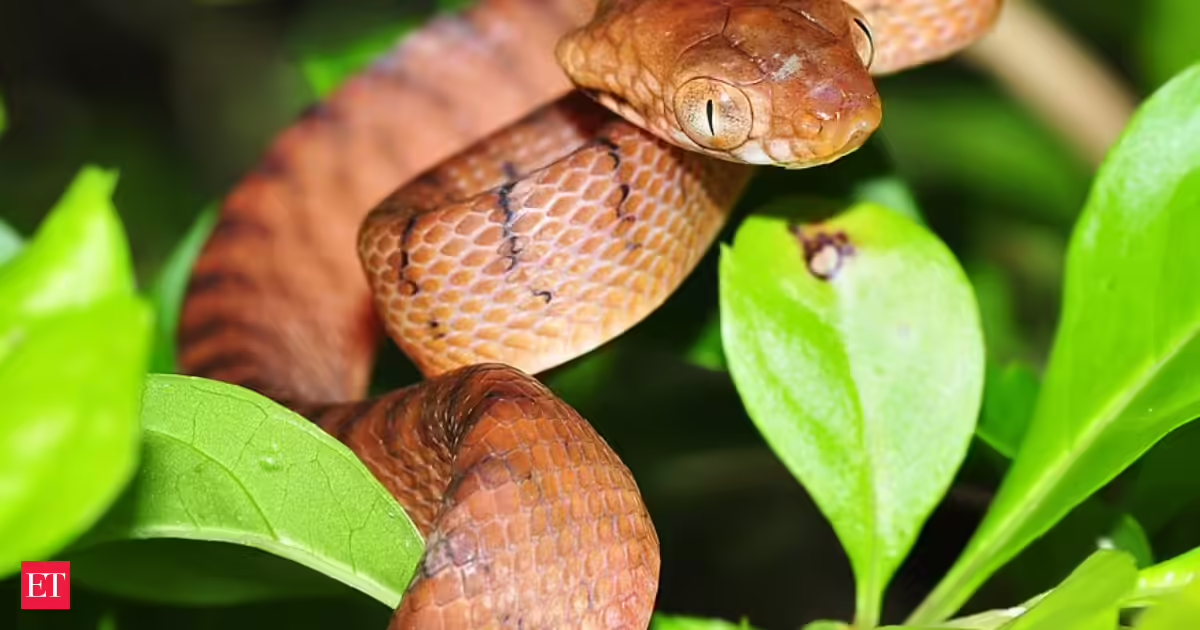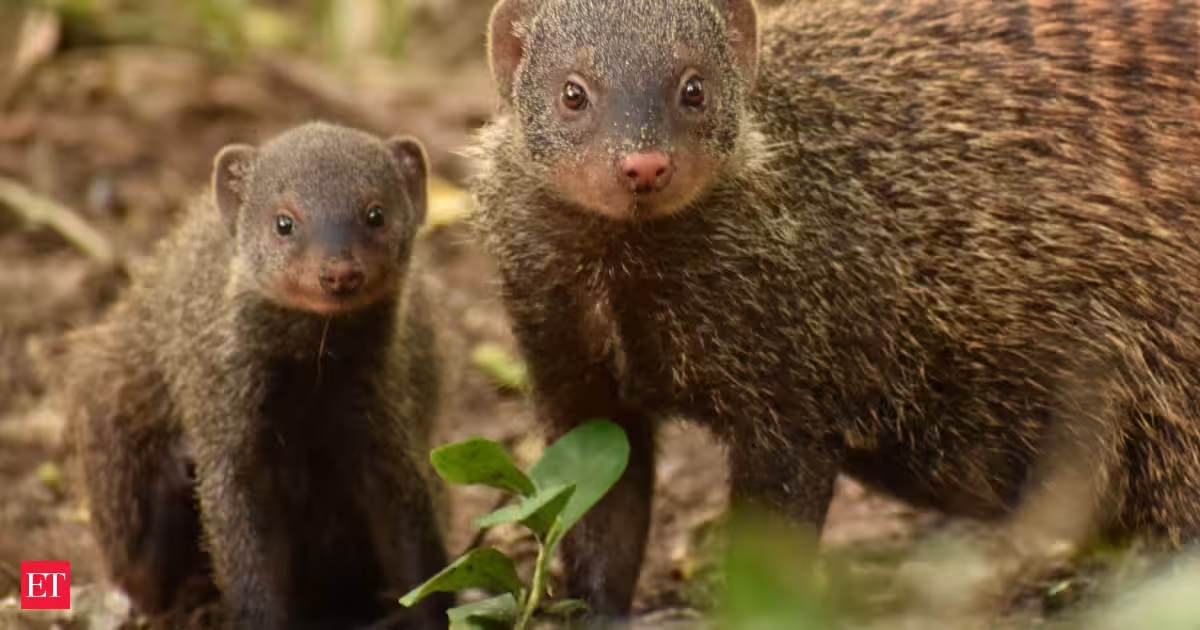
Jamaica’s sugar profits were being nibbled away by rats, so one planter imported a small predator to fix the problem. And it worked, for a while. Then everything else started disappearing too. According to a 2023 study by historian Matthew Holmes, published in the British Journal for the History of Science, this 19th-century experiment is one of the clearest early warnings about what happens when humans move a predator to a place it’s never lived.A rat problem that seemed easy to fixIn the 1800s, Jamaica’s colonial economy was built on sugarcane, and rats were destroying huge sections of every harvest. In 1872, William Bancroft Espeut, a Jamaican planter, imported nine little Indian mongooses, a weasel-like carnivore native to South Asia, to his plantation, hoping that they would eat the rats and save the crop. According to this same research by Holmes titled ‘A plague of weasels and ticks: animal introduction, ecological disaster, and the balance of nature in Jamaica, 1870–1900,’ the idea caught on quickly, and mongooses were soon being introduced across Jamaica and then other Caribbean islands with the same goal.At first it looked like a success. Mongooses hunt by day, unlike the mostly nocturnal rats, so they filled a gap no native predator had filled. Rat damage on many plantations dropped, and planters elsewhere asked for mongooses of their own.Before the mongoose, rats were the problem sugar planters were desperate to solve. Image Credits: PexelsA predator that did not stop at ratsThe problem is that mongooses do not only eat rats. As rats grew harder to find, the mongooses turned to Jamaica’s ground-nesting birds, lizards, snakes and other native reptiles, animals that had never faced a swift, daytime predator like this before. This created a second problem no one had predicted.In the Holmes study, many of the birds and reptiles killed by mongooses used to eat ticks, so with fewer tick-eating predators left, the tick population exploded. British observers of the time called it a “plague of weasels and ticks”, while some colonial naturalists insisted that nature would just rebalance itself. It didn't, at least not on any time scale that helped the people or wildlife dealing with the fallout.The damage spread far beyond one islandThis was not a one-off mistake. In the decades that followed, the tiny Indian mongoose was brought to dozens of islands in the Caribbean and Pacific, always for the same reason: to control rats.The 2020 study, ‘The globally invasive small Indian mongoose Urva auropunctata is likely to spread with climate change,’ published in Scientific Reports, now lists it as one of the most damaging invasive carnivores in the world, associated with declines and extinctions of amphibians, reptiles, birds and small mammals across many areas where it has been introduced, including islands near the US mainland such as Puerto Rico and the US Virgin Islands.On St Kitts specifically, according to a study published in Parasites & Vectors, the mongoose has been tied to the extinction of several native species, including a racer snake, a skink, a frog, and a ground lizard.Ameiva erythrocephala, once common across St. Kitts, was wiped out by the mongoose introduced to hunt rats. Image Credits: Wikimedia CommonsIn the study’s global review, the authors note that the mongoose was introduced to more than 60 islands and is now associated with declines and extinctions of amphibians, reptiles, birds and mammals in many of those places. They also highlight its opportunistic diet and its ability to live from farmland and peri-urban areas to forests, mangroves and coastal habitats, which helps explain why it has been so hard to control.A pattern familiar to the USAmericans do not have to look far for a similar story. According to an analysis by the US Geological Survey, Burmese pythons introduced to the Everglades have driven raccoon populations down by 99.3 percent and opossum populations down by 98.9 percent since 1997, since the snakes had no natural predator to keep them in check. Even the common house sparrow followed a similar path: according to the American Bird Conservancy, it was deliberately released in Brooklyn in 1851 to control caterpillars, and within decades it had spread across the entire continental US, competing with native songbirds for nesting space.The Jamaican mongoose story from 1872 is a reminder that ecosystems are complicated webs, not simple machines you fix by swapping in one new part. Removing a pest rarely solves a problem in isolation, and adding a new predator can have ripple effects nobody sees coming until it is too late. More than 150 years later, the nine mongooses brought in to save a sugarcane crop remain one of history's clearest examples of a good intention gone very wrong.
In 1872, a Jamaican planter imported nine mongooses to kill rats in his sugarcane fields; the predators then turned on native birds and reptiles
In 1872, nine mongooses were imported to Jamaica to control rat populations but led to the decline of native species and ecological imbalance, highlighting the dangers of introducing non-native predators.
777 words~4 min read