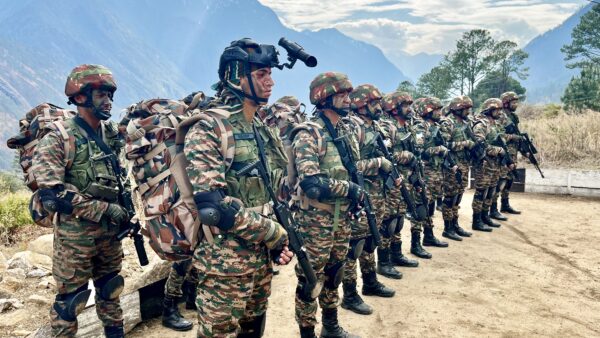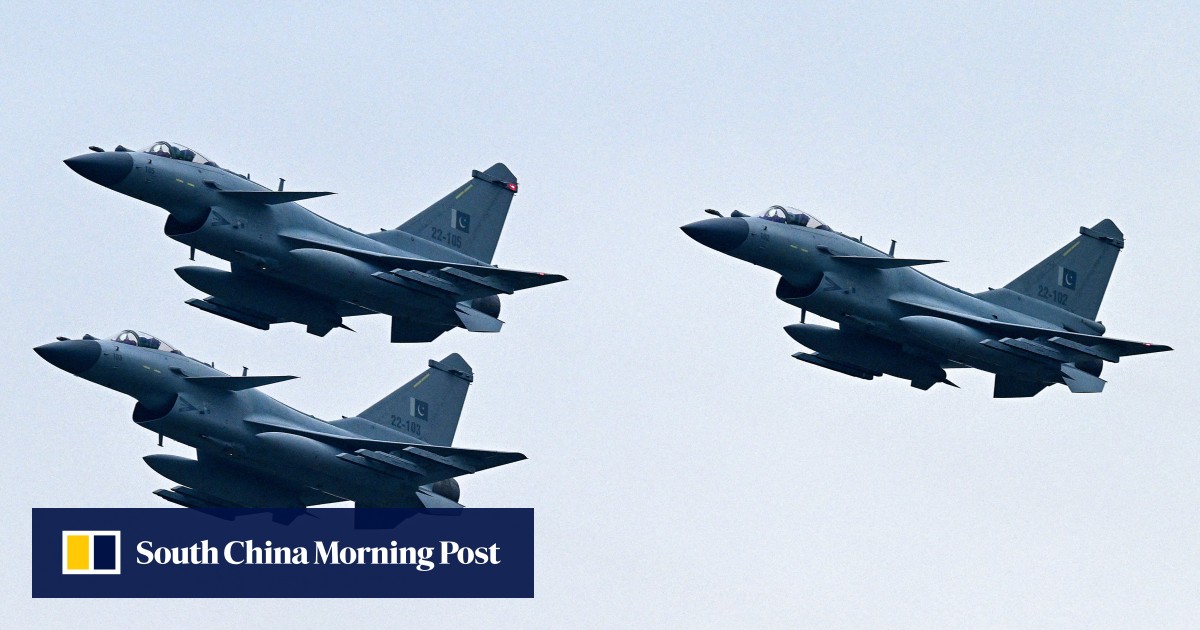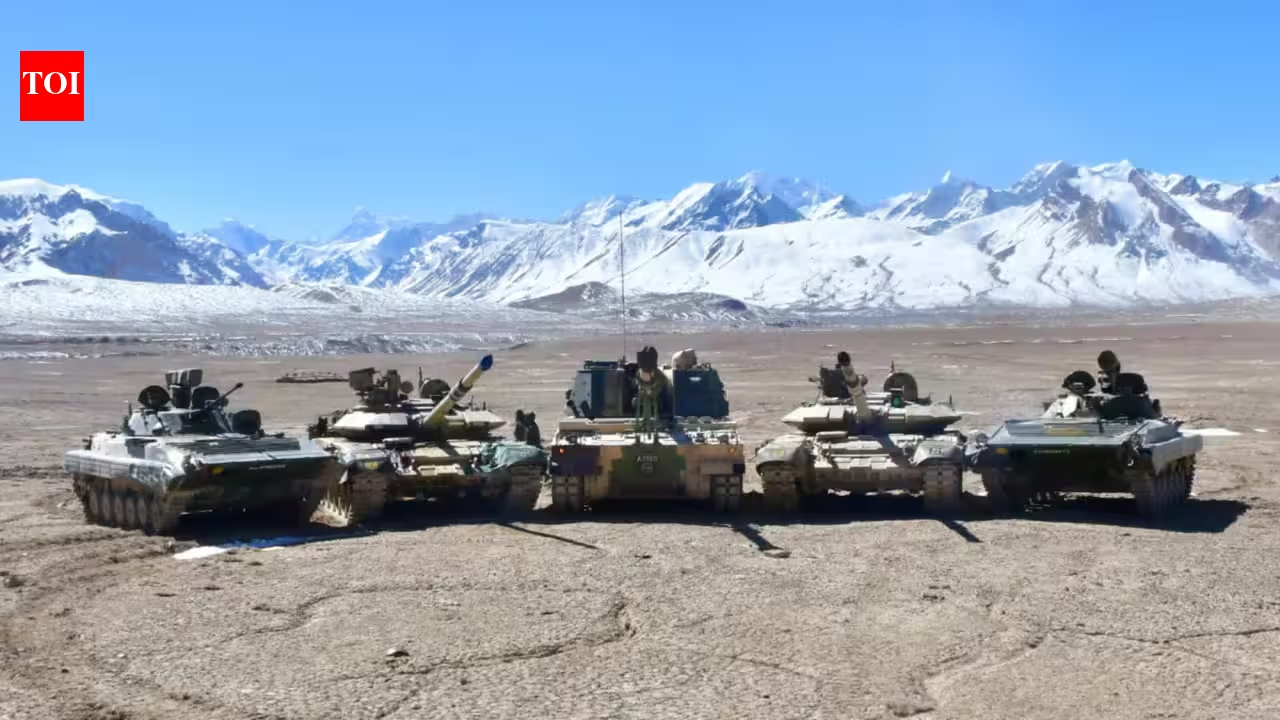
Indian army's armoured vehicles deployed in Ladakh. (Image credit: Indian Army)The image of war that has shaped military thinking for generations—columns of tanks advancing across borders, infantry assaults and prolonged artillery duels—is rapidly becoming obsolete. The first shots of tomorrow's wars are more likely to be launched through cyberattacks that cripple power grids, drones striking strategic targets hundreds of kilometres away, disinformation campaigns that divide societies, satellite-enabled surveillance, economic coercion and proxy violence. Operation Sindoor is just a small example. Modern conflict is increasingly fought simultaneously across the land, sea, air, cyber, space and information domains.The wars in Ukraine, the Middle East and the Indo-Pacific have demonstrated that technological innovation and information dominance can outweigh sheer military strength. Inexpensive drones have destroyed multi-million-dollar tanks and warships. Cyber operations have disrupted critical infrastructure. Proxy groups have imposed heavy costs on technologically superior militaries. Military success is no longer determined solely by the number of soldiers or platforms, but by the ability to integrate technology, intelligence, speed and political resolve.Turn & Burn: The Untold Story Of Op Sindoor Reveals How Pak's AWACS Failed To Escape India's S-400India's changing security challengeFor India, this transformation is not an academic debate—it is a strategic reality. The country no longer faces the prospect of two separate conventional wars with China and Pakistan. Instead, it confronts an increasingly coordinated challenge in which Pakistan acts as the operational executor while China provides intelligence, surveillance, cyber capabilities, satellite support, electronic warfare and diplomatic backing. This is less a two-front war than a "one-front reinforced war", designed to keep India under continuous pressure without triggering full-scale conflict.Lessons from historyThis approach reflects the evolution of asymmetric and hybrid warfare. Throughout history, weaker powers have avoided confronting stronger adversaries directly. Instead, they exploited weaknesses through mobility, deception, intelligence and psychological operations. From the Scythians exhausting the mighty Persian Empire through mobility and scorched-earth tactics, to the Greeks using the narrow pass at Thermopylae to negate Persian numerical superiority, history repeatedly demonstrates that innovation often triumphs over brute strength. Sun Tzu distilled this principle more than two millennia ago: avoid the enemy's strength and strike at his weakness.India's own civilisational and military heritage offers similar lessons. In the Mahabharata, Lord Krishna guided the Pandavas to victory not through superior numbers but by exploiting the vulnerabilities of a stronger opponent. In the Ramayana, Hanuman's mission to Lanka resembled a modern special operations raid, combining intelligence gathering, psychological warfare and precision sabotage. Indian history is equally rich in asymmetric success. Chanakya weakened the Nanda Empire through espionage and political subversion before military confrontation. Chhatrapati Shivaji Maharaj perfected Ganimi Kava, using mobility, intelligence and surprise to challenge the vastly larger Mughal Empire. Lachit Borphukan's victory at Saraighat and the resistance led by Rani Lakshmibai and tribal leaders such as Alluri Sitaramaraju, Birsa Munda demonstrated how terrain, local support and unconventional tactics could offset conventional inferiority.Modern conflicts, modern lessonsThe twentieth and twenty-first centuries have reinforced these timeless principles. Vietnam showed that overwhelming military superiority can be defeated by resilience, guerrilla warfare and political determination. Ukraine has demonstrated how inexpensive drones and autonomous systems can impose devastating costs on a conventionally superior adversary. Iran has refined proxy warfare, swarm drones and missile forces into an effective strategy for deterring stronger opponents without engaging in direct conflict. Together, these examples confirm that future wars are increasingly decided not by mass but by innovation, technology and the ability to exploit an adversary's vulnerabilities.The emerging China–Pakistan hybrid axisChina has embraced these lessons with remarkable sophistication. Rather than risking a large-scale conventional war, Beijing increasingly relies on grey-zone tactics—cyber operations, information warfare, economic coercion and incremental territorial encroachment—to advance its strategic objectives. Pakistan complements this approach through terrorism, drones, narcotics trafficking, cyber operations and digital propaganda, while China's technological superiority enhances Pakistan's military effectiveness.Viewed independently, China and Pakistan present serious but manageable challenges. Together, however, they create a far more complex threat. China's technological superiority and strategic depth combine with Pakistan's proxy networks and hybrid tactics to produce a coordinated campaign that stretches India's military, economy and political attention across multiple domains. This evolving collusion represents the most significant transformation in India's external security environment since Independence—and it demands an equally fundamental transformation in India's approach to national defence.Is India ready for the challenge?India has recognised the changing character of warfare and has responded with significant reforms over the past decade. Massive investments in border infrastructure, indigenous defence production and advanced military technologies have strengthened deterrence along both the Line of Actual Control (LAC) and the Line of Control (LoC). The induction of systems such as the S-400 air defence system, Akash missiles, indigenous drones, long-range surveillance platforms and network-centric capabilities reflects a clear shift towards technology-enabled warfare.Institutional reforms have been equally significant. The appointment of the Chief of Defence Staff (CDS), creation of the Department of Military Affairs (DMA), Defence Cyber Agency, Defence Space Agency, Armed Forces Special Operations Division and Joint Operations Centre have laid the foundation for integrated military planning. Strategic partnerships through the Quad and intelligence-sharing arrangements with friendly nations have further enhanced India's situational awareness and deterrence.Yet, preparedness remains a work in progress. The Indian Air Force continues to operate below its authorised fighter squadron strength, Integrated Theatre Commands are yet to become fully operational, and sustaining a prolonged high-technology conflict against two coordinated adversaries would place enormous demands on national resources, logistics and industrial capacity. More importantly, organisational structures and professional military education have not fully adapted to the realities of multi-domain warfare.Building a multi-domain militaryPreparing for tomorrow's wars requires much more than acquiring sophisticated weapon systems. It demands a fundamental transformation in doctrine, organisation, HR policies and command philosophy.The implementation of Integrated Theatre Commands should therefore become India's foremost military reform. Unified Northern, Western and Maritime Commands will enable faster decision-making, better resource allocation and seamless coordination between the Army, Navy and Air Force. Theatre Commands must be supported by specialised organisations responsible for cyber warfare, space operations, cognitive warfare, geospatial intelligence and secure communications so that commanders receive real-time information from every operational domain.Emerging technologies also require new organisational models. Training, doctrine and procurement for drones should remain centralised through a Joint Drone Warfare Centre, while operational control should rest with Theatre Commanders. Similarly, military satellites and space assets should remain under the Defence Space Agency, with intelligence distributed instantly to operational formations. Strategic Air and Missile Defence should continue under the Indian Air Force's integrated command architecture while remaining fully responsive to theatre-level operational requirements.Training for tomorrow's warsTechnology alone cannot compensate for outdated thinking. India's military education system must evolve from its conventional orientation towards comprehensive preparation for hybrid and multi-domain conflict.Professional military education should integrate artificial intelligence, cyber operations, electronic warfare, autonomous systems, data analytics and information operations alongside traditional combat skills. Officers of all three Services should routinely train together through realistic multi-domain exercises involving drones, cyber attacks, electronic warfare and information operations. Training centres must be built upon existing infrastructure and expertise rather than opening new centres.A clear example is to build upon the infrastructure, expertise and qualified instructors in UAV over decades who can handle drone warfare at School of Artillery. Innovation , experimentation and rapid adaptation must become central features of military culture rather than exceptions.Equal attention must be devoted to cognitive warfare. Future conflicts will attempt to weaken public confidence through deepfakes, disinformation and psychological manipulation long before military operations commence. Preparing commanders to recognise, counter and exploit these non-kinetic threats will be as important as mastering conventional battlefield tactics.Beyond an infantry-centric forcePerhaps the most fundamental organisational challenge is moving beyond an excessively infantry-centric approach to warfare. Infantry will always remain indispensable for holding ground and fighting close battles, particularly along India's contested borders. However, modern conflicts are increasingly shaped by drones, cyber operations, artificial intelligence, electronic warfare, space-based intelligence and long-range precision fires.An organisational culture that disproportionately prioritises one arm risks underinvesting in the technical arms and specialist capabilities that increasingly determine operational success. The future battlefield will reward integrated teams rather than individual branches. Artillery, armour, aviation, air defence, engineers, signals, cyber, space and unmanned systems must receive equal institutional emphasis as part of a truly all-arms, multi-domain force. The objective is not to diminish the infantry but to ensure that every combat arm contributes fully to a network-enabled system of warfare.Five priorities for India's military transformationIndia's strategic transformation should now focus on five priorities. First, complete the implementation of Integrated Theatre Commands to achieve genuine jointness. Second, accelerate indigenous development of drones, artificial intelligence, electronic warfare systems and autonomous platforms under Atmanirbhar Bharat. Third, reform professional military education to prepare leaders for technology-driven, multi-domain operations. Fourth, strengthen collaboration between the armed forces, academia, industry and the private sector to build a resilient defence innovation ecosystem. Finally, deepen strategic partnerships with like-minded nations to enhance intelligence sharing, maritime security, cyber resilience and advanced technology cooperation.Collectively, these reforms will not merely improve military preparedness; they will strengthen India's ability to deter conflict by convincing potential adversaries that aggression will prove prohibitively costly.Winning the war before it beginsHistory's enduring lesson is that nations rarely lose wars because they lack courage; they lose because they prepare for the wrong kind of war. The defining feature of twenty-first-century conflict is that it begins long before armies mobilise. Cyber attacks, disinformation campaigns, economic coercion, drones, proxy violence and space-based intelligence now shape the battlefield well before the first conventional engagement.The collusive challenge posed by China and Pakistan is therefore not simply a military problem—it is a test of India's capacity to integrate every instrument of national power. India has already taken important steps through institutional reforms, infrastructure development and defence modernisation. However, the pace of technological change demands even greater urgency. The objective should not merely be to modernise existing structures but to transform the Indian Armed Forces into a fully integrated, technology-driven, multi-domain force capable of deterring and, if necessary, defeating aggression across the entire spectrum of conflict.India's strategic future will depend not on preparing for yesterday's wars but on anticipating tomorrow's. In the era of asymmetric and hybrid warfare, the decisive advantage will belong to the nation that best integrates technology, intelligence, jointness, innovation and national resilience. For India, the strategic imperative is therefore unmistakable: transform today, deter tomorrow, and prevail before the first shot is fired.
The next war will not begin at the border India must prepare for a China–Pakistan hybrid threat - The Times of India
News News: The image of war that has shaped military thinking for generations—columns of tanks advancing across borders, infantry assaults and prolonged artiller.
1,719 words~8 min read