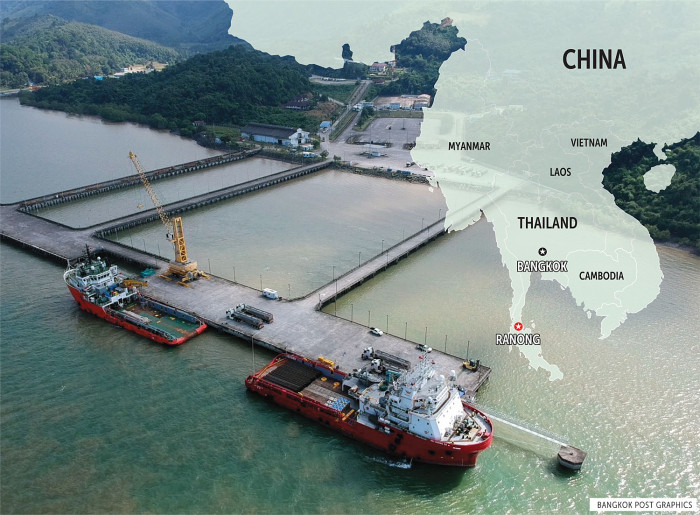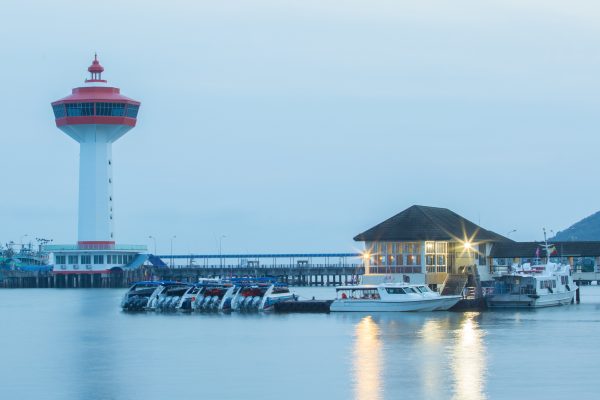
In late April, Sebastian Strangio and I penned separate articles for The Diplomat highlighting how Thailand’s ambition to build a “land bridge” across its upper southern provinces as an alternative trade route to the Strait of Malacca – via two deep-sea ports linked by a dual-track railway and a six-lane motorway – was increasingly framed by Thai leaders as an imperative amid deepening geopolitical volatility. What we said lost relevance quickly, with the shelving of the one-trillion-baht megaproject coming to light on July 24.
The announcement was made verbally by Deputy Prime Minister and Finance Minister Ekniti Nitithanprapas, citing unfavorable findings in a government feasibility study. Just as too many skeptics have loudly reasoned, the projected financial return does not look promising. The operational requirement to repeatedly load and unload goods is too much of a hassle and may end up taking more time than shipping through the supposedly longer Malacca route.
Another guaranteed problem is environmental damage. Constructing a 90-kilometer transport corridor entails seaward land reclamation of roughly 13,000 rai in two ecologically rich provinces: 7,000 rai in Ranong on the Andaman Coast and 6,000 rai in Chumphon facing the Gulf of Thailand. This far exceeds 5,257 rai (2,411 during Phase 1 and 2 construction, and 2,846 as part of the unfinished Phase 3 expansion) of sea area reclaimed for Laem Chabang Port, Thailand’s main international deep-sea terminal in the Eastern Economic Corridor (EEC).