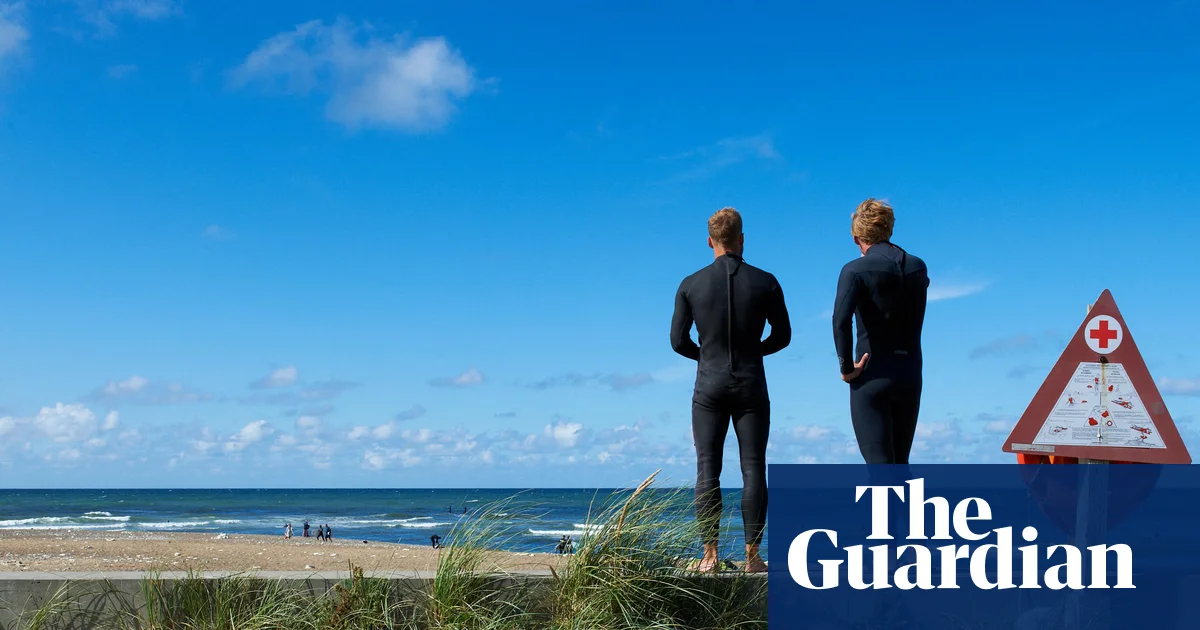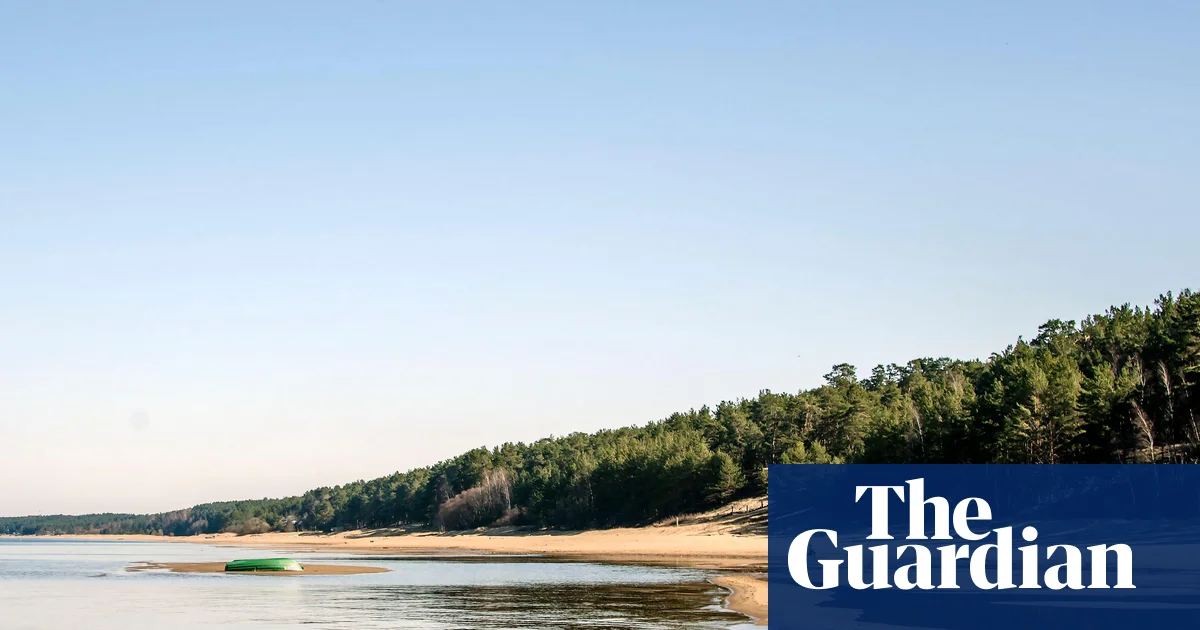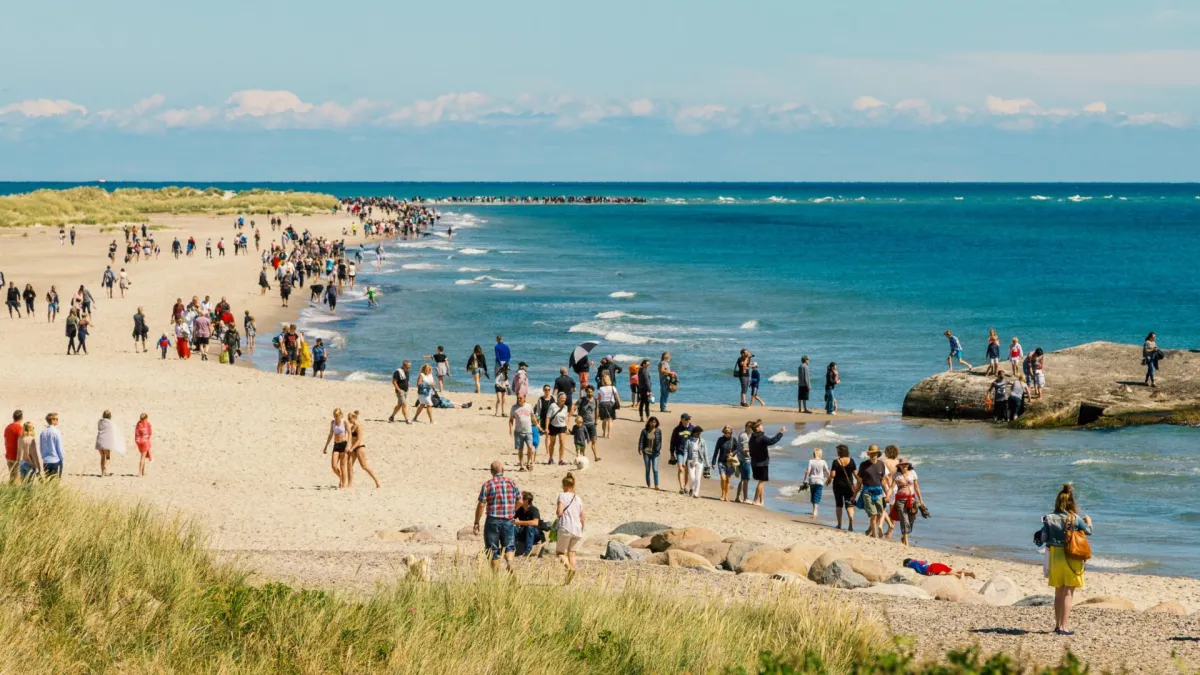
As the glare of the sun starts to soften, I set off for the beach, passing bulky steel buildings on the harbour and rows of yellow houses with terracotta roof tiles and neat picket fences. I’m not alone. People with rattan hampers and woollen blankets are heading in the same direction and a crowd has already assembled.
I clamber up a steep dune, the fine grains shifting under my feet, and look for an empty spaces. Normally the west coast of the peninsula is the place to be at sunset, but not tonight.
Skagen, Denmark’s northernmost town, sits on a narrow strip of land at the top of Jutland. It’s midsummer, Sankt Hans Aften (Saint John’s Eve), when bonfires are lit along the coast and across the country. Singing, quiet chatter and a subdued sense of excitement fill the air until the pile of dry branches on the beach is finally lit, the flames taking hold in seconds.
This particular scene on the eastern beach of Sønderstrand was made famous by Danish artist PS Krøyer in 1906. His large canvas painting, Midsummer Eve Bonfire on Skagen’s Beach, is known all over Denmark and remains one of the main reasons people come here in June.
Summer Day at the South Beach, Skagen. The painting is an 1884 oil canvas by the renowned Danish realist and impressionist artist Peder Severin Krøyer (Photo: Picturenow/Getty)