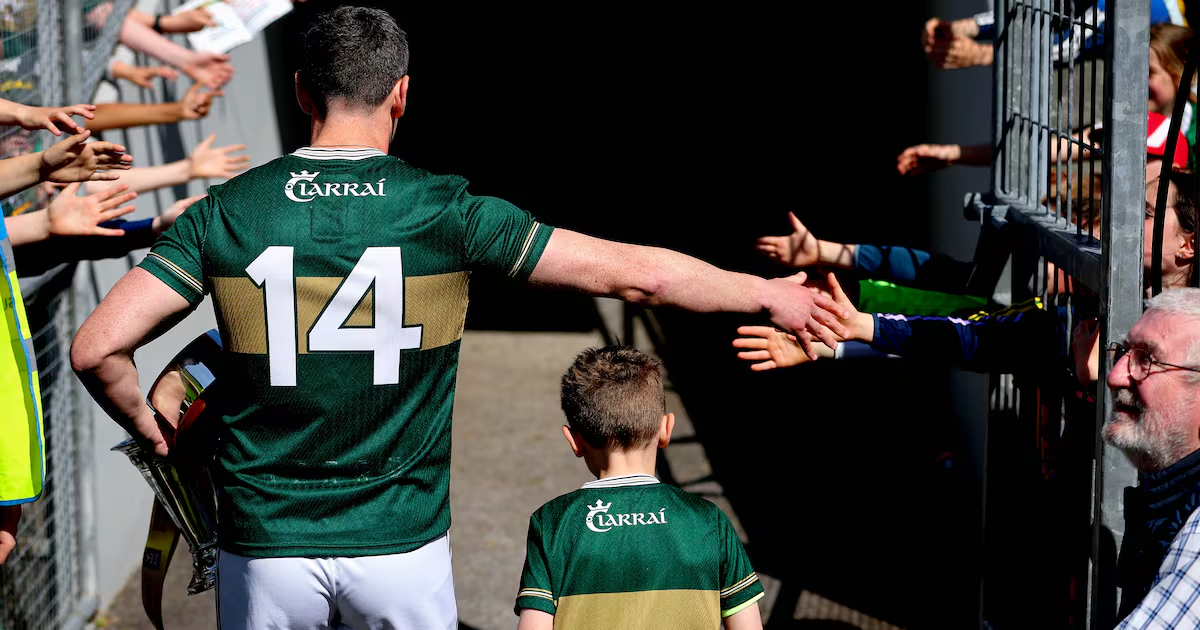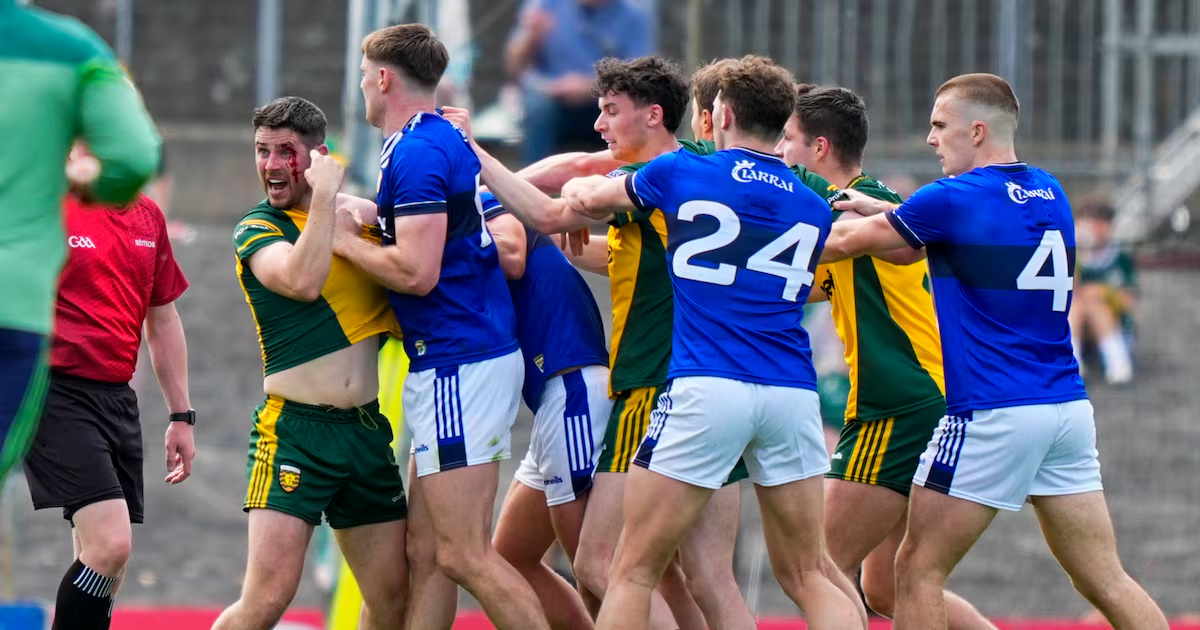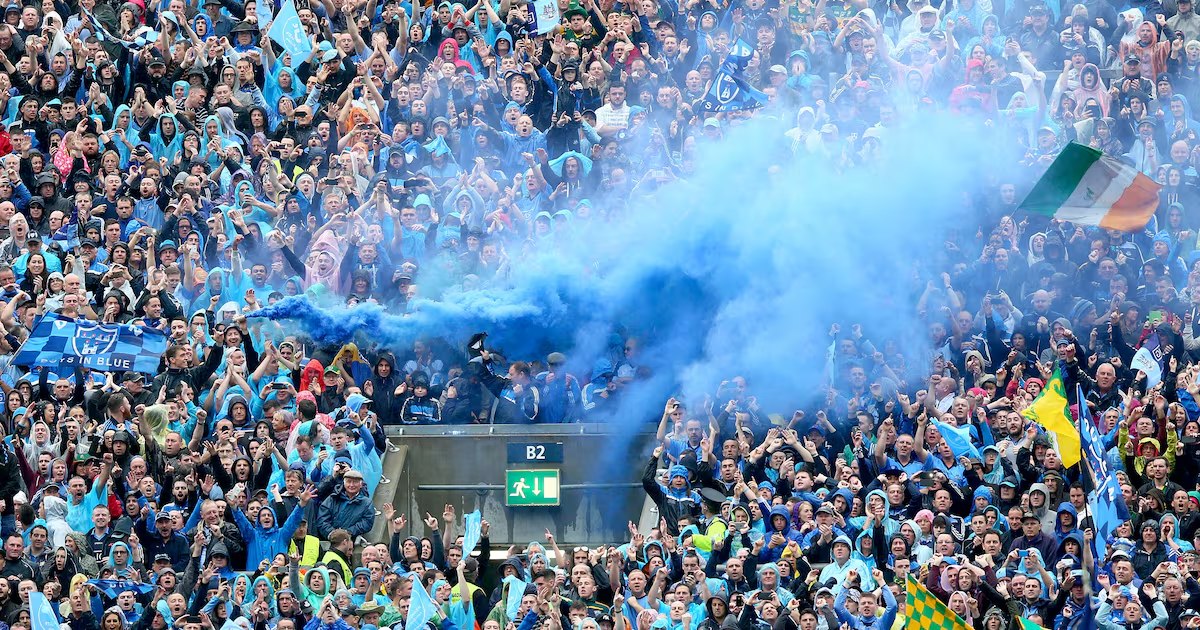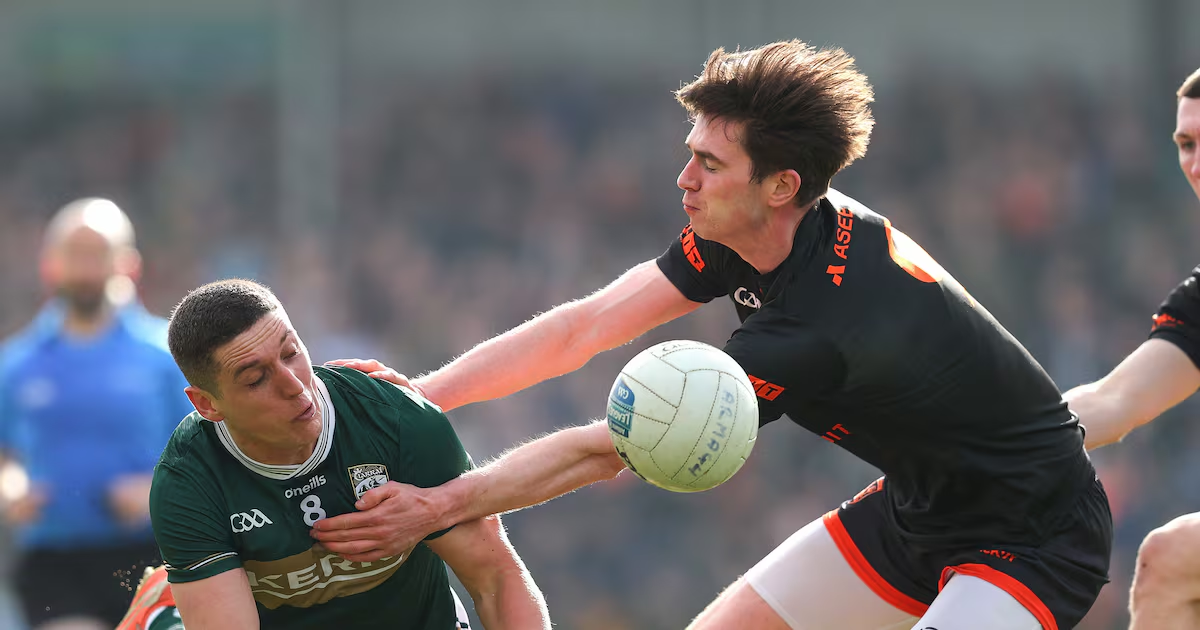
In the GAA, the agonising doesn’t have a split season. As soon as football is fixed, hurling is broken. The new calendar has been agreed and yet the fighting continues. The wrong games are on telly, too many games are behind a paywall. Club players have been training for too long: waiting. Intercounty players have been training for too long: flogged. The GAA is a worrier. There are too many stakeholders and competing interests. Too many people care. That fault is beyond repair.Once the All-Irelands are over, there is too much time to think in one side of the GAA house, and not a minute to scratch in the other. John Kiely pointed out last week that the opening games of the Limerick Premier Intermediate hurling championship were scheduled for the weekend just gone. The senior championship begins next weekend. Players are scampering over the bridge while it burns behind them.In Kerry, as Jack O’Connor complained again recently, the players are facing into three separate club championships before the year is out. O’Connor said that it was “crazy”, and, in his view, unsustainable. Kiely spoke about the danger of breaking players if they are pushed “beyond the elasticity of commitment”.In these situations, though, everybody makes choices. According to Kiely, Limerick were together for 34 weeks and took just five days off over Christmas. By that reckoning, they had resumed collective training in the last week of November, which is when the GAA formally permits intercounty teams to train together. However, intercounty players all over the country will have been following gym programmes or running plans for at least a month before that. Many of them will have been getting together in blatant contravention of the training ban. Nobody believes that doing less, or obeying the rules, will give them a competitive advantage. And there is no uprising from the players against this tyranny because everyone is afraid of being left out.Eleven of the players who appeared in the All-Ireland final for Limerick last weekend also played a part in the Munster league final on January 17th. Gearóid Hegarty, the hurler of the year elect, played two of their preseason games in full and came on as a late sub in the other. David Clifford started and finished the McGrath Cup final for Kerry, also in the middle of January. Games that meant nothing then and mean less than nothing now.Gearóid Hegarty greets fans. Photograph: James Crombie/Inpho How much of that was necessary? None of it. How much of it was a choice? All of it.There has been a rising chorus of dissent against the current system for the hurling championship and the merciless guillotine at the provincial stages. The round robin phase takes 35 days from start to finish, but four of the five counties who failed to qualify this year knew their fate within 28 days. A similar equation will play out all over the country in the coming weeks. Club teams that have been training since January will be eliminated less than a month after they play their first-round game. By then, some of them will have been training together longer than Limerick were. The split-season has provided scheduling clarity for club players, which was the biggest problem with the old calendar. However, it has created another monster: the lead-in time between the first day of training and the matches that matter is as long as it ever was for intercounty players, but it is longer than ever before for club players.What has been lost is proportionality. The intercounty hurling teams that were eliminated in the middle of May were not idle last October. A championship campaign that lasted five weeks had been seven months in the making. For club teams it is a similar timetable. Every serious team will have resumed running or gym work in January for a championship that won’t start until late July or early August. Very few teams will wait. Nobody feels that doing less is a master plan.Westmeath’s Conor Dillon celebrates after beating Dublin in the Leinster Football Senior Championship final. Photograph: James Crombie/Inpho What the new calendar has inadvertently created is more dead time and more waiting. Any team that didn’t reach a football league final, for example, had at least three weeks off before their first championship match, and some counties had five. And any team that was beaten in their opening game of the provincial championship had at least a month off. Mayo, Meath and Kildare had five weeks; Tyrone and Cavan had six. Between the end of the league and the start of the All-Ireland series, some counties played one game in two months. The intercounty season is routinely described as “compressed” now, but how can those gaps appear in a “compressed” season? The calendar is like sourdough bread: a crusty exterior, with trapped air pockets inside. Over the last two seasons, the provincial championships have been energised by the victories of Louth, Westmeath and Roscommon. However, Kerry were the only one of this year’s provincial winners to still be standing at the quarter-final stage. How long before teams with designs on the Sam Maguire avail strategically of the trapped air pockets afforded by the current calendar and decide that one game in two months would be the smartest way to reset before an All-Ireland campaign? [ Recollections from the road: The highs, lows and what I’ll miss after 32 years as a GAA correspondentOpens in new window ]In the hurling calendar, there are fewer gaps, but their value was not lost on Limerick this year. They went bald for the National League partly because they had a three-week break from the final to their opening championship game and, once again, they surfed the four-week gap for provincial winners before the All-Ireland semi-finals. At the other end of the spectrum, Waterford, Tipperary, Kildare and Wexford were all eliminated from the Liam MacCarthy Cup a month before any team exited the Sam Maguire. How to correct that imbalance without torpedoing the essential competitiveness of the provincial hurling championships will exercise minds over the coming months. Is that riddle impossible to solve? Probably. In the GAA, has there ever been a solution that didn’t cause a problem? Probably not. The GAA calendar has not been fixed. The two sides of the house are living together for the sake of the children.
GAA calendar: Two sides of the house are living together for the sake of the children
Once the All-Irelands are over, there is too much time to think in one side of the GAA house, and not a minute to scratch in the other
1,061 words~5 min read