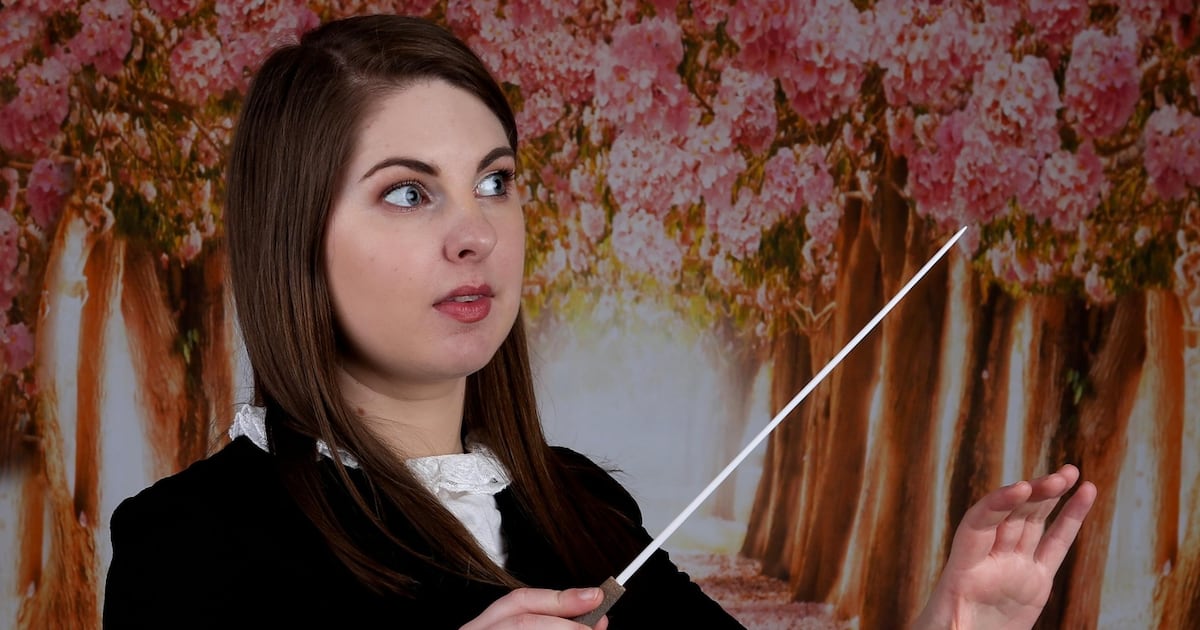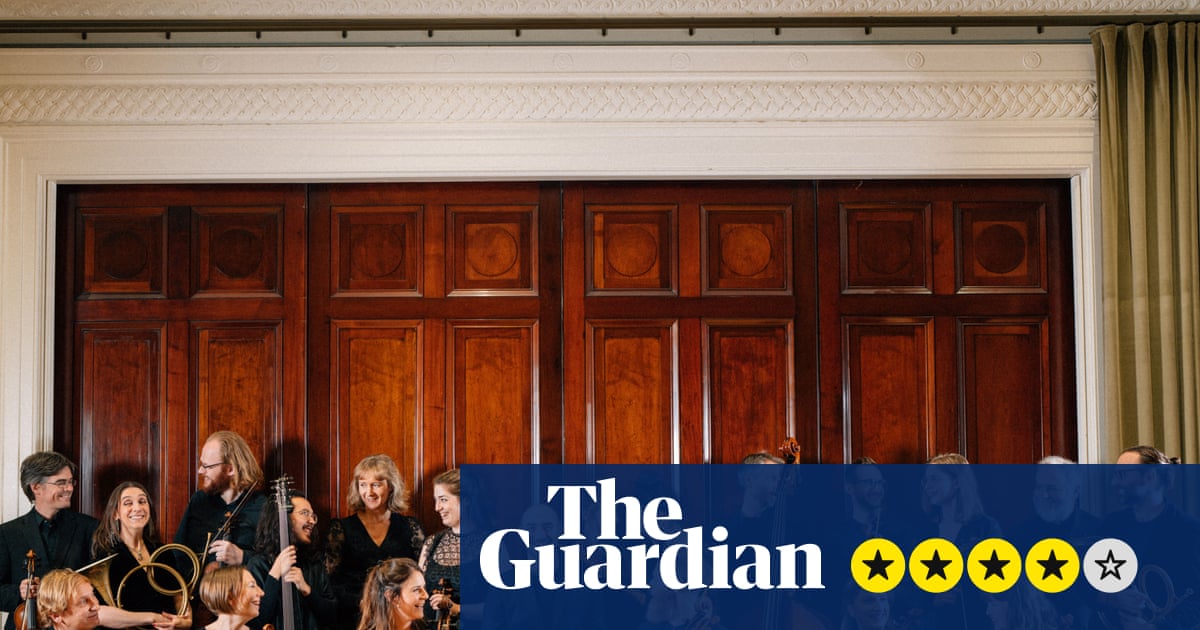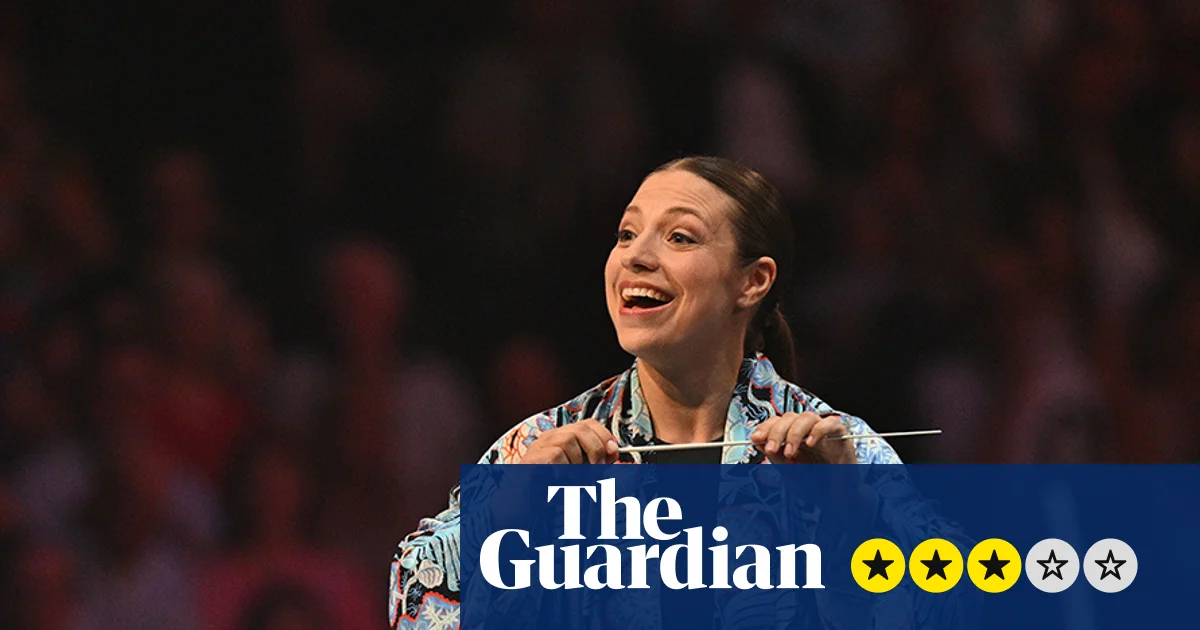
Four years ago, at a pub quiz in Cambridge, Massachusetts, my team ferociously debated a music-round question: who conducted the first performance of Handel’s Messiah?My contribution to our pursuit of a bucket of bottled beer was that one of the most performed choral works on earth premiered on Dublin’s Fishamble Street in April 1742, in a venue so oversold that women were asked to remove their dress hoops and men were told leave their swords at home.It was, of course, a trick question. Nobody conducted it, as the baton-waving maestro had not yet been invented – so Handel led from the keyboard while the orchestra was directed by the English violinist Matthew Dubourg, who held the grandiose title of Master of the State Music in Ireland. The most successful piece of classical music ever written was first led by Ireland’s official musician: three centuries ago, this country sat at the artistic summit of western civilisation.But why in Dublin? Because Ireland had a tradition so far ahead of its time: the benefit concert. Dublin’s concert societies existed to use performances to fund state welfare. The Fishamble Street hall was built by the Charitable Musical Society to pay for the release of imprisoned debtors, and the Messiah premiere’s proceeds were split between two hospitals and the jails – that one evening discharged the debts of 142 prisoners. Dublin had discovered, 243 years before Bob Geldof’s Live Aid, that art could underwrite government financial obligations, and had the institutions to do it at scale. What Georgian Dublin did not possess, however, was anyone resembling the Irish woman who walked to the front of the Royal Albert Hall in London last Saturday and took her place, to a rapturous standing ovation, at the most visible conducting podium in the world.Conductor Karen Ní Bhroin, the first Irish woman to take her place on the podium at the Royal Albert Hall in London Sadly, the Proms waited 89 seasons for their first woman conductor. And it took until last July for Karen Ní Bhroin of Co Wexford to become the first Irish woman on that podium – 130 years into the festival, and 283 years after Ireland last stood this close to the summit of this classical art. Immediately after her debut performance she was invited back for last Saturday’s performance, a year later nearly to the day. Ní Bhroin’s career tells us what changed and what hasn’t during those three centuries. Her early years show Ireland doing what we do so well. She started with a tin whistle and concertina aged four, taught by her aunt in Wexford – proof that the informal, family apprenticeship model that makes Irish trad music a global superpower can also take a musician beyond Ireland and beyond the genre. And if trad music opened the door for her career, the Feis Ceoil, Trinity and the Royal Irish Academy carried her through it. But her later years show the limits of Ireland’s ability to support her. Like every Irish conductor before her, she had to leave – through Ohio and North Carolina to a fellowship under the well-known Marin Alsop – because she had outpaced what was available in Ireland. If the first half of her biography mirrors what Ireland is already world class at, perhaps the second half is what Ireland could be, if the training that now requires a transatlantic flight could only be provided in Dublin?Which brings us back to 1742. Dublin was once a musical capital because it had the infrastructure of music halls that were built alongside the choirs, patrons and the causes that were funded creatively. Nothing about that part of our history is unrepeatable. National Concert Hall: The National Symphony Orchestra Ireland now has direct State funding for the first time The National Symphony Orchestra, after decades of wandering adrift inside a national broadcaster that could no longer afford it, was finally moved in 2022 to the National Concert Hall, ending a 75-year association with RTÉ. Now, with direct State funding for the first time, there is finally a mandate to rebuild it to full strength; an administrative decision that may be the most consequential thing done for Irish music in a generation. An orchestra that is financed to the degree that it can plan ahead is an orchestra that can train, tour and teach musicians.[ How to be a conductor: Seek out mentorships and maintain your skillsOpens in new window ]Irish people, meanwhile, aren’t waiting for Irish institutions to catch up. Peter Whelan, who led the Irish Baroque Orchestra to its Proms debut this time last year, is back again this year, days after Jennifer Davis, another Dubliner, sings there in Weber’s Oberon. And Killian Farrell, the Dublin conductor already musical director of the famed Staatstheater Meiningen, is spending part of his summer leading the National Youth Orchestra of Ireland’s own summer proms – in Wexford.Perhaps the pub quiz question wasn’t a trick after all. Somebody did lead the first Messiah, and it was an Irish State musician, at the centre of the greatest premiere in classical history. It may have taken 283 years, but Karen Ní Bhroin has just shown us that an Irish musician standing atop the classical world isn’t a historical anomaly, but a tradition interrupted – and now, perhaps, resumed.
Sinéad O'Sullivan: The Irish woman conducting the Proms is part of a long tradition. Yes, you read that right
Why was Handel’s Messiah first performed in Dublin? Because 243 years before Bob Geldof’s Live Aid, Ireland invented the benefit gig
882 words~4 min read