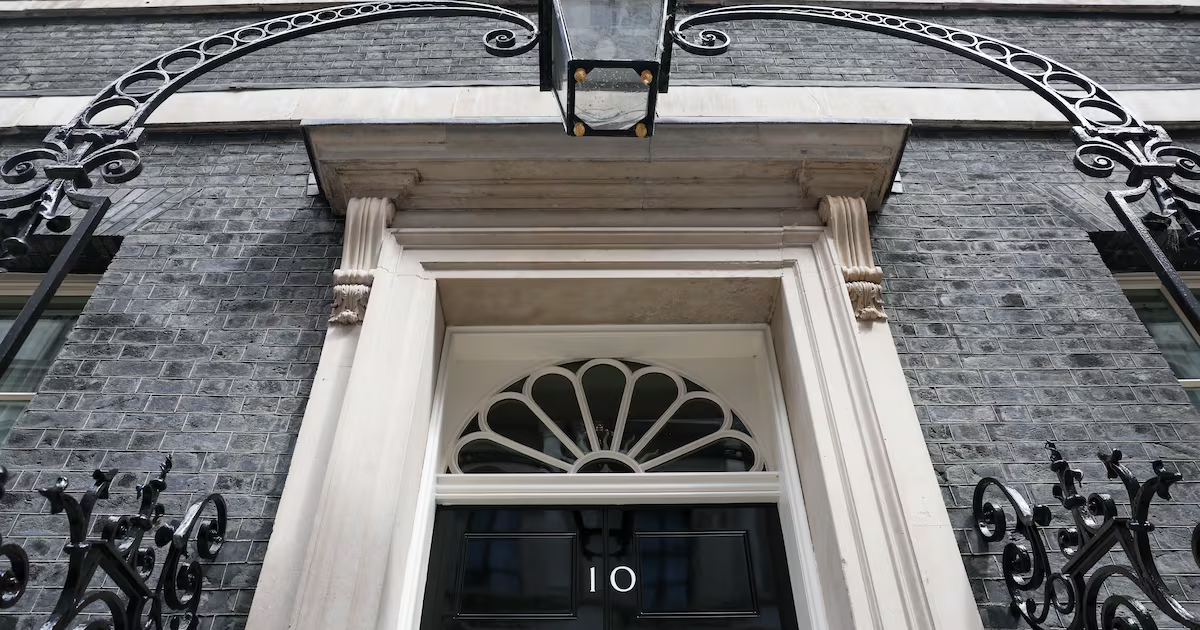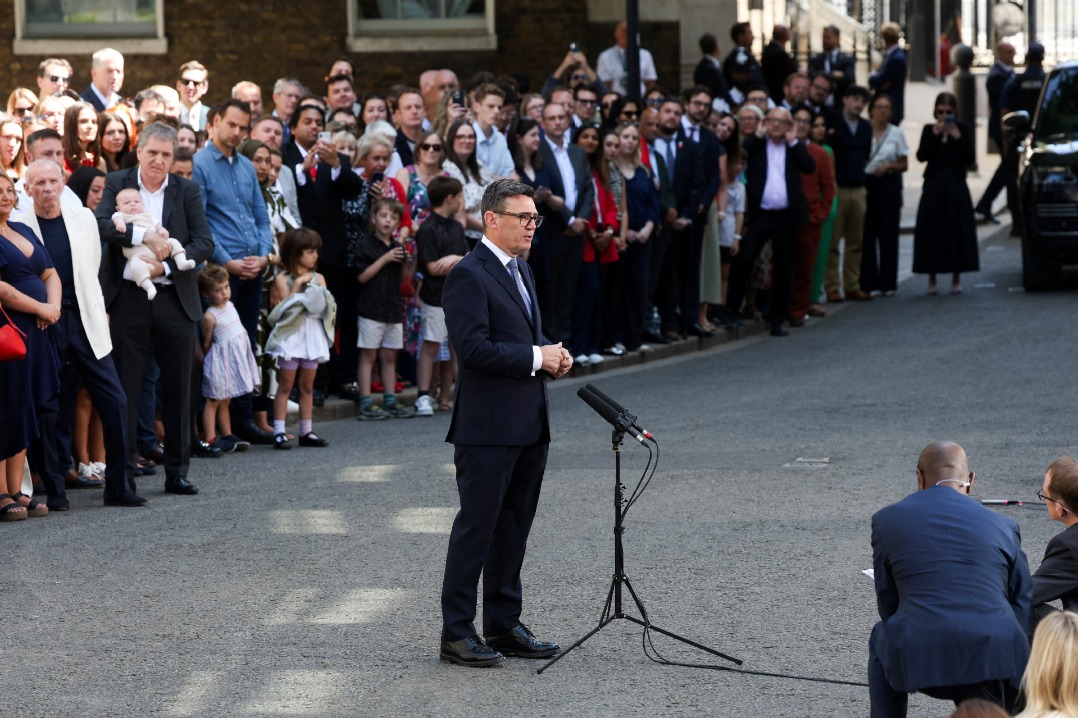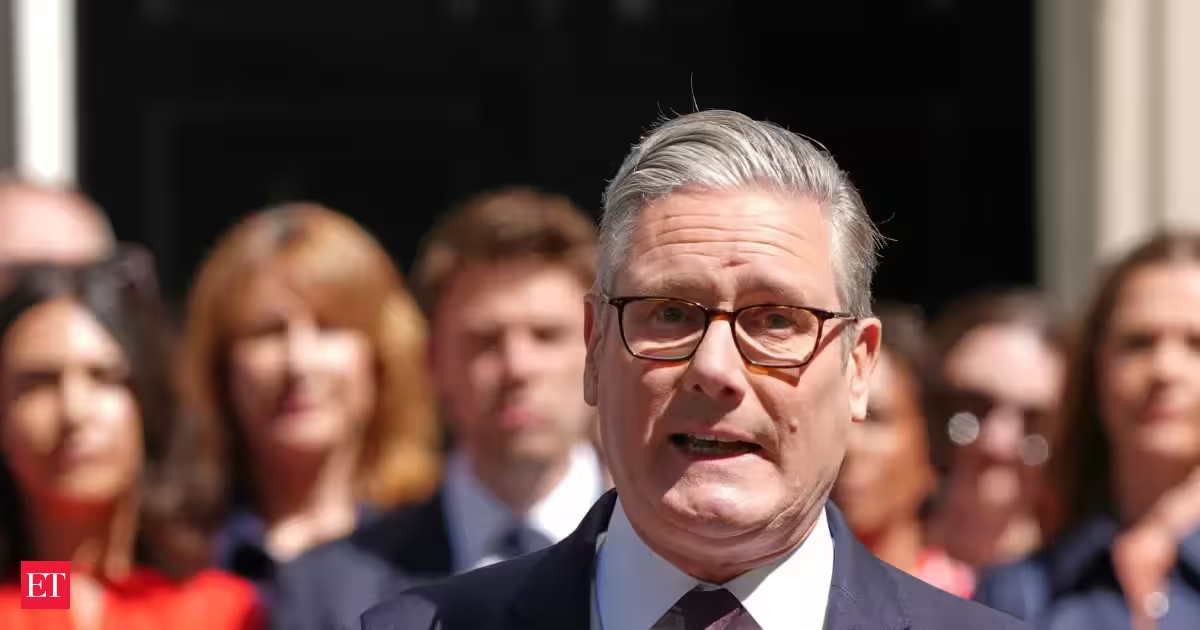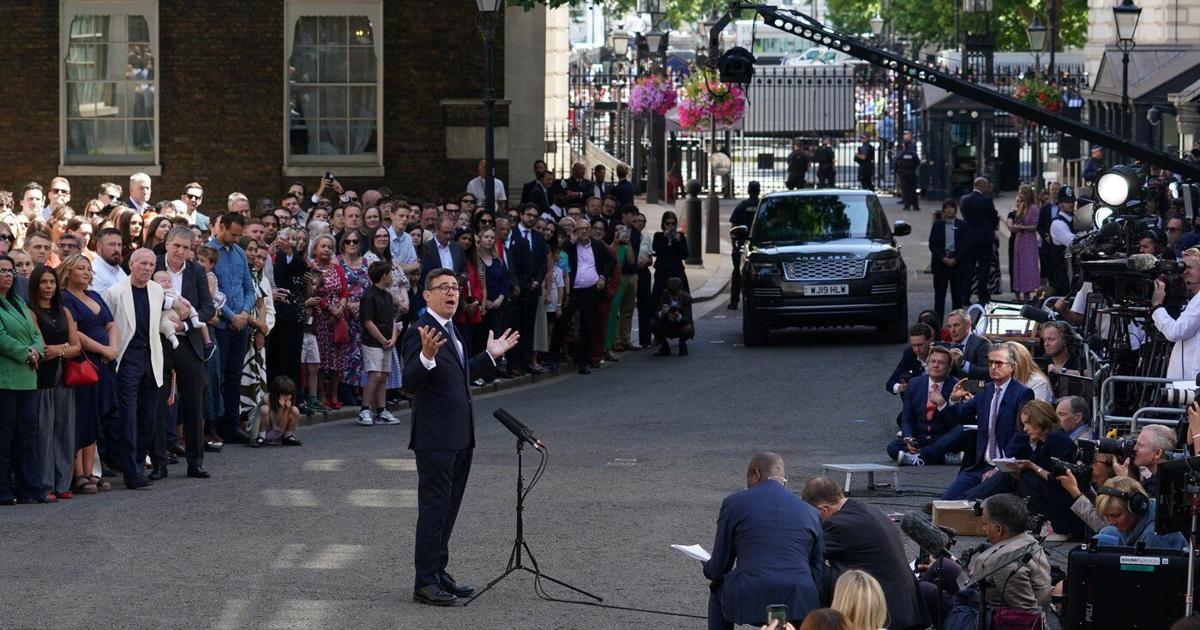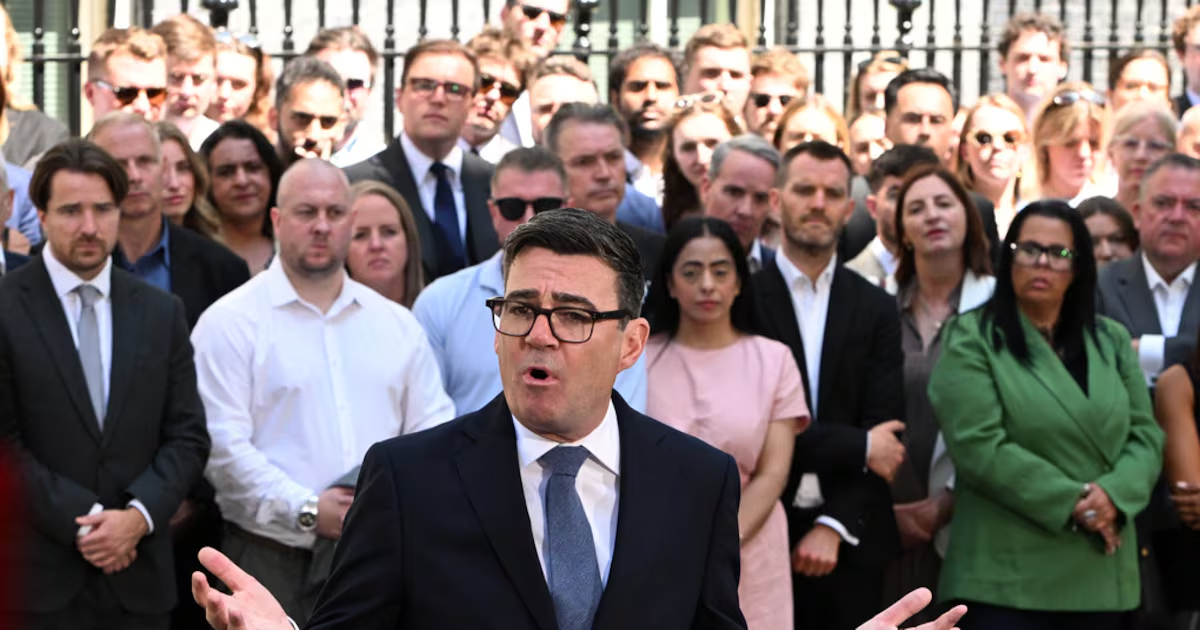
Andy Burnham officially assumed the British prime ministership last week. He is the seventh person to walk through the doors of Number 10 Downing Street in the past 10 years. Turmoil feels too weak a word to reflect the recent state of the UK’s highest political position, and its politics more generally. By the time the Conservative Party was yanked out of power in 2024, any public gathering was liable to spontaneously combust into chants denouncing the Tories. Labour won at the polls but never earned back those bitter hearts. Keir Starmer assumed office almost by default. While not exactly the fait accompli of The Economist’s infamous iceberg-lettuce Liz Truss complex, he was always haunted by the common suspicion that his time was fleeting and finite. More akin to a stodgy, well-kept potato — with the personality to match. Burnham’s early rhetoric has promised to get “power out of Westminster, into the hands of people at a local level, so that they can turn things around". His words capture the sentiment of his time: a virulent distrust — disdain, even — of the political class. Party politics, as the conduit through which they operate, is similarly maligned. It’s a spirit in keeping with many global indicators, which measure a sustained faith in the democratic process but an increasing suspicion of the parliaments it elects.And yet the irony is that it was democracy at its most direct that made the unruly bed the nation is now lying in. Last month marked 10 years since Britons voted to leave the EU in a referendum the popular imagination remembers as the original sin. In most quarters the Brexit anniversary has been remembered with solemn reflection instead of celebration. Yet while strong, zealous political forces animated the vote, it was the nation itself that ultimately decided it. Leadership instability aside, the evidence of the deleterious economic impact of the referendum has subsequently mounted. A Stanford paper authored by a panel led by academic Nicholas Bloom argues that Brexit has reduced UK GDP by 6%-8%. Similar hits are estimated to productivity, employment and investment. Standard Bank CEO Sim Tshabalala brought up those numbers last week, almost as a parable to hold front-of-mind during discussions around restricting migration. While the evidence is new, many British observers argue that a palpable sense of buyers’ remorse swept the island almost immediately after the 2016 vote as the new realities of trade and travel began to dawn on the nation. But there was no going back against the inalienable will of democracy.Incidentally, in the same month marking the Brexit anniversary another foundational plebiscite took place in Europe centred on migration. Switzerland, famed for its adherence to direct democracy, considered a proposal to cap its population, currently at 9.1-million, at 10-million by 2050. Put forward by the far-right Swiss People’s Party, had the proposal been successful, Switzerland would have become the first country to actively limit its growth in such a systemic way. Ultimately, however, 54.79% of voters turned it down (with a turnout of 58.86%).If the tight margin had swung the other way, it would have necessitated an overhaul of Switzerland’s migratory infrastructure to honour the threshold. The freedom of movement agreement it shares with all EU states would almost certainly have had to be reneged on. The door would have been shut on all asylum-seekers. That is to say nothing of how the political machinery — should it have proved a viable test case — might have eventually spread to increasingly right-leaning continental neighbours. By the reckoning of popular economic logic, magnified through the lens of Brexit’s consequences, the outcome is a positive one. But the fissures it has highlighted in Swiss society will not disappear with the vote. In a faraway sliver of South America, Chile has failed to find the social trust to amend its constitution, the current version of which dates back to Augusto Pinochet’s ruthless presidency. In a 2020 referendum, an overwhelming 78% of voters said it should be redrafted, and a constitutional convention that was set up produced a set of reforms that leaned heavily into inclusivity and the protection of indigenous people.But the effort was resoundingly shot down at a 2022 plebiscite on the back of complaints that it had overstepped what was reasonably progressive. A more conservative version was rejected a year later, and the government abandoned the reform process. It was a divisive, damp end to a process that had promised to unite the population under a democracy-for-all philosophy.If there is a thread to be found through these disparate examples, it is that returning power to the “hands of people” is not an automatic panacea when the foundations of society are misaligned. Burnham’s successful escape from the legacy of his six predecessors will come from addressing his nation’s core divisions — a task that requires more than platitudes. • Feltham is Business Day editor-in-chief.
LUKE FELTHAM | Burnham, Brexit and empty platitudes
Andy Burnham takes over from Keir Starmer in Downing Street, but he will have to address the UK’s core divisions
814 words~4 min read