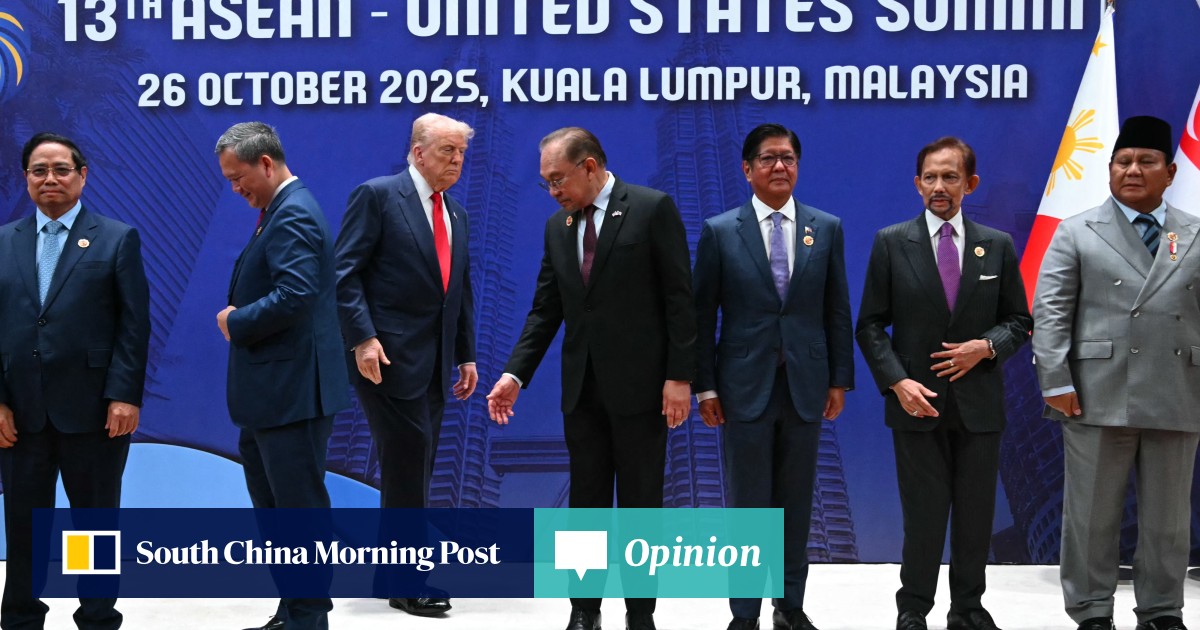
With the Trump administration renewing the chaos in the Middle East (and global energy markets), last week’s cluster of ASEAN and ASEAN-plus foreign ministers’ meetings offered China the chance to appear as a more predictable partner. But the events in Manila offered plenty of reminders of how strained Beijing’s relationships in the region are still, from the Philippine hosts’ protests over the South China Sea dispute to Australia’s complaints about the surprise ballistic missile test in the Pacific. Japan’s foreign minister had a brief encounter with his Chinese counterpart — that fact is newsworthy as a barometer of how bad things are in the Japan–China relationship.
These diplomatic problems are often cast as incongruent with the reality on the ground that trade and investment are binding China and its region together in ways that defy the designs of politicians. Yet economics is also now central to geopolitical tensions with the United States and Europe. Will it soon be the same in Asia?
For a decade or more, countries as different as labour-abundant lower-income Southeast Asian states and high-income EU members have levelled the same complaint: China’s persistent trade surpluses and manufacturing dominance squeeze out competitors at both ends of the development spectrum. But the view of some catastrophising observers — that China has comparative advantage in everything, leaving little room for anyone else — is too pessimistic and defies logic. Simon Evenett and Stefan Legge’s analysis of Chinese exports over the decade since the launch of Xi Jinping’s Made in China 2025 policy finds little evidence of China mounting a full-spectrum challenge to Western industries.