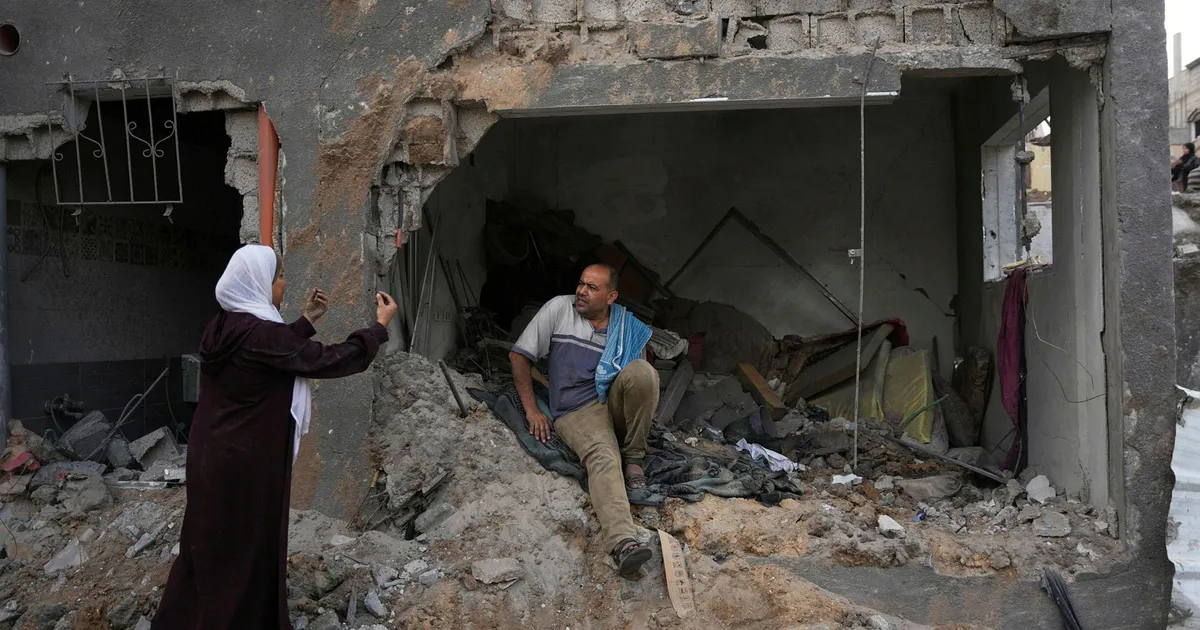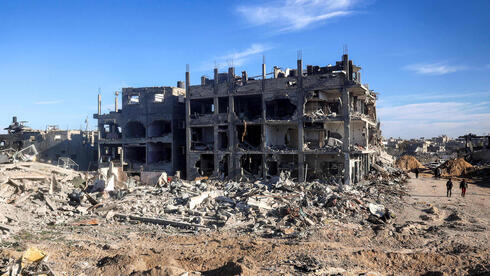
Ben-Gvir was the sole minister to oppose the plan, which would restore basic services, deliver aid and build shelters in non-Hamas areas under a Palestinian technocratic committee backed by an international force Related TopicsNational Security Minister Itamar Ben-Gvir was the only Cabinet member to vote against the move. “Hamas did not meet its obligation to demilitarize the Strip and disarm, and therefore we are not obligated to do so either," Ben-Gvir said. "I was also against the ‘20-point plan’ from the beginning. The solution in Gaza is to encourage migration.”GalleryThe destruction in Rafah(Photo: Eyad Baba / AFP)By contrast, Foreign Minister Gideon Sa’ar said during the discussion: “This is an international plan. We may not succeed, but we should not be the ones to destroy it.” Minister Ze’ev Elkin added: “We already decided this at the time, and determined that if hostages were released, we would bring international forces into Gaza.”Minister Orit Struck was concerned about the rebuilding of Gaza. “The only good thing here is the international consensus, but on the other hand, they made commitments and did not meet them. If the new Gaza is established, it will be an eternal disgrace,” she said.The Cabinet decision effectively grants special status to the Board of Peace in Gaza and constitutes Israeli consent to launch a pilot program to restore basic services in Gaza, provide humanitarian aid and establish shelters in areas not controlled by Hamas.The plan includes the construction of temporary structures that will serve as housing for Gaza residents. According to reports, anyone seeking to live in these areas will undergo strict screening procedures to ensure they are not identified with or connected to Hamas. This is the first area to be administered by the Palestinian “technocratic government,” known as the National Committee for the Administration of Gaza (NCAG), with the backing of the multinational force, the International Stabilization Force (ISF), now being established and made up of soldiers from several countries.The goal is to begin the trial in the coming weeks. If successful, it will be expanded to additional areas. According to sources in the Strip, the committee of technocrats, which is still based in Egypt and has not yet entered Gaza to govern the territory, is supposed to manage daily life and oversee the distribution of humanitarian aid, basic services, infrastructure rehabilitation and the administration of civilian institutions. Hamas’ government, which has controlled the Strip since the organization took over in 2007, announced earlier this month that it was prepared to make way for the technocrats’ committee, but nothing has moved forward since.Members of the technocratic government meet in CairoThe members of the technocratic committee were selected from among professional figures with institutional and security experience. In addition to the committee’s chairman, Ali Shaath, who held official positions in the Palestinian Authority and also served as deputy planning minister, its members include Abdel Karim Ashour, director of the Agricultural Relief Association in the Gaza Strip and a social activist; Aed Yaghi, director of the Medical Relief Society in Gaza; Aed Abu Ramadan, director of the Gaza Chamber of Commerce; Jaber al-Daour, president of Palestine University in Gaza; Bashir al-Rayes, an engineering consultant; engineer Omar Shamali, director of Palestinian telecommunications in the Gaza Strip; Ali Barhoum, an engineer and adviser in the Rafah municipality; and attorney Hanaa Tarazi, the first Christian female lawyer in the Strip.The six additional figures who will take part in the committee are Mohammed Bseiso, owner of one of the largest law firms in the Strip, who will oversee the justice portfolio; Mohammad Khalas, a retired senior officer from the Palestinian Authority security services; Mohammed Nasman, a former official responsible for the security portfolio in Gaza; Orabi Abu Shaaban, who will be responsible for the Land Authority portfolio; Adnan Abu Warda, a judge on the Palestinian Authority’s Supreme Constitutional Court, considered one of the senior judges who rule on constitutional issues and oversee laws and regulations in the authority; and Osama al-Saadawi, a Palestinian engineer and entrepreneur who served as minister of entrepreneurship and empowerment in the Palestinian government in Ramallah.The Otef Israel Forum, representing residents from the Gaza envelope communities that advocates a complete removal of the security threat, responded to the decision to allow the Board of Peace into the Strip “We again warn that Clause 17 of the agreement is a dangerous clause that allows the beginning of the entry of international forces for the rehabilitation of Gaza before Hamas is dismantled. The State of Israel must come to its senses and oppose Clause 17 across the board, and not accept parts of it and in practice implement Clause 17 by creeping steps. The rehabilitation of Gaza, even in stages before Hamas is dismantled, is dangerous for residents of the Gaza border area and will inevitably strengthen Hamas on the ground,”the group said in a statement.Roni Green Shaulov contributed to this report.Comments
Cabinet approves Board of Peace entry into Gaza, starting in Rafah
Ben-Gvir was the sole minister to oppose the plan, which would restore basic services, deliver aid and build shelters in non-Hamas areas under a Palestinian technocratic committee backed by an international force
811 words~4 min read