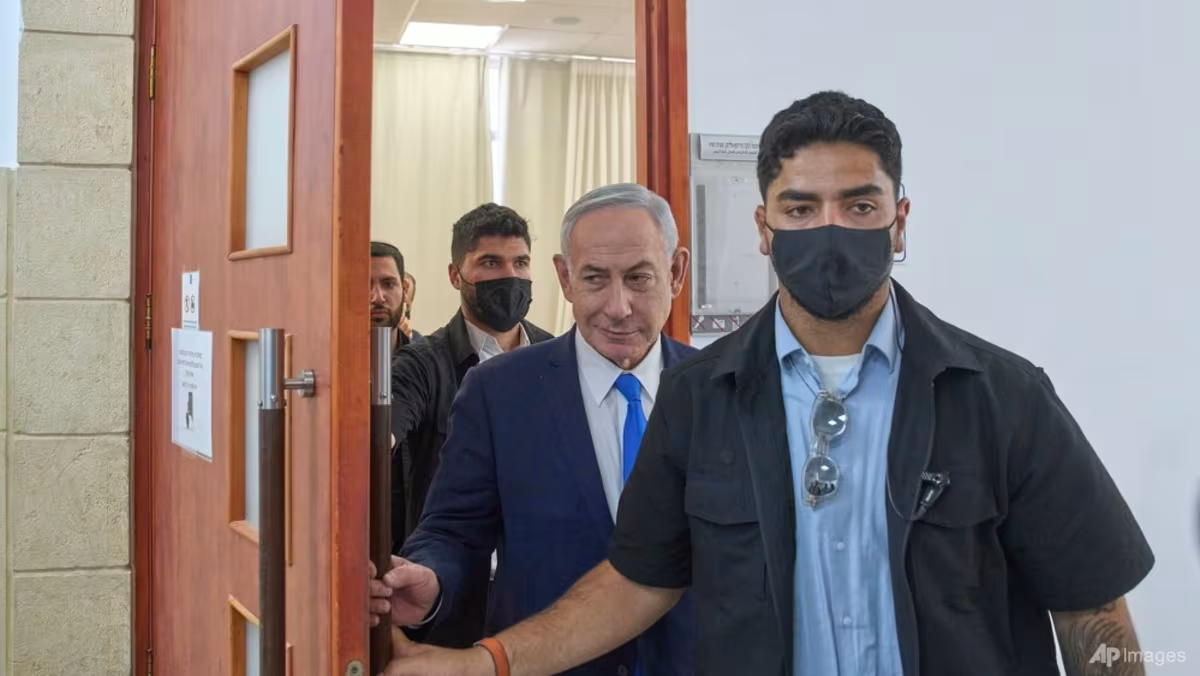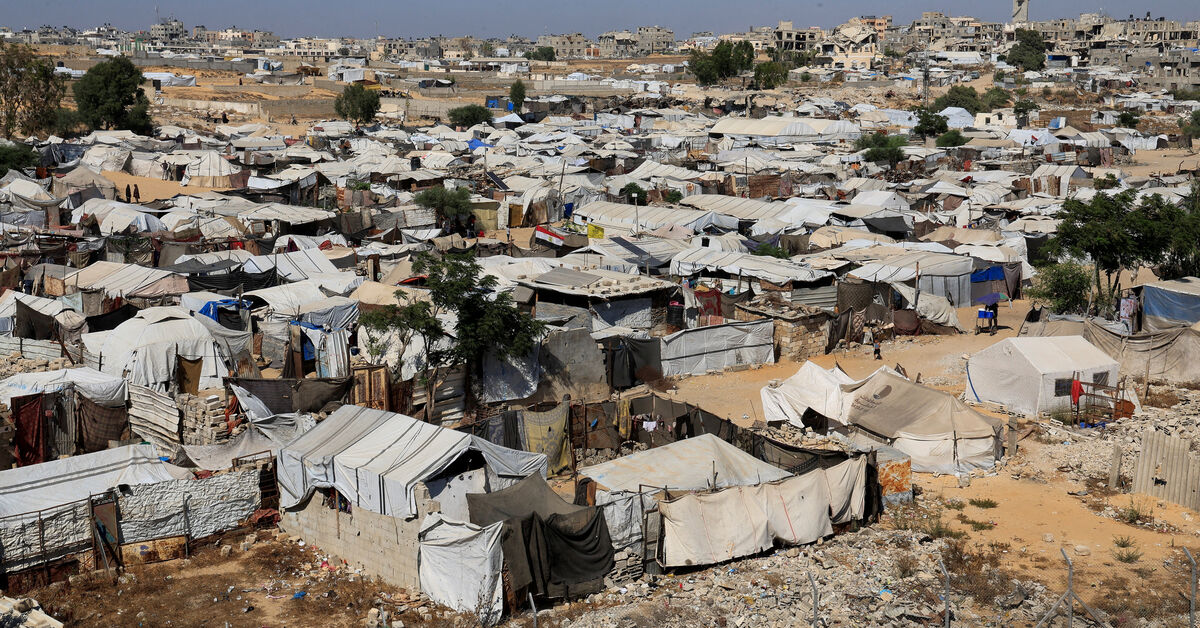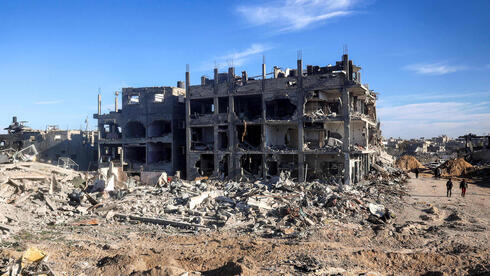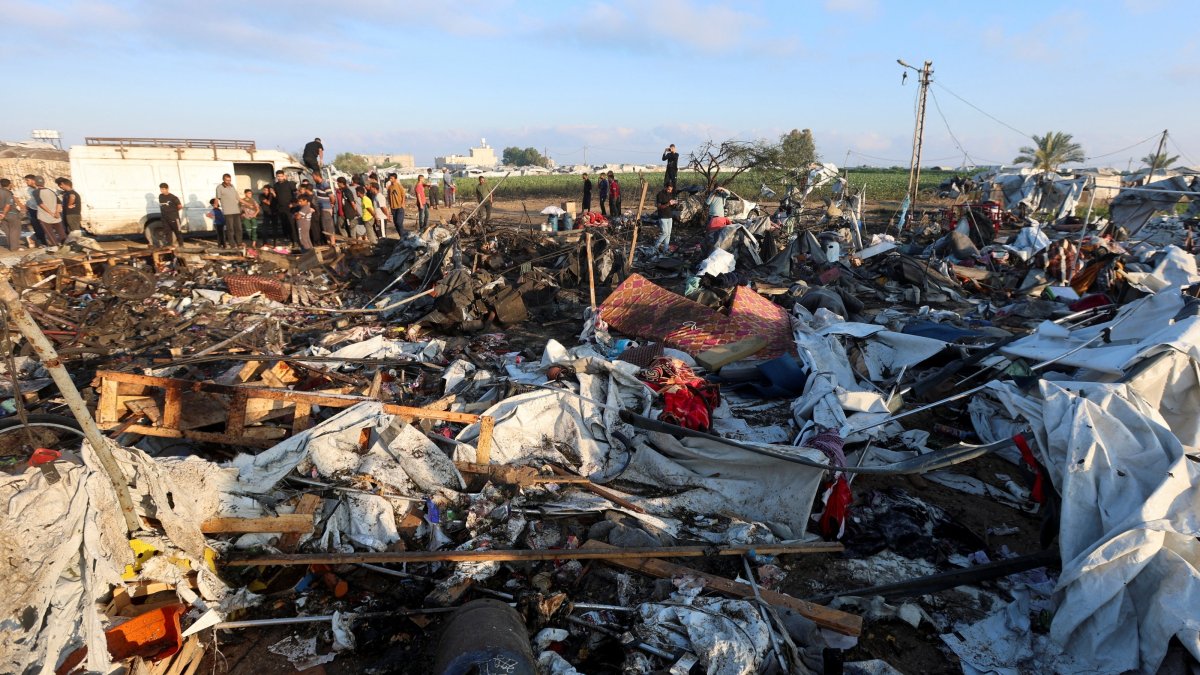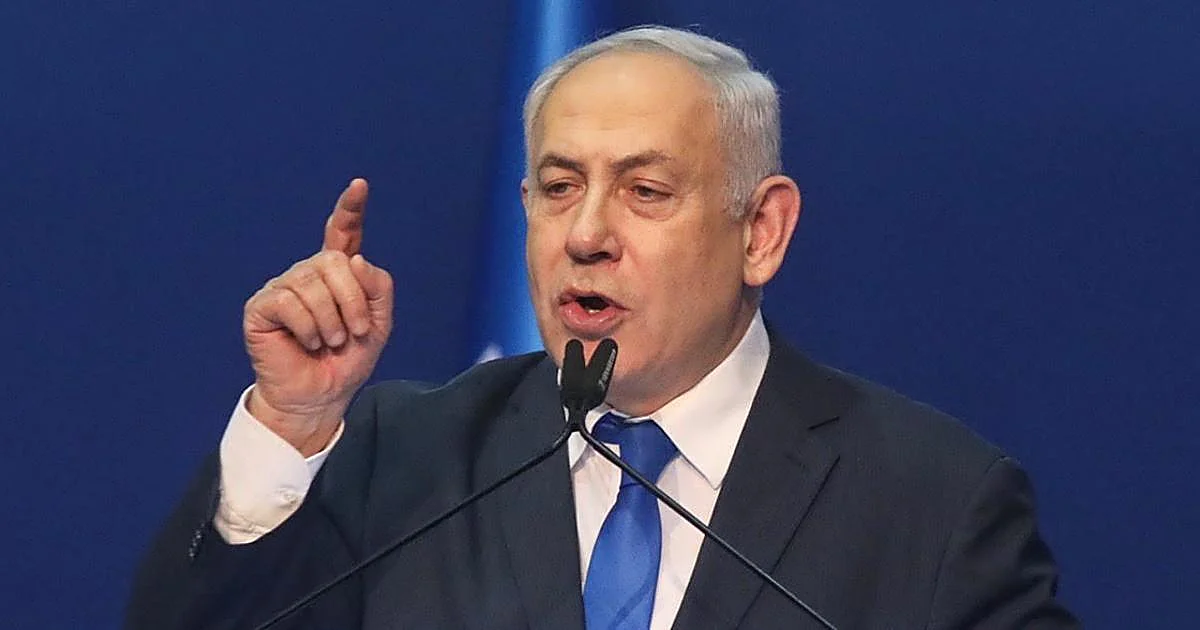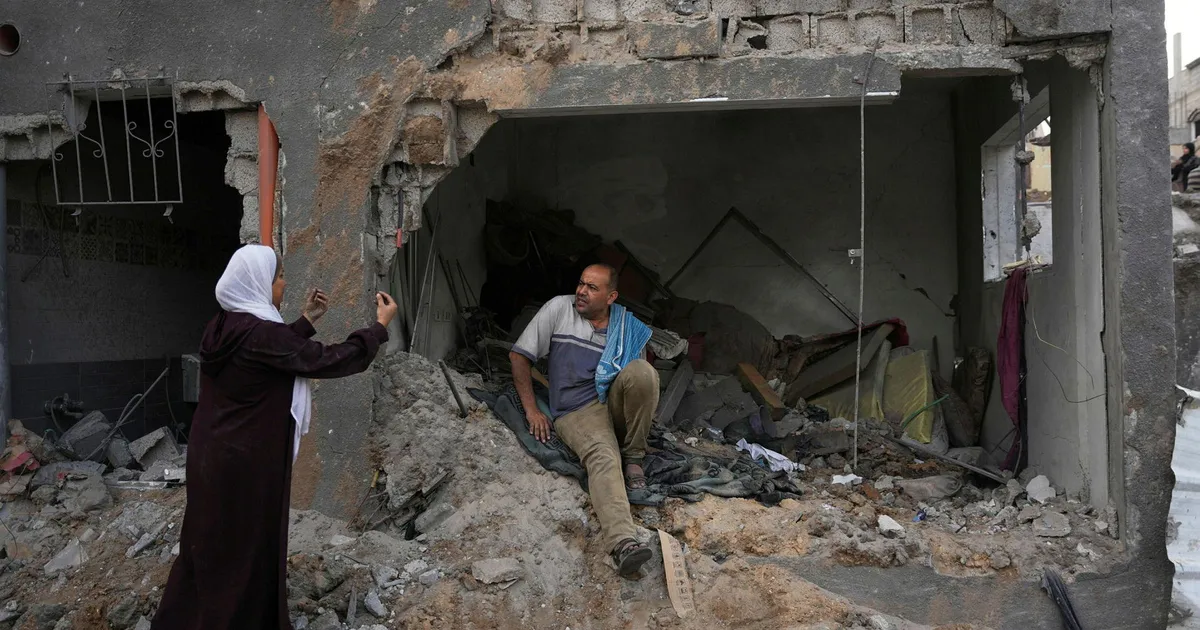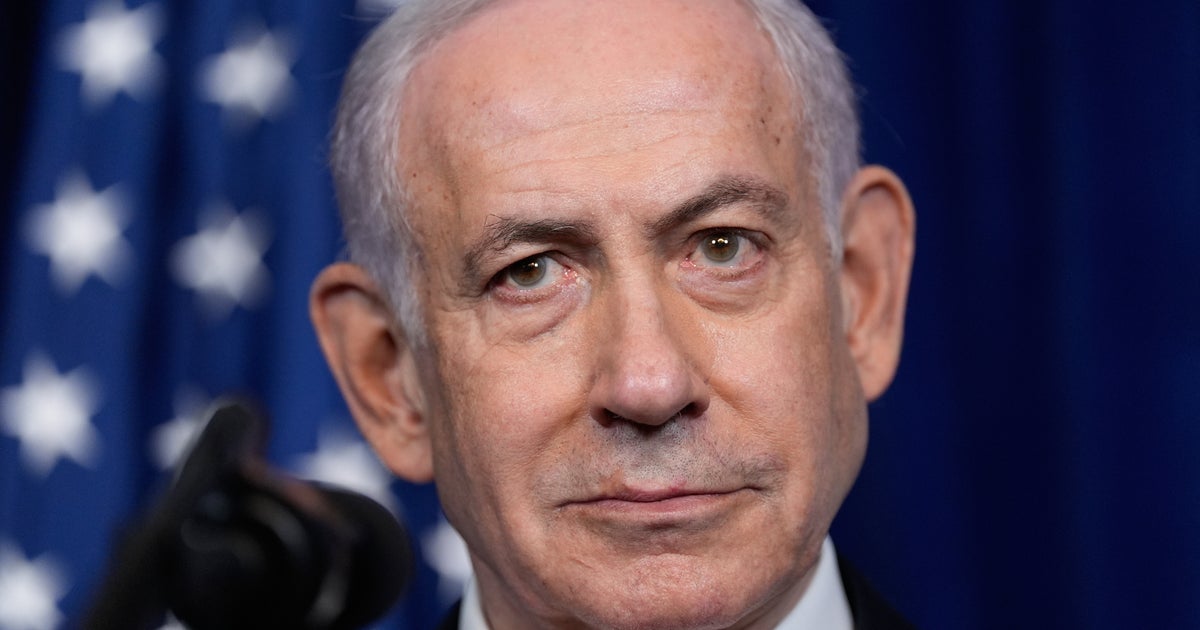
Current sectionIsrael NewsIsrael SecurityThe decision, one day before Netanyahu is set to fly to Washington to meet Trump, also gradually allows a small multinational peacekeeping force into Gaza, along with a Palestinian technocratic committee. Ben-Gvir objected to the moveShare to FacebookShare to XArticle printing is available to subscribers onlyPrint in a simple, ad-free formatSubscribeComments: Zen reading is available to subscribers onlyAd-free and in a comfortable reading formatSubscribePalestinians inspect destroyed buildings at the site of an Israeli airstrike, at al-Maghazi refugee camp, central Gaza Strip, Friday, July 24, 2026. (AP Photo/Abdel Kareem Hana) Credit: Abdel Kareem Hana/אי־פי Palestinians inspect destroyed buildings at the site of an Israeli airstrike, at al-Maghazi refugee camp, central Gaza Strip, Friday, July 24, 2026. (AP Photo/Abdel Kareem Hana) Credit: Abdel Kareem Hana/אי־פי 05:45 PM • July 26 2026 IDTIsrael's security cabinet approved on Sunday the entry of President Donald Trump's Board of Peace, meant to oversee postwar Gaza, into the Strip, one day before Prime Minister Benjamin Netanyahu is scheduled to travel to Washington. National Security Minister Itamar Ben-Gvir voted against the decision. According to sources familiar with the details, the decision approved the entry of an initial international peacekeeping force as part of Trump's 20-point plan for Gaza, into a limited area in Rafah. An Israeli diplomatic official said that, at this stage, the plan involves around 200 representatives from "friendly countries such as Uganda and Morocco." According to the diplomatic official, any entry of forces from the International Stabilization Force would require specific approval from the prime minister, Defense Minister Israel Katz and Foreign Minister Gideon Sa'ar. The official said Israel would determine which countries are allowed to send troops, and that in any case they would be "only countries that have peace agreements with Israel and are not acting against Israel or its officials on the international stage."It also allows members of the Palestinian technocratic committee – which had been barred by Israel from accessing Gaza – to finally enter the territory, gradually and under restrictions. Under the 20-point plan, governance in the Gaza Strip – or in areas designated as "terror-free" – is supposed to be transferred to the committee, named the National Committee for the Administration of Gaza, or the NCAG.The technocratic committee is expected to operate in the "orange zone" – an area between the Yellow Line and the Orange Line designated by the IDF. There is no military presence in the area, but the IDF controls it through the use of firepower.Earlier this month, Hamas announced that the body that administers Gaza on its behalf has resigned in order to transfer its powers to the committee in a move regarded as largely symbolic, in part due to the committee's members. The resignation also does not concern Hamas' military wing, while mediators are still negotiating with the group over its disarmament. A source familiar with the details said the cabinet decision includes approval to build two temporary residential areas for displaced Palestinians. One of them, the source said, will have a capacity of tens of thousands of people. The second, which is expected to be built adjacent to it and has already been dubbed the "Emirati neighborhood," is expected to house a smaller number of residents. As its name suggests, the project will be funded by the United Arab Emirates. Neither camp has yet been built, but basic infrastructure work has already been carried out in preparation for their construction.According to the original plan, the first phase of the pilot was supposed to see 500 Moroccan troops enter a refugee camp in Rafah that would be under the responsibility of the multinational force. If only 200 troops enter, as the diplomatic official said, it could indicate that the cabinet decided to divide the deployment into stages.Palestinian police officers recruited by the technocratic committee will be responsible for security inside the camp itself. However, at present there are only a few hundred potential recruits, who are in Egypt for training. Israel has yet to approve the departure of thousands of additional potential police recruits from Gaza to Egypt.Several weeks ago, Aryeh Lightstone, a senior adviser to the Board of Peace, sent Netanyahu's office a letter outlining a series of demands for progress in Gaza, including allowing a multinational stabilization force to enter a limited area near Rafah.In February, the committee began recruiting new police officers who are meant to maintain order in Gaza, but the recruits have yet to be allowed to leave the Strip for training in Egypt or Jordan. The same provision also states that Israel would have to withdraw from areas handed over to the international stabilization force, even without Hamas disarming – a move Israel has strongly opposed.In the NewsNolan's "Odyssey" Is Set in Greece, but Is Really All About AmericaIsraeli Security Cabinet Approves Entry of Trump's Board of Peace Into GazaHow the Sea of Galilee's Trapezoid Beach Ignited a Battle Over ModestyFar-right Smotrich's Religious Zionism to Hold Primaries Amid Comeback in PollsKnesset Legal Adviser: Law Shielding Haredi Draft Dodgers Undermines IDF NeedsRemembering and rebuilding two years laterICYMIThe Original Ozempic Society of Ancient Rome'Choose Hope': Natalie Portman Backs Arab-Jewish Party Ahead of Israeli ElectionAn Israeli Election Surprise Called the DemocratsIsrael's Far Right Is Repeating the Sin That Brought Down the TempleEd Miliband, the U.K.'s New Foreign Secretary – and His History With IsraelBiden Officials Now Regret What They Let Israel Do in Gaza. Does It Matter?
Israeli security cabinet approves entry of Trump's Board of Peace into Gaza
The decision, one day before Netanyahu is set to fly to Washington to meet Trump, also gradually allows a small multinational peacekeeping force into Gaza, along with a Palestinian technocratic committee. Ben-Gvir objected to the move
899 words~4 min read