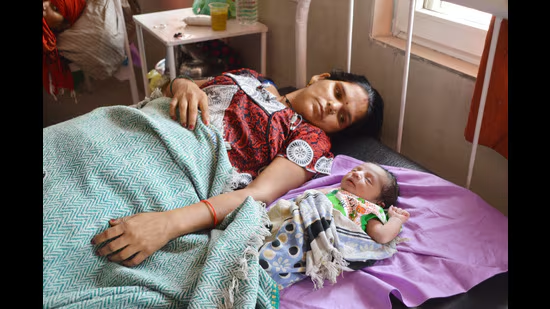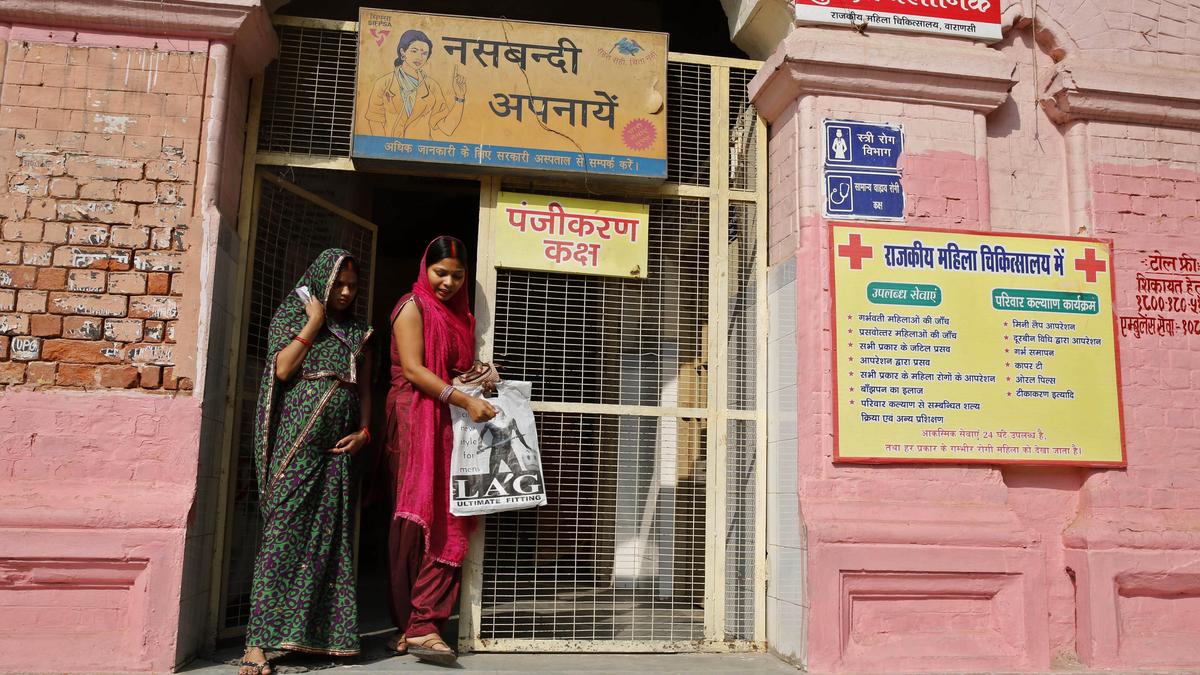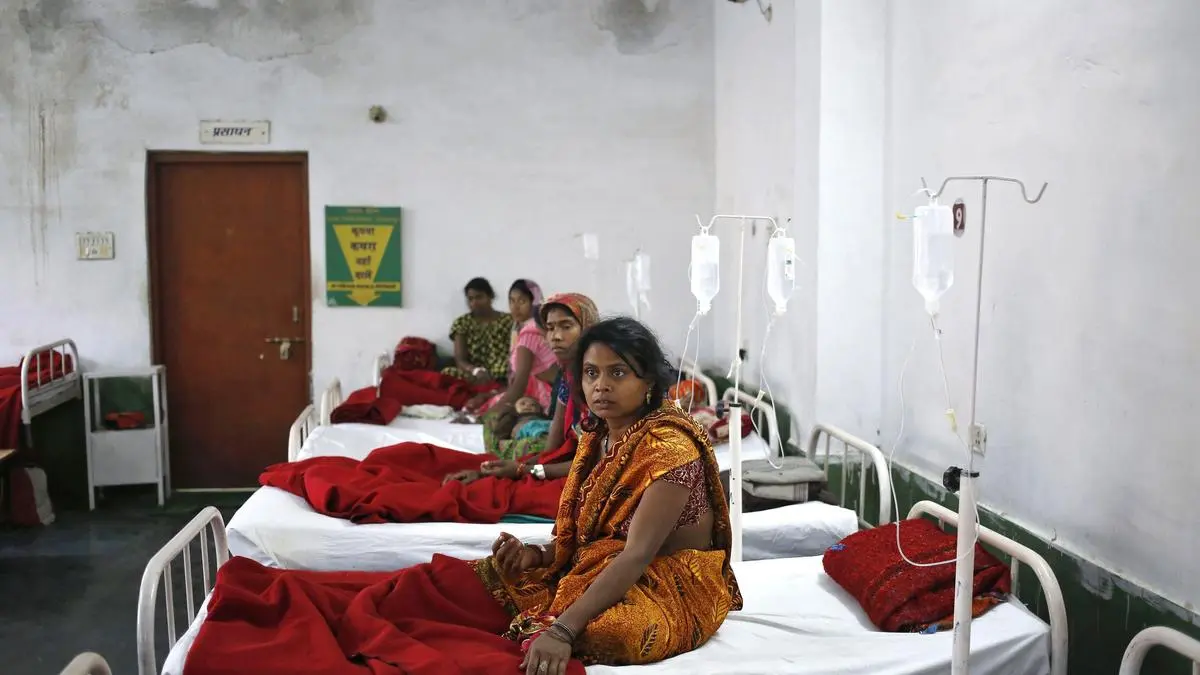
SKEWED BURDEN. Female sterilisation dominates family planning
| Photo Credit:
On May 29, the Ministry of Health and Family Welfare had released the much-awaited sixth round of the National Family Health Survey (NFHS-6). The ‘national’ data, in reality, tells the story of many regions that are increasingly diverging in ways that make governance under one policy framework untenable.India’s total fertility rate (TFR) stands at 2, below the replacement level of 2.1 and unchanged from the previous round of the survey about five years ago. But this story of stability seems inaccurate once you start reading past the national average.Urban India’s TFR is 1.6, while for rural India it is 2.1; Bihar continues to lead among states, with a TFR of 2.7. At the same time, states like Tamil Nadu, Karnataka and Kerala have been below replacement level for decades.Some regions still require investment in reproductive health, contraception, girls’ education and child marriage prevention. Others need to prepare for ageing populations, care systems, changing labour markets and low fertility. A one-size-fits-all population policy is out of date.The same pattern recurs across reproductive health indicators. The national unmet need for family planning has declined marginally from 9.4 per cent in NFHS-5 to 8.5 per cent in NFHS-6. But this aggregate hides serious State-level gaps. Meghalaya records unmet need at 21 per cent, Bihar 14.4 per cent, Jharkhand 12.6 per cent, and Uttar Pradesh 10.8 per cent. Behind these numbers are millions of women who want to delay or avoid pregnancy but are unable to use contraception.The method mix also remains highly gendered. Female sterilisation continues to dominate contraception, while male sterilisation remains negligible at 0.5 per cent. Andhra Pradesh, for instance, has a female sterilisation rate of 69.5 per cent. This should force us to ask whether high contraceptive prevalence truly reflects choice, or whether the burden of family planning continues to fall overwhelmingly on women.NFHS-6 also reminds us that fertility cannot be separated from adolescent health and gender inequality. Child marriage has declined nationally, but 20.1 per cent of women aged 20–24 were married before 18. In West Bengal, Bihar and Tripura, more than one in three young women were married before adulthood. Adolescent motherhood remains virtually unchanged nationally at 6.7 per cent, and is far higher in states such as Tripura, West Bengal, Jharkhand and Bihar.The policy lesson from NFHS-6 is clear — India must move from national templates to geography-specific, lifecycle-based and women-centred health planning. High-fertility rural regions need improved reproductive health services, adolescent health programmes, contraception access and action against child marriage. Low-fertility and ageing regions need care infrastructure, active ageing and geriatric health services, childcare, women’s workforce support and social protection.Above all, India must place women’s agency at the centre. Health policy cannot simply count births, contraceptive use or institutional deliveries. It must ask whether women have the power to make informed decisions about marriage, contraception, childbirth, healthcare and work.NFHS-6 shows there is no single India. Our health policy must recognise that reality. The future lies not in population panic or national averages, but in local evidence, women’s rights, and health systems that respond to the lives people actually lead.