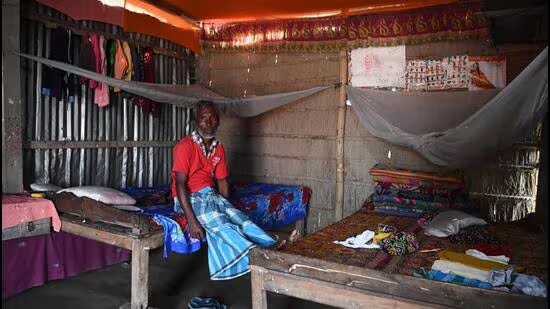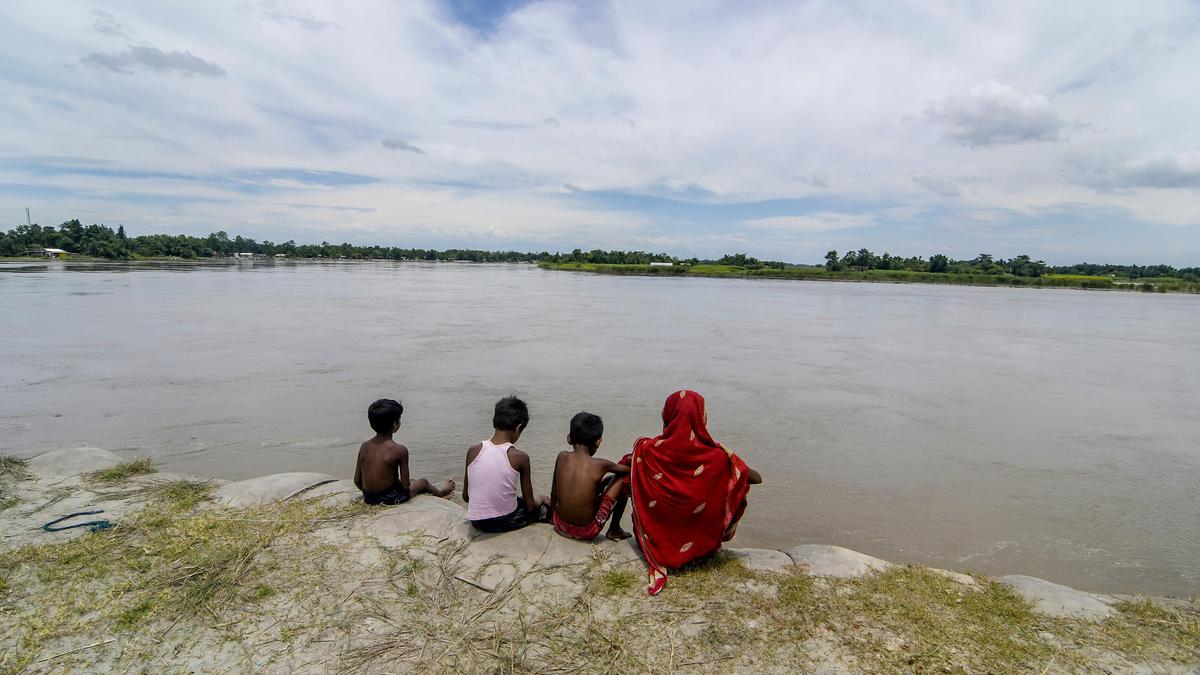
Almost six decades ago, the Brahmaputra River devoured Pashan Ali’s house at Charai Khasara village in south-western Assam’s Goalpara district. Now, a legal hurdle in the land through which the river flows is threatening to erode his grandson Aminul Hoque’s Indian citizenship.On February 28, 2019, Aminul’s world came crashing down when the Foreigners’ Tribunal (FT) No. 4 in Guwahati adjudged him a non-citizen. The 38-year-old had been staying in a rented house at Borbori, a rural area on the outskirts of Guwahati, working as a daily-wage labourer when the police came knocking in 2016. Later, he told the court that the investigating officer referred his case to the FT the following year “without fair or proper inquiry”.Created under the Foreigners Act, 1946, the FTs are Assam-specific quasi-judicial bodies set up to address cross-border migration, prevent infiltration, and enforce the provisions of the 1985 Assam Accord, which ended a violent anti-foreigner agitation from 1979-1985. One of the key provisions is to detect and detain suspected illegal immigrants who entered the State after March 24, 1971, and deport them. Such people, detected by personnel of the Assam police’s Border wing or those marked ‘D’ (doubtful) by the Election Commission are referred to the FTs.“Aminul was lost after the FT judgement. His family challenged it in Gauhati High Court, but he was shocked that he, the youngest sibling, was the only member of his family to be deemed a foreigner,” Khoiruddin Mollah, a family friend and a trader based in Lakhipur, a block headquarters in Goalpara district, says. He adds that Aminul was scared when, last year, news broke of people possessing valid documents being pushed into Bangladesh.After the Brahmaputra eroded his land, Pashan Ali moved to Dobakura with his family in the 1960s. In 1973, he purchased a plot at Ghugudoba, about 4 kilometres away, where his son Mohiruddin and his family shifted. The land, according to the documents submitted, measured 2 bighas, 1 katha, and 5 lessas. In Assam, 20 lessas make a katha, equivalent to 2,880 square feet, and 5 kathas make a bigha. The Ghugudoba plot is on the northern bank of the Jinjiram, a Meghalaya-origin river almost as “land-hungry” as the Brahmaputra, which it meets after flowing for 120 kilometres. Later, the family moved to Hashdoba, about 3 kilometres away from Ghugudoba.The original land purchase deed was one of 15 documents Aminul submitted to the High Court in his defence. The bench of Justice Kalyan Rai Surana and Justice Shamima Jahan did not find the deed and the other documents convincing enough to establish Aminul as an Indian citizen. The other documents included the 1951 National Register of Citizens (NRC) featuring the names of Aminul’s father, grandparents, and other family members; a 2017 school certificate from the government-aided Hashdoba Ancholik High School; and certified copies of voters’ lists from 1966 to 2015.Family on the moveAccording to Aminul’s statement to the court after receiving the FT notice, his father Mohiruddin Sheikh, mother Foziron Nessa, grandfather Pashan Ali Sheikh, grandmother, and step-grandmothers appeared in the 1951 NRC as residents of Charai Khasara village. The statement said that Brahmaputra River erosion in the 1960s forced the family to shift to Dobakura 56-57 years ago and enlist as voters from the village from 1966 to 1979. Thereafter, Mohiruddin moved to Ghugudoba and was enlisted in 1985 as a voter from the village along with his mother, wife, and other son Moyanuddin. The statement further said that Mohiruddin shifted again to Hashdoba “for better livelihood” a decade after one of his sons, Hoque, was born in May 1988. Aminul’s name featured for the first time in the 2015 voters’ list as a 25-year-old from Hashdoba, along with his 21-year-old wife Sahida Khatun. Hashdoba is in the Goalpara district, about 165 kilometres from Guwahati.
Eroding identities of Brahmaputra’s children
Explore the struggles of Assamese families fighting for citizenship against legal challenges and bureaucratic hurdles in the Brahmaputra region.
2,211 words~10 min read