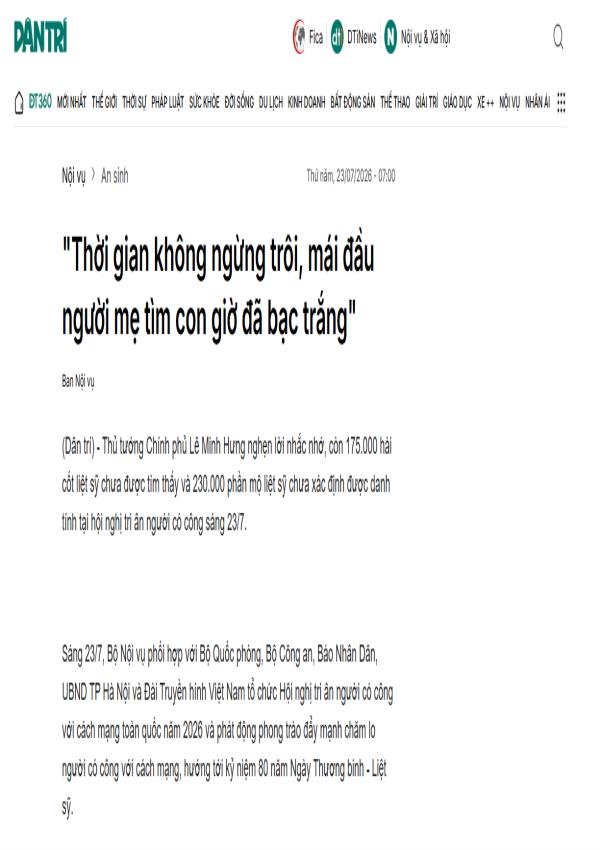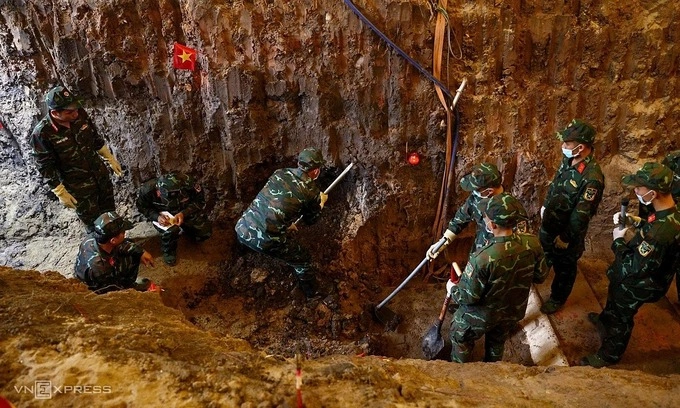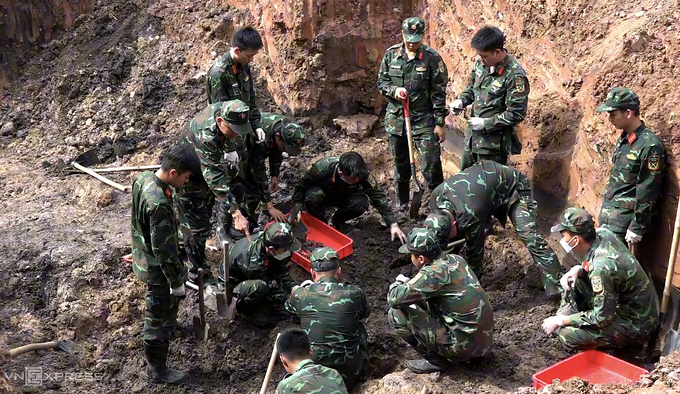
Searchers have located seven mass graves since the beginning of a 500-day campaign starting March 15 this year that aims to recover about 7,000 sets of remains, take samples from some 230,000 unidentified graves and run DNA analysis on about 18,000 of them.
Deputy Prime Minister and Defense Minister Phan Van Giang said July 25 at a ceremony launching excavation work in Dong Nai City bordering Ho Chi Minh City that more than 30 search teams have been created or reinforced under the campaign. Working groups have been sent to localities to collect and verify accounts from surviving witnesses, while excavation crews use ground-penetrating radar, digital mapping and case-management software to narrow their search.
Nationwide, more than 73,000 samples have been taken from soldiers' graves, of which more than 50,000 are intact enough for analysis. About 8,500 hectares of land have been cleared of mines and unexploded ordnance, including more than 3,500 hectares in the core zone of Vi Xuyen in Tuyen Quang Province that borders China, over 80% of the target for that area.
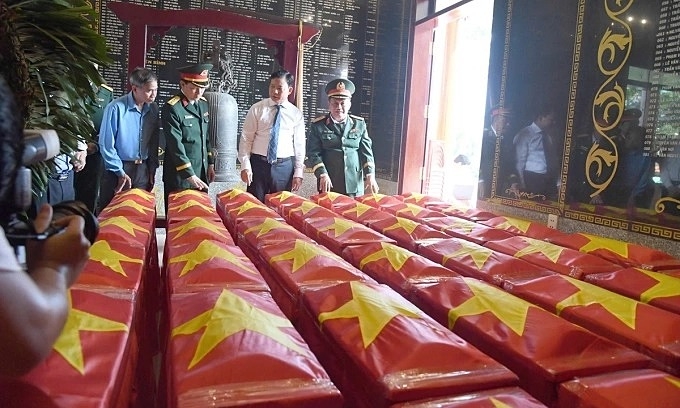
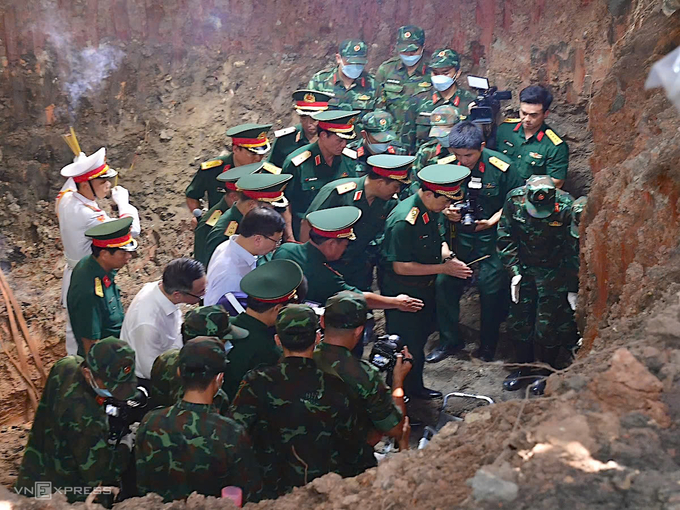
Deputy Prime Minister and Defense Minister Phan Van Giang offers incense at the mass burial trench in Le Thi Rieng Park, Ho Chi Minh City, where the remains of 100 soldiers have been found, on the morning of July 25, 2026. Photo by VnExpress/Thanh Tung