By providing an email address. I agree to the Terms of Use and acknowledge that I have read the Privacy Policy.
The goal of industrial policy in the information economy is to develop the country’s overall knowledge and technological productive capabilities, those that cut across all industries, and not specific to particular industries. However, this does not preclude the development of industrial policies in specific industries or sectors.
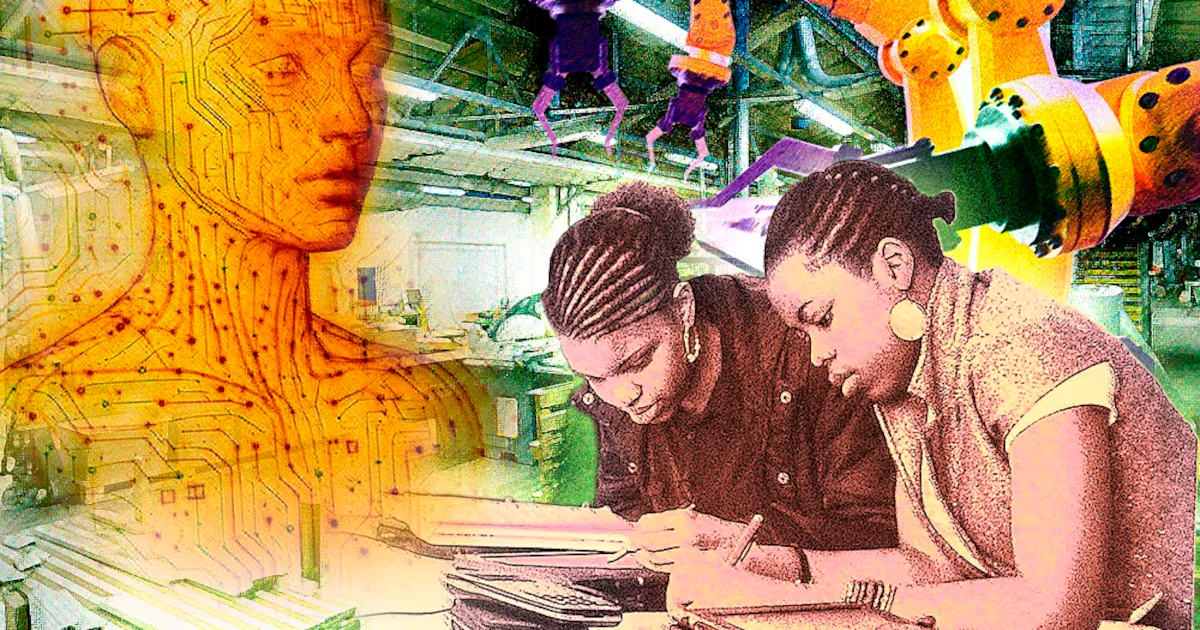
The technology-driven decision-making tools referred to above include powerful algorithms and computer software that can analyze large volumes of data to detect patterns of behavior, to generate text, and to find solutions to complex problems—in real time! Collectively called artificial intelligence (AI), these computer processes have far superior analytical capabilities than humans.
AI has one major shortcoming, however; it is emotionally neutral. AI tools are incapable of any human feelings and are unable to make ethical and aesthetic judgments.
While AI is proving to be a very useful set of decision-making tools in all spheres of human activity, successful outcomes still depend on uniquely human creativity, artistic judgment and community building.