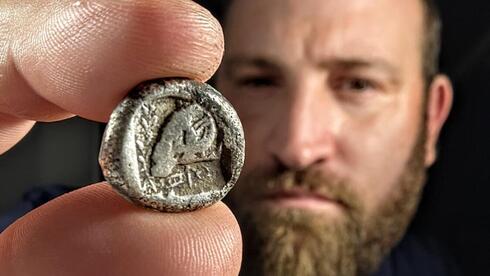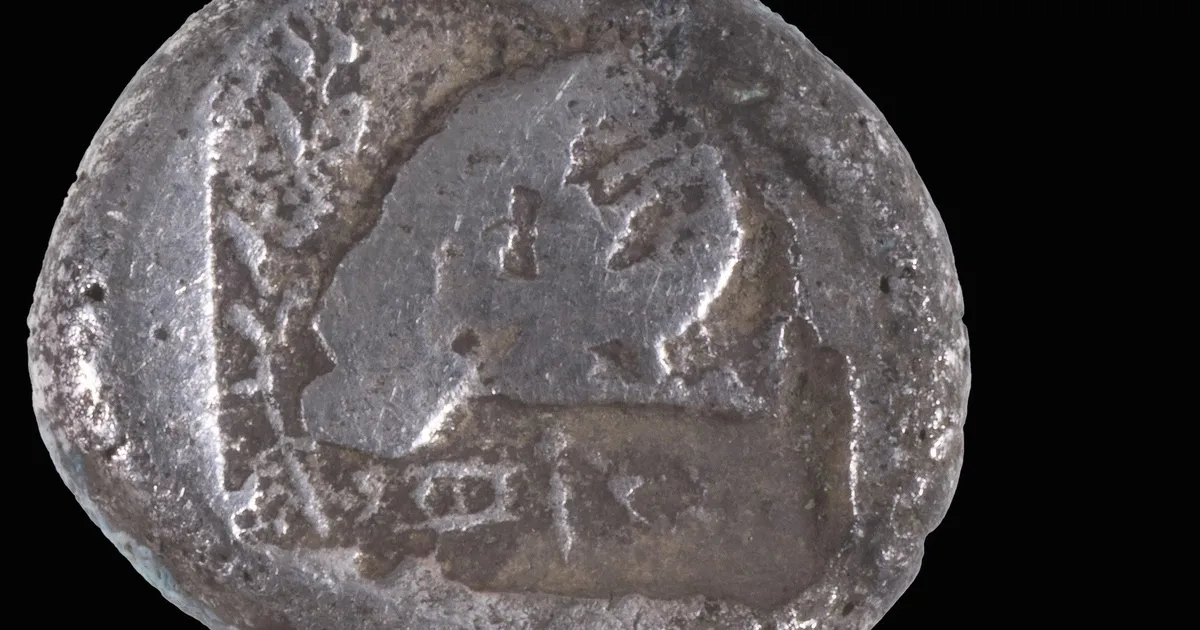
Generally, the siglos was made of silver, but this one has a base metal inside, suggesting a king under stress – or ancient skullduggeryPeople lose stuff on the beach all the time. Waves knock your earrings and rings off or carry away the kiddies' plastic toys, not to mention the sand that all but sucks off your toe rings. It's rare you'll find your lost valuables, but you can hope for help from the goddess Fortuna and the captains of Israel's beaches.About a month ago, Avi Chaprak, deputy director of Ashdod's beaches, was combing the coast and found a valuable lost by its unhappy owner. When? About 2,500 years ago during the Hellenistic period, says the Israel Antiquities Authority, which reported the unusual find Sunday.Chaprak instantly realized that he held in his hand an ancient coin, so he turned it over to the antiquities authority, as you're supposed to do when you discover an antiquity in Israel. You're never supposed to just take it home. Thanks to Chaprak's good citizenry, we now have a complete coin almost never found in any archaeological context anywhere, a standard siglos clearly minted in Salamis on the east coast of Cyprus. The coin dates to the mid-fifth century B.C.E., when the Persians controlled the island. Similar sigli have been found but not ones minted at that time in that city, says Yanniv David Levy, a researcher and curator at the antiquity authority's coin department. Avi Chaprak, deputy director of Ashdod's beaches, with a certificate of appreciation from the Israel Antiquities Authority. Credit: Israel Antiquities AuthorityAvi Chaprak, deputy director of Ashdod's beaches, with a certificate of appreciation from the Israel Antiquities Authority. Credit: Israel Antiquities AuthorityThe coin weighs about 11 grams, the IAA says, and wondrously, it looks like silver. But it wasn't. "Closer examination showed it to actually be of metal that was only plated with silver, a known phenomenon in Cypriot silver coins from this period given the shortage of silver on the island," Levy says. But wait. Sigli were made of pure silver, he notes. This one was not. The metal at its base remains to be analyzed; maybe lead. And as lipstick on a pig doth not a pretty porker make, a silver coat doesn't make a silver coin. That doesn't necessarily translate into "ancient counterfeiting," Levy adds. It could be that the treasury issuing the coinage was under stress.When might the Grand Poobah of Wherever issue base metal covered in silver or gold? For example, when times were rough, the treasury was low, soldiers needed to be paid and silver ore was rare. The government might not have been eager to counterfeit sigli, it may have simply been scrambling to survive. Either way, the result would have been devaluation of the currency.Or there was an effort to make this early money seem more valuable than it actually was, like gold plating on a tin fork. Separate research suggests that counterfeiting goes back to the dawn of coinage, around the time this coin appeared.Yanniv David Levy, a coin expert at the Israel Antiquities Authority, with the new find. Credit: Shai Halevi/Israel Antiquities AuthorityYanniv David Levy, a coin expert at the Israel Antiquities Authority, with the new find. Credit: Shai Halevi/Israel Antiquities AuthorityIn either case, whether con men were involved or merely silver shortages, the standard sigli featured a ram, and this one does too. He is lying on his left. The front of the coin shows his head looking left, set within an incuse (sunken) square frame. Next to it is a laurel branch, placed vertically, with three symbols below it, apparently of the Cypriot syllabic script, the IAA says. Siglos were often marked with the names of kings."Coins of this size and value from the Persian period are rare altogether in the archaeological record," Levy says. "Usually, silver coins of this size were not preserved intact. Over time, they were cut into small pieces, for use as local trade currency."Those small pieces of precious metal are known as hacksilver, which actually predated coinage. An ancient fishmonger probably wouldn't have been pleased to get lead hacksilver for his catch.The bottom line is that intact siglos from Salamis were unknown in the annals of Israeli or any archaeology, Levy says, and now we have one – one more of a great many objects attesting to brisk trading all around the Mediterranean. "Salamis coins from the fifth century B.C.E. were circulating throughout the eastern Mediterranean," says Evangéline Markou, a senior researcher at the National Hellenic Research Foundation and an expert in ancient Cypriot coinage. "However, finds with an exact provenance are rarer, so this coin potentially offers significant information about trade ties and movement between Cyprus and the Land of Israel during this period."By the way, even hacksilver was counterfeited; pieces of lead coated in silver. Hoards of silver pieces predating the Bronze Age collapse of about 1200 B.C.E. were almost pure. Piles of them after the period of the collapse were silver again. But hoards dating to the period of the implosion, which affected the powers all around the eastern Mediterranean, were alloys, separate research has shown. Again, government agencies were involved, not some Mycenaean mobster. But the end effect was the same. At the dawn of currency, you couldn't judge a coin by its cover.
'Debased' Cypriot coin from 2,500 years ago found on Israeli beach
Generally, the siglos was made of silver, but this one has a base metal inside, suggesting a king under stress – or ancient skullduggery
884 words~4 min read