If you're a Rust developer, quantum computing has mostly happened in someone else's language. The simulators people use for research are built in Python or C++. If you wanted to explore quantum circuits without leaving the Rust ecosystem, your options were thin. Bindings to foreign runtimes. Abandoned crates. Academic code that doesn't compile on stable.
Sirraya QuTub is a full quantum simulation stack in Rust. State vectors. Density matrices. Noise channels calibrated to real hardware. Entanglement measures implemented against the literature. All in one crate. Add it with cargo add sirraya-qutub and you're done.
But the question isn't whether another quantum simulator exists. The question is whether you can read the source, understand what every layer is doing, and extend it yourself - without leaving your language.
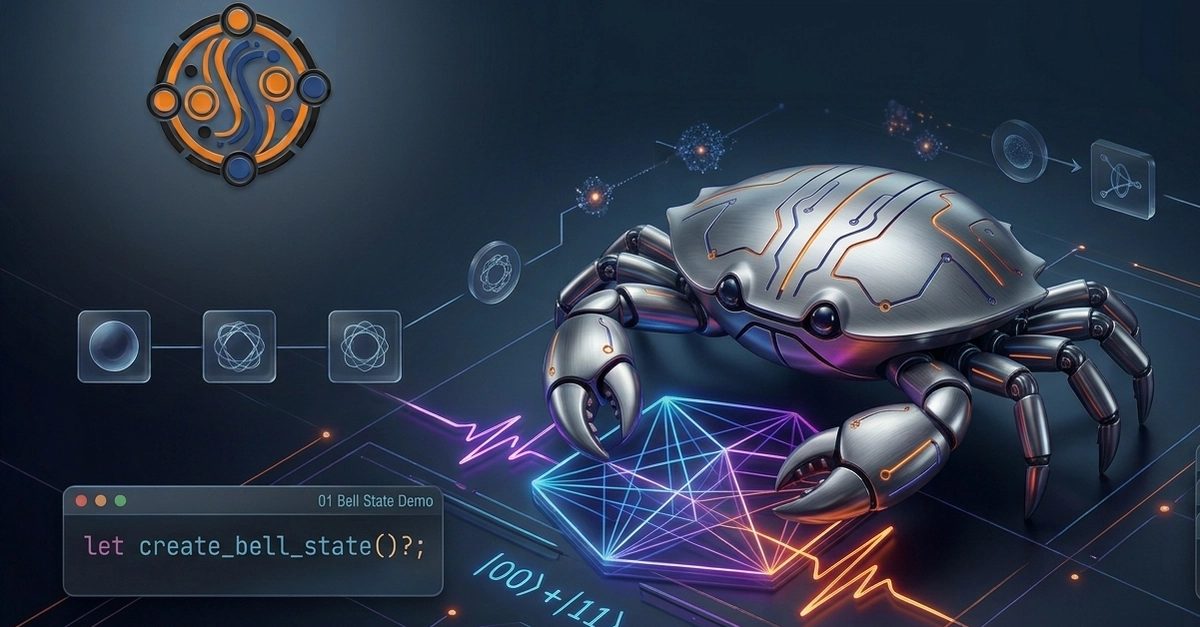
This post walks through a single Rust program: creating a Bell state, measuring it, examining its density matrix, quantifying its entanglement, and watching what happens when you lose a qubit. No physics background assumed. Every number in the output gets explained.
The Program