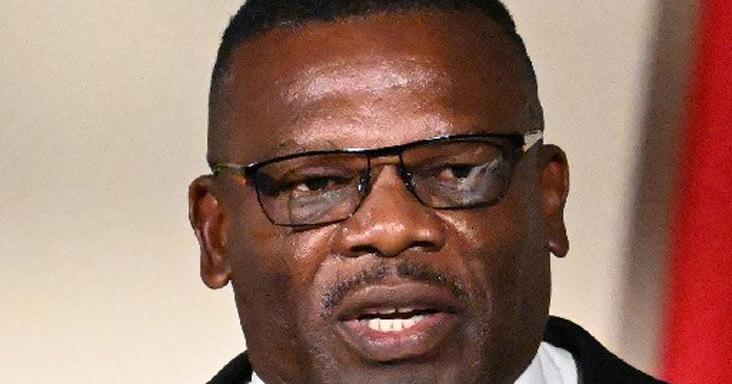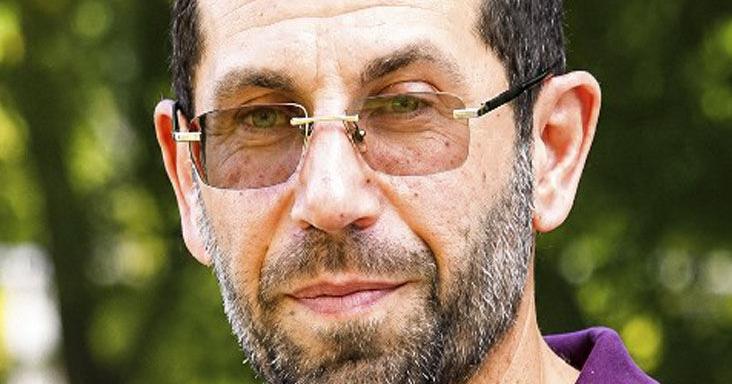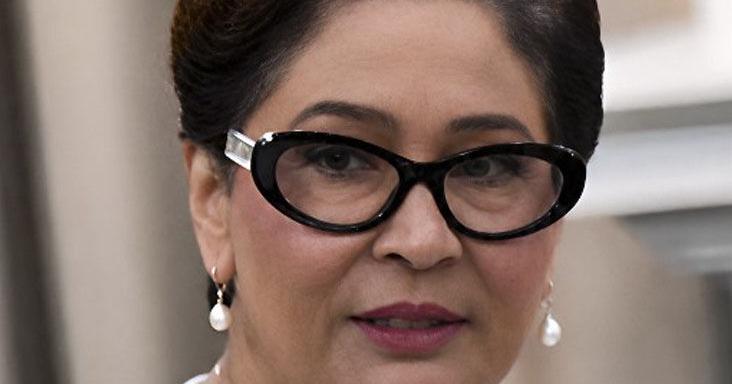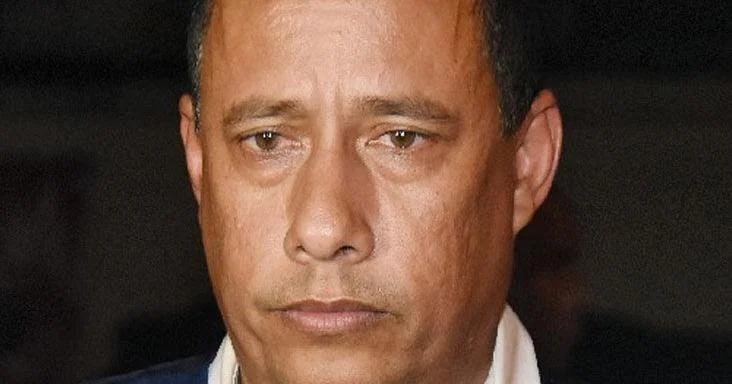
Homeland Security Minister Roger Alexander has disclosed intercepted conversations in which Star Sabga, 70, spoke about bullets, violence and the death of a Government official, as he defended his decision to keep her in preventive detention.In a 19-page affidavit sworn on July 24 and submitted to the court on Friday, Alexander said security agencies advised him that Sabga’s statements, including that “somebody getting ah bullet in dey head” and that “the only way this thing going to end is when ah bullet fly”, were relevant to an ongoing investigation into an alleged wider plot to assassinate Prime Minister Kamla Persad-Bissessar and members of her Government.
Intelligence obtainedfrom mobile device: Star Sabga’s niece, Genevieve Hadeed.
Alexander alleged that the statements were contained in intelligence material obtained from Sabga’s landline and the mobile device of Genevieve Hadeed, wife of businessman Dominic Hadeed.He further told the High Court that security agencies interpreted Sabga’s words as indicating knowledge of a pre-existing plan to harm Government officials and advised that she should remain detained while authorities complete a risk assessment and what he described as the “neutralisation” of the threat.The minister said that exercise was expected to take another two weeks and warned that releasing Sabga before it was completed could place the lives of senior Government officials at risk.The affidavit was filed in Sabga’s constitutional and judicial review proceedings against the Commissioner of Police, Alexander, the Attorney General and PC Eldon Calliste.The matter came up before the court on Friday and will resume tomorrow.Sabga was arrested on June 25 and has been detained at the Golden Grove Women’s Prison under a preventive detention order (PDO).Sabga’s release rejectedAlexander said he issued PDOs in relation to Sabga and the Hadeeds following their arrests amid an investigation arising from intelligence concerning threats against senior Government officials.On June 28, Sabga applied for the Review Tribunal to examine her detention.On July 19, the Tribunal concluded there was “insufficient cause for the detainee’s detention” and that her continued detention was not necessary or expedient in the public interest.Alexander accepted the Tribunal’s recommendations in relation to the Hadeeds, whose PDOs were subsequently revoked, but rejected its recommendation concerning Sabga.He provided several reasons.Alexander contended that the Tribunal’s procedure was “procedurally and fundamentally unfair” because he was not given an opportunity to respond to submissions made on Sabga’s behalf.He also complained that the Tribunal provided no reasons supporting its recommendation and said it had not been given all the intelligence available to him because some information could not be disclosed in the public interest.Alexander said he also possessed expert security advice unavailable to the Tribunal.He further maintained that Sabga’s release could interfere with an ongoing criminal investigation and create a risk to those allegedly targeted.A major aspect of Alexander’s affidavit is the disclosure of intercepted communication between Sabga and Genevieve Hadeed.The conversation centred on comments made by Attorney General John Jeremie in Parliament on June 11, 2026, while piloting a motion seeking a three-month extension of the state of emergency (SoE). (See story at right.)In his affidavit, Alexander said he directed security agencies to extract statements which they believed corroborated the threat being investigated as part of an alleged wider plot against the Prime Minister and Government members.He said the intelligence material was obtained from Sabga’s landline and Genevieve Hadeed’s mobile device.Alexander placed what he described as the actual words spoken before the court.The conversation, reproduced verbatim in the affidavit, detailed Sabga’s angry comments directed at Prime Minister Kamla Persad-Bissessar as she and Hadeed discussed an Express news report about the comments made by the Attorney General in Parliament.Sabga allegedly made racist comments about the Prime Minister.She also allegedly said “somebody getting ah bullet in dey head” and made comments about getting “big men” to “lambaste her a**”.Genevieve allegedly said that this is the “devil work” and it will “cool down”.However, Sabga allegedly responded that it would never cool down until something happened.“What have to happen for this to cool down is the death of one of her Member for Parliament,” she allegedly said.She added that the only way this would end is “when ah bullet fly”.Cross-border crimeAlexander also made a significant disclosure concerning the investigation of electronic devices belonging to the Hadeeds.He said their devices were “exploited by partner agencies in the United States”.While saying he was not permitted to reveal what that exercise produced, Alexander alleged that investigators established a pattern of communication between Genevieve Hadeed and people being monitored by international agencies and local intelligence counterparts in connection with cross-border crime.Alexander went further, stating: “I am satisfied that there is a clear link between Star Sabga and those individuals such as would allow her to communicate deadly intent to those persons.”Alexander said security agencies advised him that Sabga’s statement that “somebody getting ah bullet in dey head” represented “knowledge of a pre-existing plan to harm members of the government”.He said that having received the intelligence, failing to act would amount to “a serious dereliction of duty and a breach of my constitutional duty”.According to Alexander, security agencies advised that the only means of averting the threat and managing the risk was to place Sabga under a PDO until the alleged threat could be fully investigated and steps taken to neutralise it.Alexander also alleged that Sabga was the “main proponent of the violent acts” among herself and the Hadeeds, based on the material available to him.He said investigators considered Sabga’s close familial relationship with the Hadeeds as well as what they believed was her access to people capable of making the alleged threat a reality.Alexander contended that her comments to Genevieve amounted to promoting violence against public officials.He said the Commissioner of Police and security agencies advised him that, during the preceding 29 days, checks had been carried out on people associated with Sabga both within and outside her community.He said this was being done to ensure there was “absolutely no possibility” that what he described as Sabga’s radical views could influence others to carry out threats.Alexander said the process was intended to “neutralise any or all persons who are in contact with this Applicant to reduce to a manageable level the threat”.He said the exercise had been continuing for about a month and was considered necessary before her release could responsibly be contemplated.The security agencies, he said, expected the task to be completed within another two weeks.Alexander warned that authorities believed Sabga’s release before then could propel her to act in a manner “seriously prejudicial to public safety worse than that recorded in her statements”.The minister also explained why he revoked the detention orders against Dominic and Genevieve Hadeed but refused to do the same for Sabga.He said the Review Tribunal had also found the Hadeeds’ continued detention was not necessary or expedient in the public interest.However, Alexander said a medical report received on July 21 detailed Dominic Hadeed’s condition and the specialist treatment required.He said Hadeed refused his request to be examined by an independent specialist appointed by the State, but his deteriorating health remained a “weighty consideration”.He said the required specialist care would have been challenging to administer in prison and Genevieve was Hadeed’s primary caregiver.Alexander also considered the fact that the Judicial Committee of the Privy Council had suggested October dates for hearing the State’s appeal arising from the Court of Appeal proceedings.He therefore concluded that “special circumstances” justified revoking the Hadeeds’ PDOs, but maintained that those circumstances did not apply to Sabga.Alexander said some details of the operation could not be disclosed because doing so could tip off people of interest.According to the minister, the investigation involved complex intelligence gathering, analysis of electronic devices not belonging to Sabga, and other covert operations.Alexander said security agencies had advised him that their risk assessment and “neutralisation of the risk posed by the threats made” remained incomplete.He said some data retrieval depended on third parties, while elements of the investigation had to be conducted outside Trinidad and Tobago and were therefore beyond the control of local agencies.Alexander maintained that he recognised his legal obligation to keep Sabga’s detention under continuous review, but said the balance remained in favour of keeping her detained. He asked the High Court to refuse Sabga’s application for interim relief.Sabga’s matter continues tomorrow before the court.