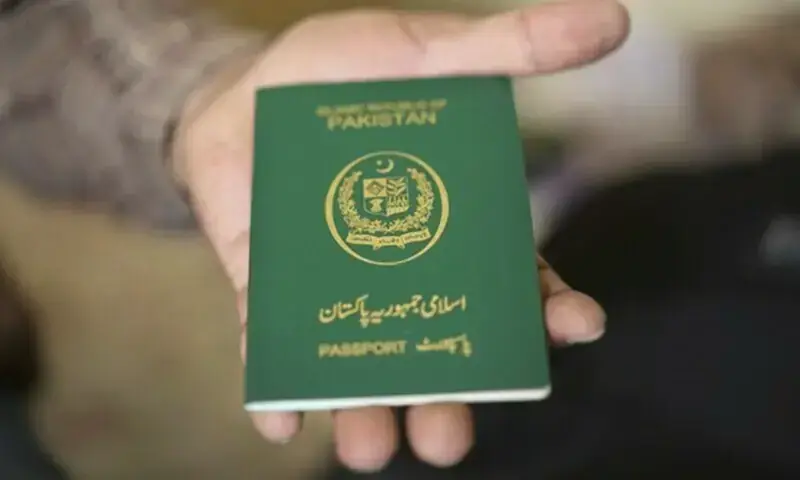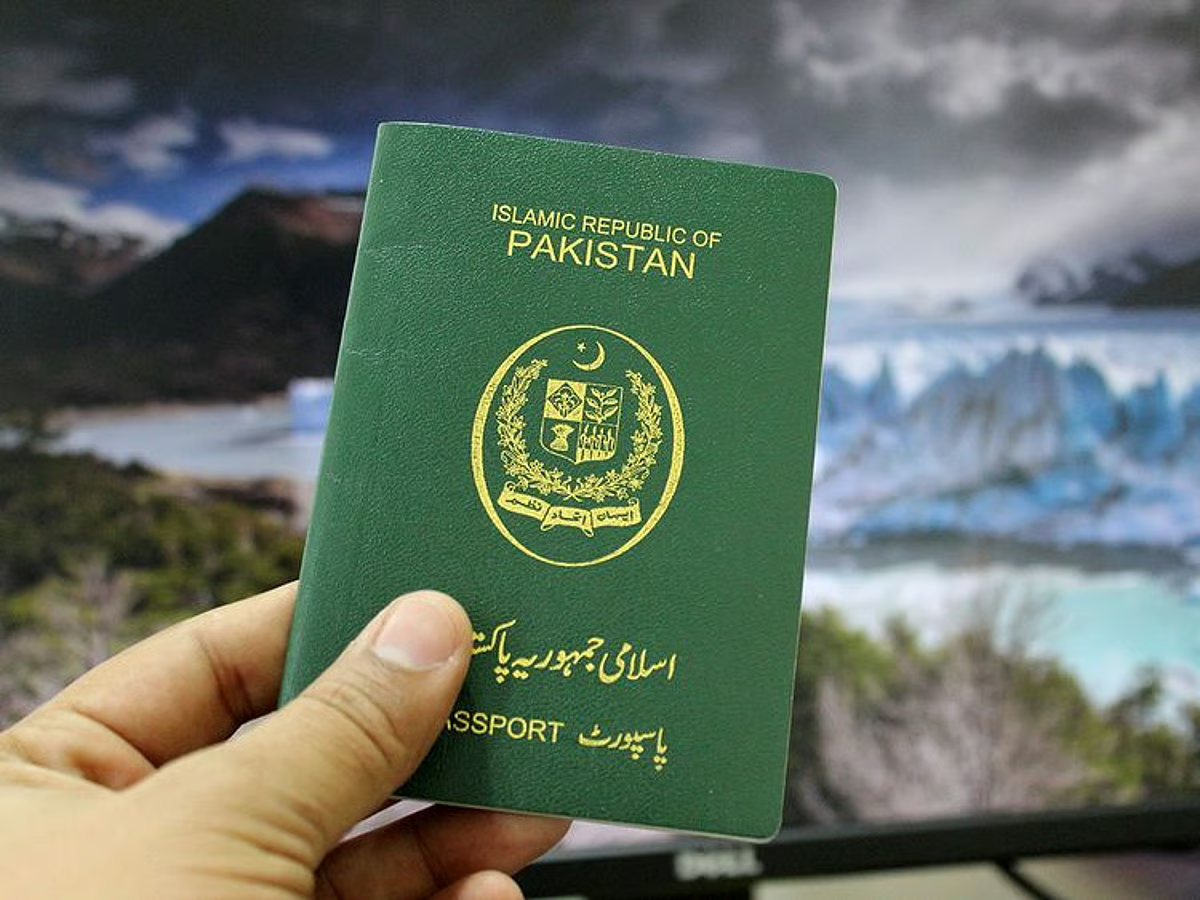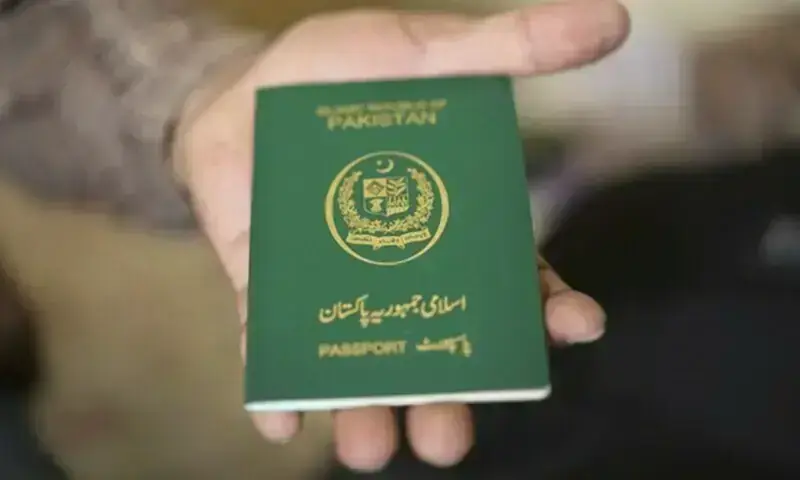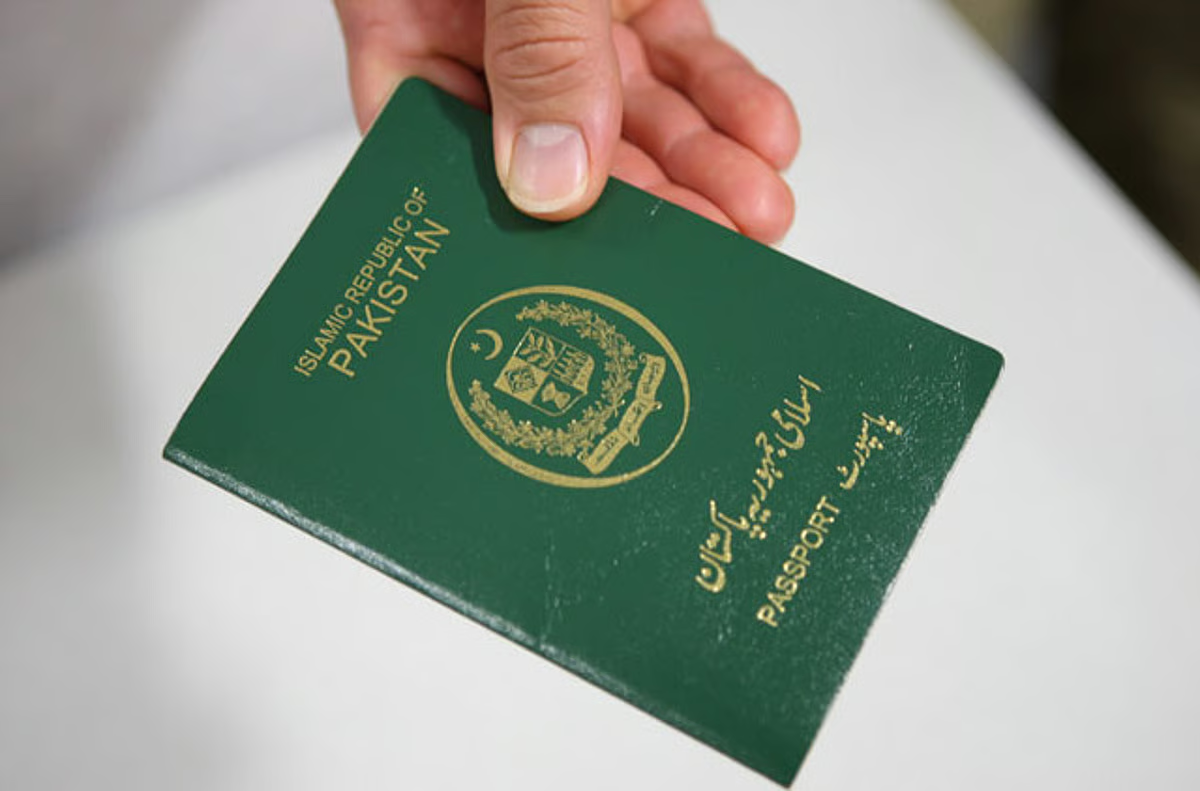
As millions of travellers prepare for the peak summer holiday season, the July 2026 Henley Passport Index highlights how global mobility has transformed over the past two decades. The 20th anniversary edition shows that the average passport now offers visa-free access to 108 destinations worldwide, compared with just 58 when the index launched in 2006.However, passport power has not grown equally. Changing diplomatic ties, security concerns, visa policies and geopolitical shifts have widened the gap between the world’s most and least mobile citizens.Pakistan’s passport 20-year journey: 79th to 101stPakistan’s passport ranking reflects the uneven nature of global mobility. In 2006, the country ranked 79th globally, but by 2026 it had fallen to 101st place.Over the past two decades, Pakistan’s ranking has fluctuated, reaching its lowest point at 113th in 2021 before recovering gradually. It ranked 103rd in 2025 and improved slightly in 2026.Pakistani passport holders currently have access to 29 destinations through visa-free entry, visa-on-arrival (VOA) facilities or electronic travel authorisation (ETA) arrangements.Pakistan passport ranking timeline2006: 79th2011: 99th2015: 107th2021: 113th (lowest ranking)2024: 101st2025: 103rd2026: 101stThe changes show how passport strength depends not only on travel agreements but also on diplomatic relationships, international confidence and global mobility trends.Pakistan passport changes in 2026Pakistan’s ranking shifted during the year as visa policies changed worldwide:2025: Ranked 103rd globallyJanuary 2026: Improved to 98th placeFebruary 2026: Rose to 97th placeMay 2026: Slipped to 100th placeJuly 2026: Ranked 101st with access to 29 destinationsHenley rankings can move when countries introduce visa waivers, tighten entry rules or change visa-on-arrival systems.Peace, conflict and passport powerThe Henley Passport Index 2026 comes alongside the 20th edition of the Global Peace Index, which highlights rising global instability. The report says state-based conflicts are at their highest level since the Second World War, while global peacefulness has declined for the 12th consecutive year.Henley & Partners’ analysis of two decades of data shows a strong link between peacefulness and passport strength. Many countries with high peace rankings also hold powerful passports, while conflict-affected nations often face weaker global mobility.Singapore leads, UAE becomes mobility success storySingapore remains the world’s most powerful passport in 2026, offering visa-free or visa-on-arrival access to 192 destinations.The UAE recorded the biggest improvement in Henley Passport Index history, climbing to second place alongside Japan and South Korea with access to 188 destinations. Over 20 years, the UAE added 153 visa-free destinations, highlighting the impact of diplomacy, international cooperation and economic influence.Where can Pakistani passport holders travel?Pakistani passport holders currently have access to 29 visa-friendly destinations through visa-free entry, visa-on-arrival (VOA) or Electronic Travel Authorisation (ETA) arrangements. Total accessVisa-free: 11 destinationsVisa on arrival (VOA): 15 destinationsElectronic Travel Authorisation (ETA): 3 destinationsTotal: 29 destinationsVisa-friendly destinations include:Asia: 5 destinations In Asia, Pakistani travellers can access Cambodia, Maldives, Nepal, Sri Lanka (ETA) and Timor-Leste through simplified entry arrangements.Africa: 10 destinationsAfrica offers the largest share of visa-friendly options, including Burundi, Comoro Islands, Djibouti, Guinea-Bissau, Kenya (ETA), Madagascar, Rwanda, Senegal, Seychelles (ETA) and Sierra Leone.Americas and Caribbean: 5 destinationsIn the Americas and Caribbean, Pakistani passport holders can travel to Barbados, Dominica, Haiti, St Vincent and the Grenadines, and Trinidad and Tobago with easier entry options.Pacific and island destinations: 9 destinationsIsland destinations available to Pakistani travellers include Cook Islands, Micronesia, Montserrat, Niue, Palau Islands, Samoa, Tuvalu and Vanuatu.Europe remains restrictedNo European country currently offers visa-free or simplified entry access to Pakistani passport holders under this list.E-visa destinations for Pakistani travellersElectronic visa systems have expanded globally, allowing travellers to apply online before departure.Asia: Bahrain, Indonesia, Malaysia, Myanmar, Oman, Qatar, Singapore, Tajikistan, Thailand, Türkiye, United Arab Emirates, Vietnam, Azerbaijan and Kyrgyzstan.Europe: Albania, Georgia, Moldova and the United Kingdom.Africa: Benin, Botswana, Burkina Faso, Cameroon, Côte d'Ivoire, Democratic Republic of Congo, Equatorial Guinea, Ethiopia, Gabon, Ghana, Guinea, Liberia, Libya, Malawi, Mauritania, Namibia, Nigeria, São Tomé and Príncipe, Somalia, South Africa, South Sudan, Tanzania, Togo, Uganda and Zimbabwe.Americas and Caribbean: Anguilla, Bolivia, Colombia, Cuba, Ecuador, El Salvador, St Kitts and Nevis, Suriname and The Bahamas.Island destinations: St Helena.The world’s most powerful passports in 2026The top-ranked passports in the latest Henley index are:Singapore — 192 destinationsUAE, Japan, South Korea — 188 destinationsSweden — 187 destinationsBelgium, Denmark, Finland, France, Germany, Ireland, Italy, Luxembourg, Netherlands, Norway and Spain — 186 destinationsAustria, Greece, Malta, Portugal and Switzerland — 185 destinationsHungary, Poland and the UK — 184 destinationsAustralia, Canada, Czech Republic, Latvia, Malaysia, New Zealand, Slovakia and Slovenia — 183 destinationsCroatia and Estonia — 182 destinationsLithuania and Liechtenstein — 181 destinationsIceland and the US — 180 destinationsPassport power reflects global influenceThe 20-year passport journey shows that travel freedom is closely linked to diplomacy, economic strength and international partnerships.While Pakistan has recovered from its lowest ranking in 2021, its passport remains significantly less powerful than it was two decades ago. As visa policies continue to evolve, passport rankings remain a reflection of the changing balance of global connections and geopolitical influence.
From 79th to 101st: How Pakistan’s passport journey changed in 20 years — visa-free travel list explained
Pakistan passport ranking falls from 79th to 101st in Henley Index 2026. See 20-year trends, visa-free destinations and what it means for travel freedom.
802 words~4 min read