I recently spent hours debugging a support bot that was supposed to handle customer inquiries about orders, shipments, and returns. The bot was built using LangGraph and MCP, and it worked great in isolation, but when we deployed it to production, it started to fail in unexpected ways. Sometimes it would answer questions about orders when the customer was asking about returns, or vice versa. It was as if the bot had forgotten what context it was in, and was just making random guesses.
After digging through the code, I realized that the problem was that the bot was trying to do too much itself. It was a single agent that was responsible for understanding the customer's question, retrieving the relevant information from the database, and generating a response. This was causing the bot to get overwhelmed and lose track of what it was doing.
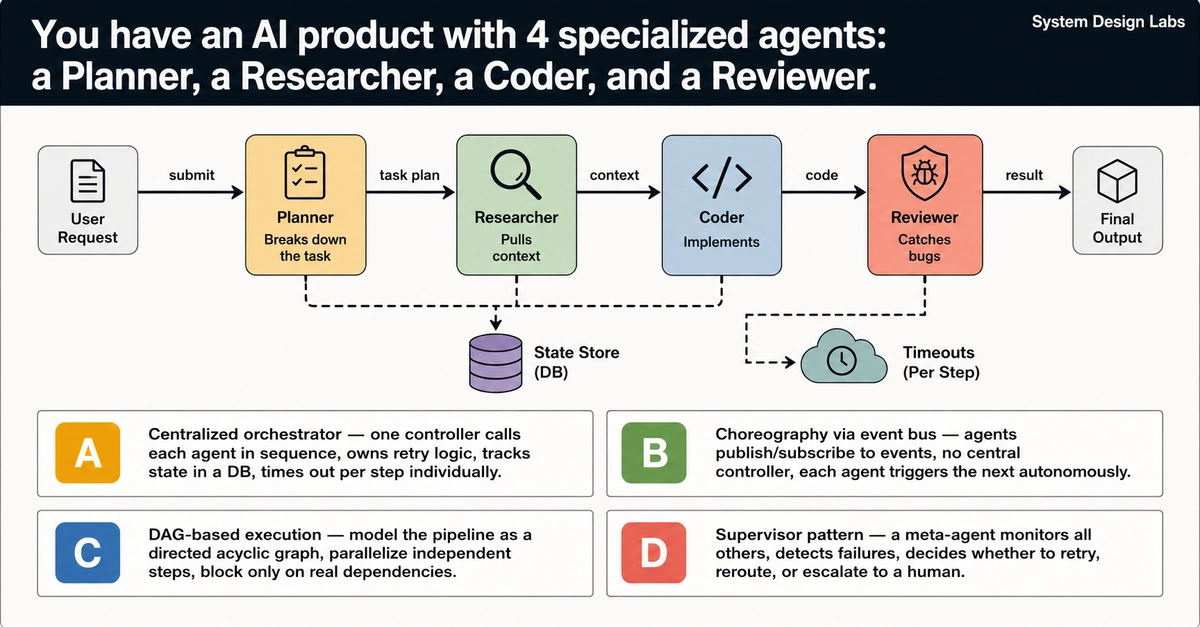
That's when I decided to try out the Supervisor pattern. The idea is to create a manager agent that delegates tasks to specialized worker agents. In this case, I created a supervisor agent that would receive the customer's question and then delegate it to one of three worker agents: an orders agent, a shipments agent, or a returns agent. Each worker agent was responsible for a specific task, such as retrieving information from the database or generating a response.