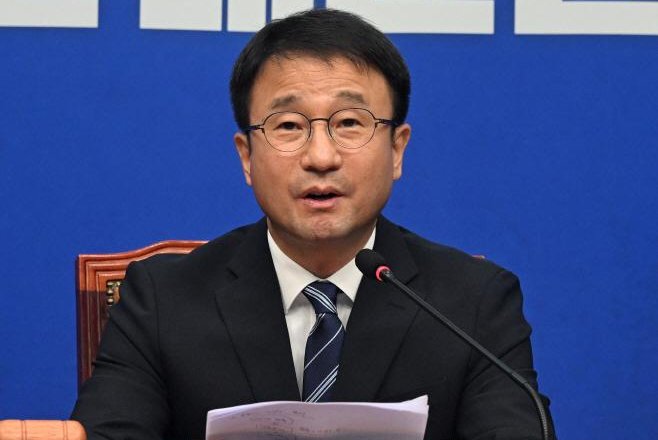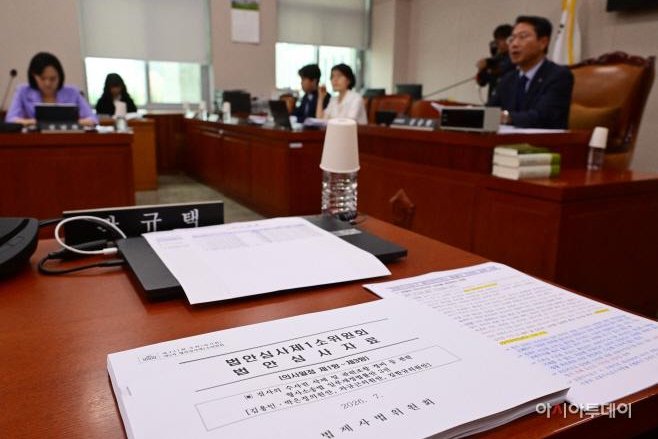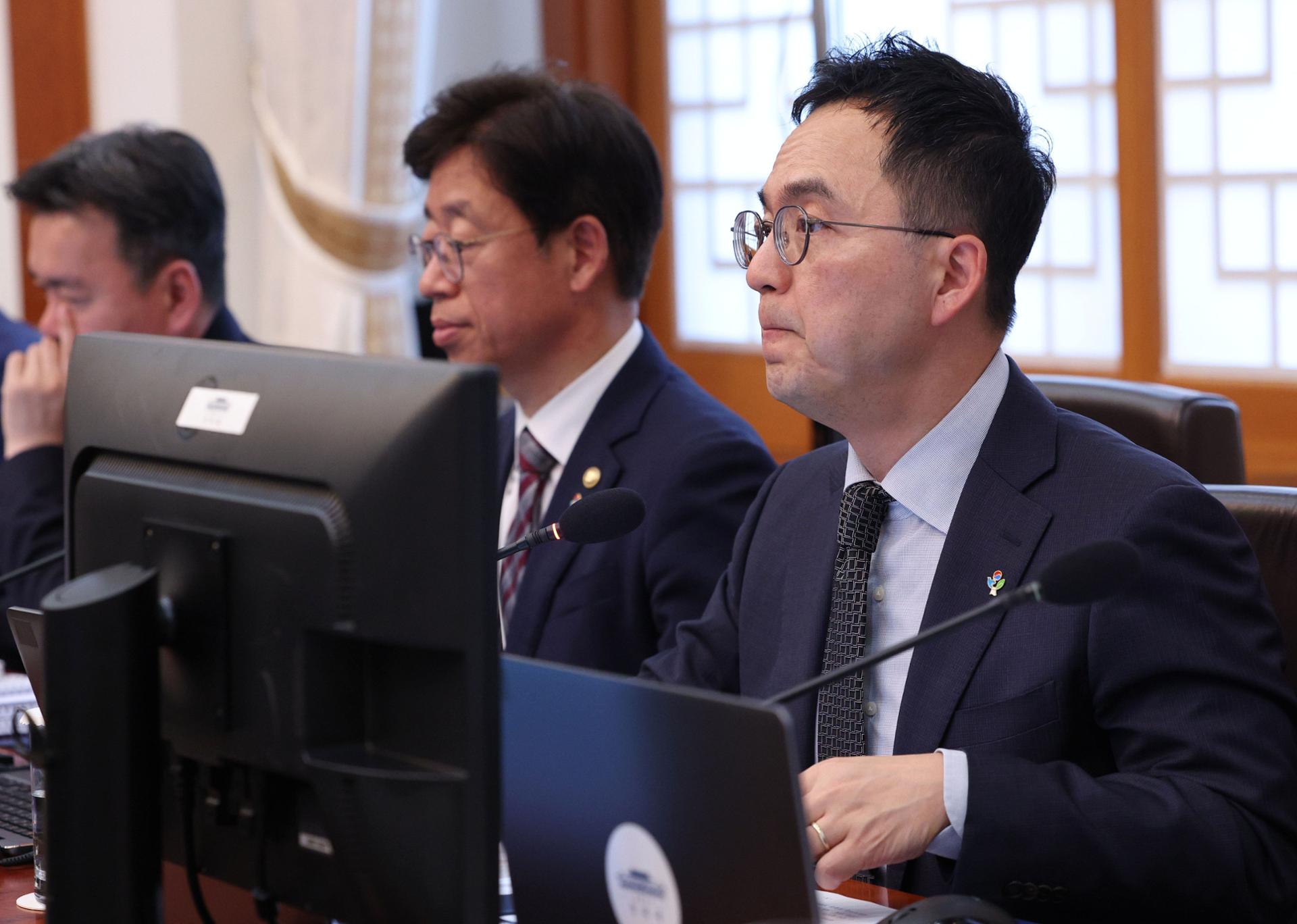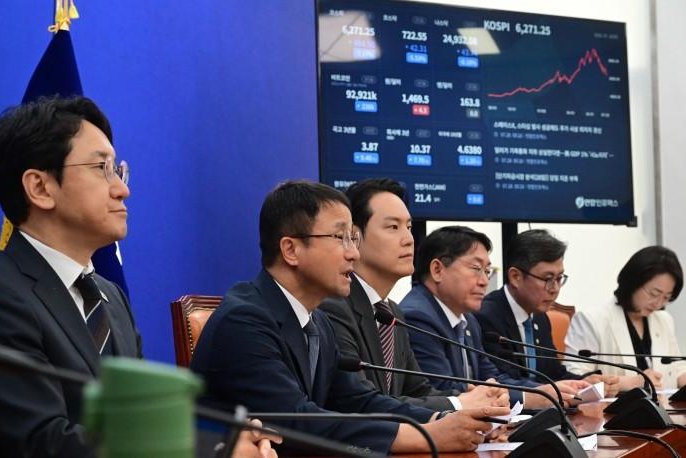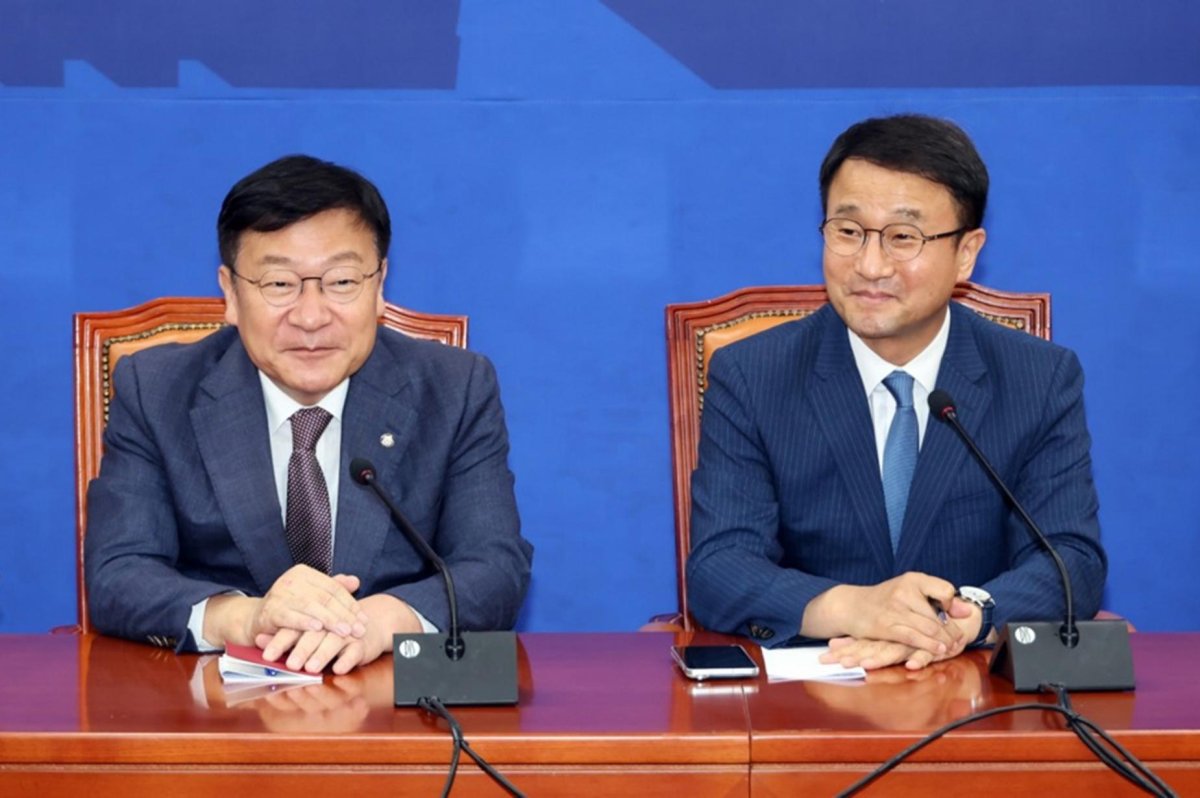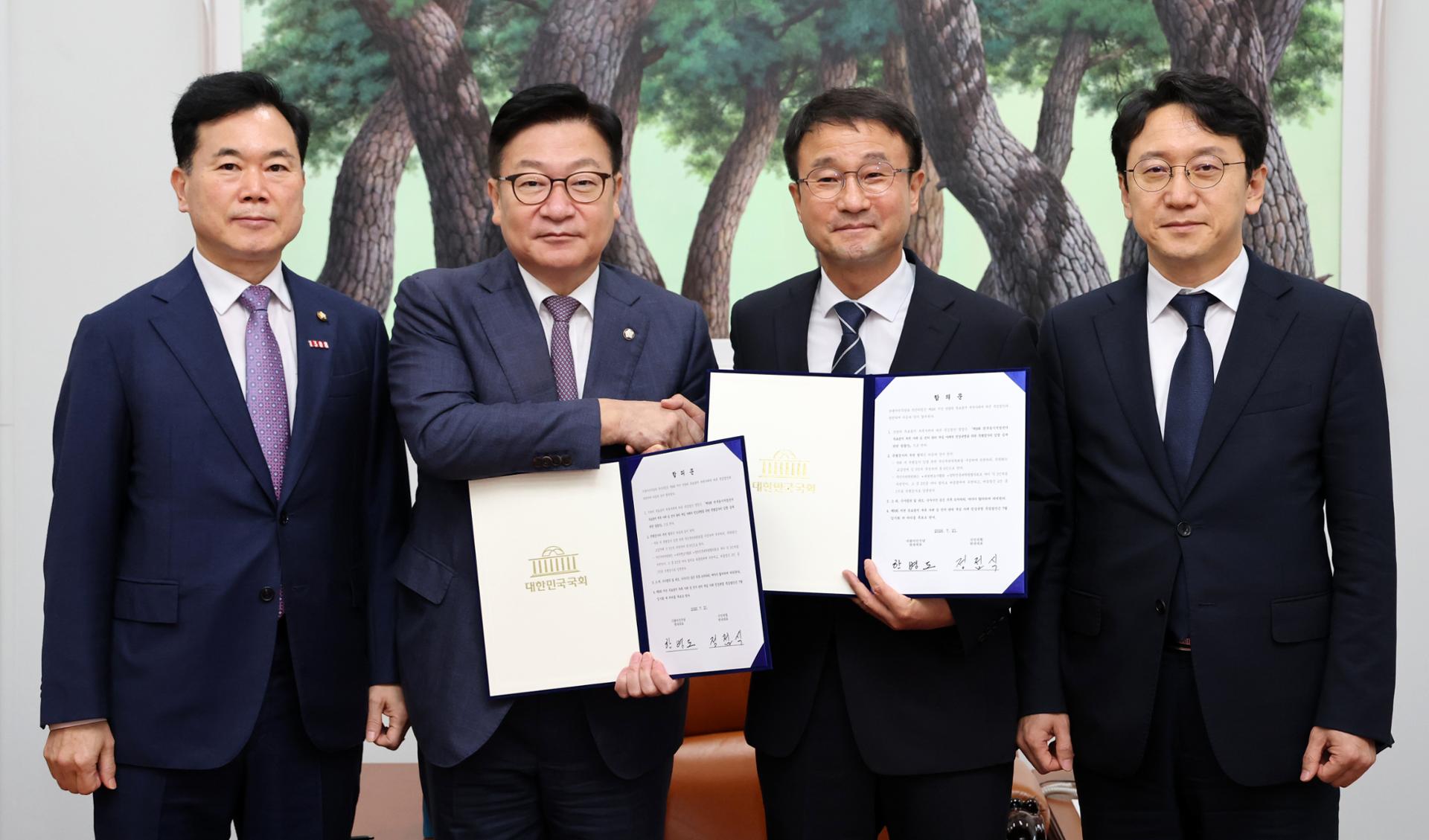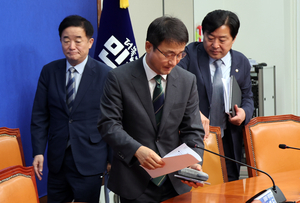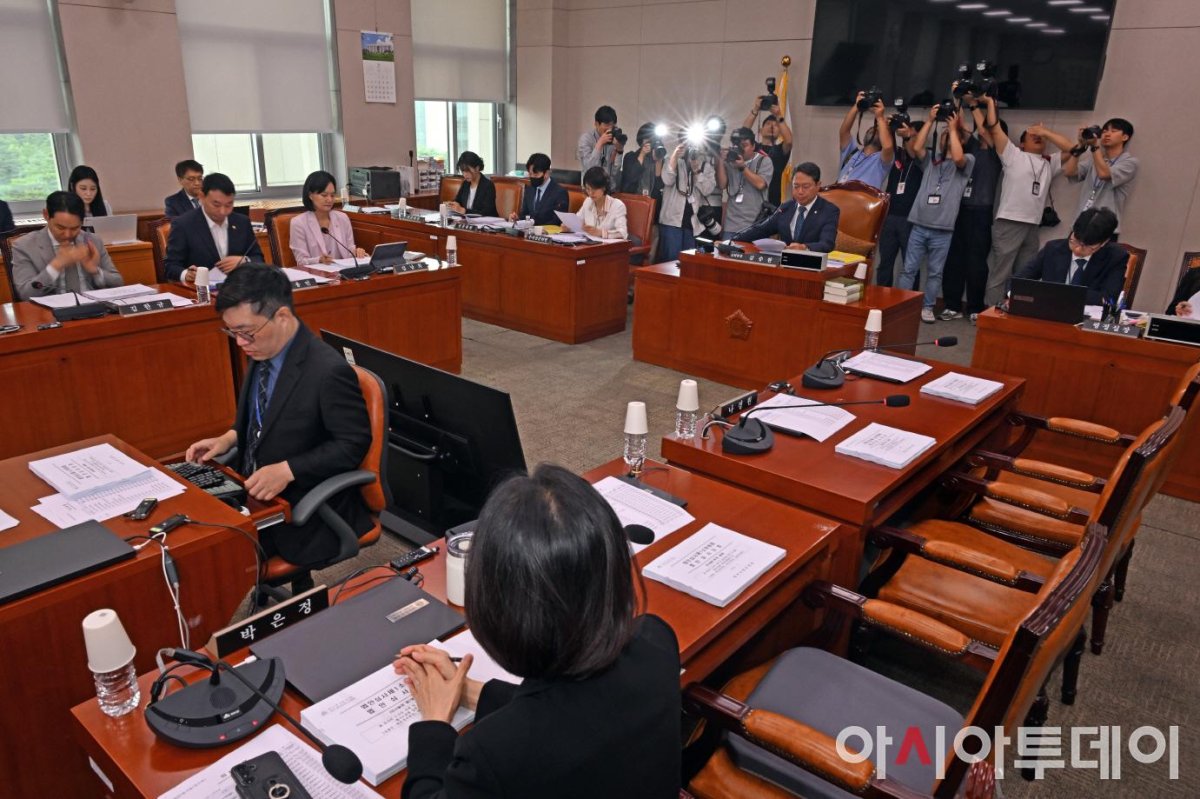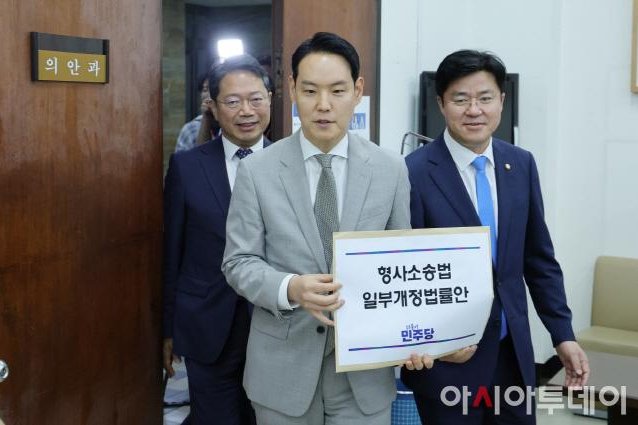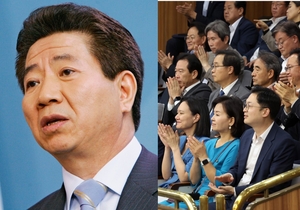
Liberal icon's death in 2009 spurred push for criminal justice system overhaul to curtail prosecution's power abuse. Now, ruling party is in final stretch to rein in prosecution Democratic Party lawmakers gather at a general assembly to discuss the revision to the Criminal Procedure Act to remove the prosecution's investigative power on Tuesday. (Pool photo via Yonhap) The ruling Democratic Party of Korea's push for the complete removal of the prosecution's investigative power is now in its final stretch, despite a range of concerns over the monumental change in South Korea's criminal justice system.On Friday, the party announced its plan to confirm a revision to the Criminal Procedure Act, which would remove the prosecution's power to investigate without exceptions, on a party-line bill. At present, the prosecution can investigate a criminal case if it is deemed that the initial police investigation was insufficient. The proposed revision will remove this conditional clause, leaving zero investigative authority in the prosecution. While the bill has been met with strong resistance from the conservative bloc and some groups representing victims of crimes, the Democratic Party says without it, prosecution reform would be incomplete.According to Democratic Party floor spokesperson Rep. Lee Ju-hee, the revision is "the final touch to complete the prosecutorial reform" and the bill embodies the party's determination to address the "hotbed of politically motivated prosecutors."The liberal bloc believes that the prosecution having both the authority to investigate and indict has enabled it to weaponize its power politically. Further, the proponents of the reform believe this "weaponized authority" enables the prosecutors' office to exert influence on politics and to collude with certain administrations seeking to target their political opponents.Lasting impact of Roh Moo-hyun's legacyThe Democratic Party's push for prosecutorial reform goes back more than two decades to Roh Moo-hyun.Roh, a liberal icon whose influence on the progressive bloc remains strong 17 years since his death, was the first South Korean president to push for prosecutorial reform to align the criminal justice system with democratic principles. In 2004, he unsuccessfully sought to establish an independent agency dedicated to investigating high-ranking officials' corruption to keep the prosecution's power in check.In 2009, just a year after his presidential term ended, Roh died by suicide while under investigation over corruption allegations. His supporters and many politicians aligned with the former president believe that investigation was politically motivated."We can never forget the profound anguish of being unable to do anything in the face of the ruthless investigations and public pressure that pushed Roh's life to the brink," said Rep. Han Byung-do, interim chair and floor leader of the Democratic Party."The history of political prosecution could repeat itself at any time," he added. "We will not pass on the failures and tragedies of the past to future generations." Former South Korean President Roh Moo-Hyun delivers his speech during a ceremony marking Korean Memorial Day at the Seoul National Cemetery on June 6, 2005 in Seoul, South Korea. (Getty Images) Grudge against prosecutionWhat Roh set in motion was picked up eight years later by former President Moon Jae-in — Roh's closest ally and his attorney in the corruption case — when he took office in 2017.During Moon's term, major changes were made to the prosecution's powers. Much of the prosecution's investigative authority was transferred to police. The National Office of Investigation was established under the national police to bolster its investigative authority, while the Corruption Investigation Office for High-ranking Officials was founded to investigate powerful figures independently of the prosecution.Many in the liberal bloc believe that this reform — strongly opposed by conservatives and prosecutors —has motivated criminal investigations concerning leading liberal figures.In 2019, former Justice Minister Cho Kuk — who spearheaded Moon's reforms — was indicted for forging academic credentials for his children. The top court confirmed a two-year prison sentence for Cho in 2024.In 2025, former President Moon was charged with bribery through his former son-in-law receiving over 200 million won ($137,000) from an entrepreneur.President Lee Jae Myung himself faced multiple criminal charges when his predecessor Yoon Suk Yeol was in power.Allegations against Lee range from false claims in his previous run for president in 2022 to collusion with private-sector developers that led to significant damages to a state-run developer. All of Lee's trials were suspended shortly after his inauguration."It would be fair to say that progressives believe the prosecution unfairly targeted Cho Kuk to halt prosecutorial reform during the Moon Jae-in administration, and some progressives believe the charges against Lee Jae Myung are also politically motivated," commented Benjamin Engel, an assistant professor of Korean Studies at Dankook University."In this reading, prosecutorial reform is politically motivated by grudges against the prosecution. However, because a 'grudge' may be part of the motivation does not mean the reform is unnecessary or unjustified.""(The liberal-led reform) is occurring to limit the power of prosecutors and for reasons of partisan politics," said Bernard Rowan, a professor of political science at Chicago State University."I cannot say whether there are deep-seated grudges, but grudges tend to happen on any and all sides in politics, and memories of perceived injustice run long, and not just on one side." Democratic Party Reps. Lee Ju-hee and Kim Han-kyu on Friday announce plans to put a revision to the Criminal Procedure Act to a party-line vote once the bill is forwarded to the plenary session of the National Assembly. (Yonhap) Deep polarizationFor the liberal bloc, the political landscape has never been more favorable for implementing sweeping prosecutorial reforms.The Democratic Party holds an overwhelming majority in the National Assembly, while the president has been supportive of such measures throughout his political career. The timing of Lee's inauguration — taking office in the wake of political turmoil set off by conservative Yoon's martial law declared in December 2024 — also set the reform drive on firmer ground. The reform drive has also been championed by a number of Democratic Party lawmakers, including Reps. Park Jie-won and Song Young-gil, who have had personal run-ins with the prosecution that they say were politically motivated. Additionally, six of the current 161 Democratic Party lawmakers — Reps. Kim Dong-ah, Kim Gi-pyo, Kim Seung-won, Lee Geon-tae, Park Kyoon-taek and Yang Bu-nam — are former attorneys who defended Lee in his criminal cases."Would politicians charged with crimes personally benefit from prosecutorial reform? Likely," Engel said. "But if we are going to ask who benefits from the reform, we also need to ask who would benefit from the reform being halted."Experts, however, say elements of the prosecutorial reform could engender deeper polarization."The recent spate of tit-for-tat prosecutions of both liberal and conservative former presidents and leaders, and members of their governments and families, partakes of a concern for limiting executive power, politics and polarization," Rowan said."I think that Korean democracy is strong, but since there have been for some time allegations for nearly each and every administration, it tends to make the public more cynical over time, regardless of party."Engel said the Democratic Party's unilateral push for reform and the public backlash is "a symptom of polarization.""In that sense, pushing for prosecutorial reform will undoubtedly elevate or maintain polarization in the short-term, because a polarized society has polarized views of prosecutorial reform," he said."However, in the long-term, prosecutorial reform, if successful in depoliticizing the prosecution, can help alleviate polarization."
History, motivations of Democratic Party's decadeslong prosecution reform drive
The ruling Democratic Party of Korea's push for the complete removal of the prosecution's investigative power is now in its final stretch, despite a range of co
1,212 words~6 min read