Support CleanTechnica's work through a Substack subscription, on Patreon, or on Stripe. Help us produce all of the high-quality, original content we publish week after week despite the challenges of content-scraping AI, antisocial media, inflation, and other hurdles.
By Ray Wills, Peter Newman AO, and Raphael Wellmann
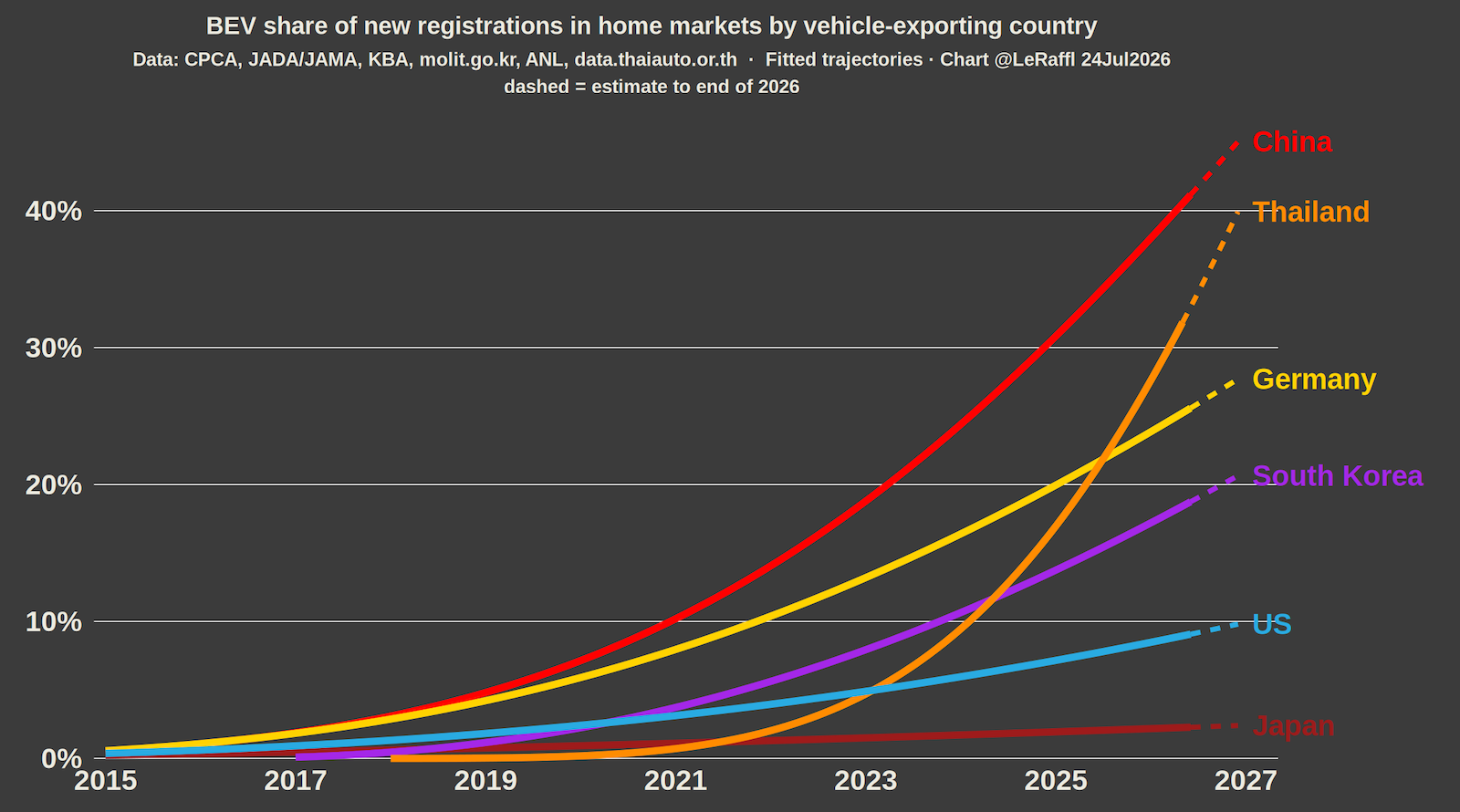
China’s latest NEV plan makes one thing clear: the future global car hierarchy is being decided at home, not in export markets. Less expected is the rapid rise of Thailand, which is following China’s playbook with striking success.
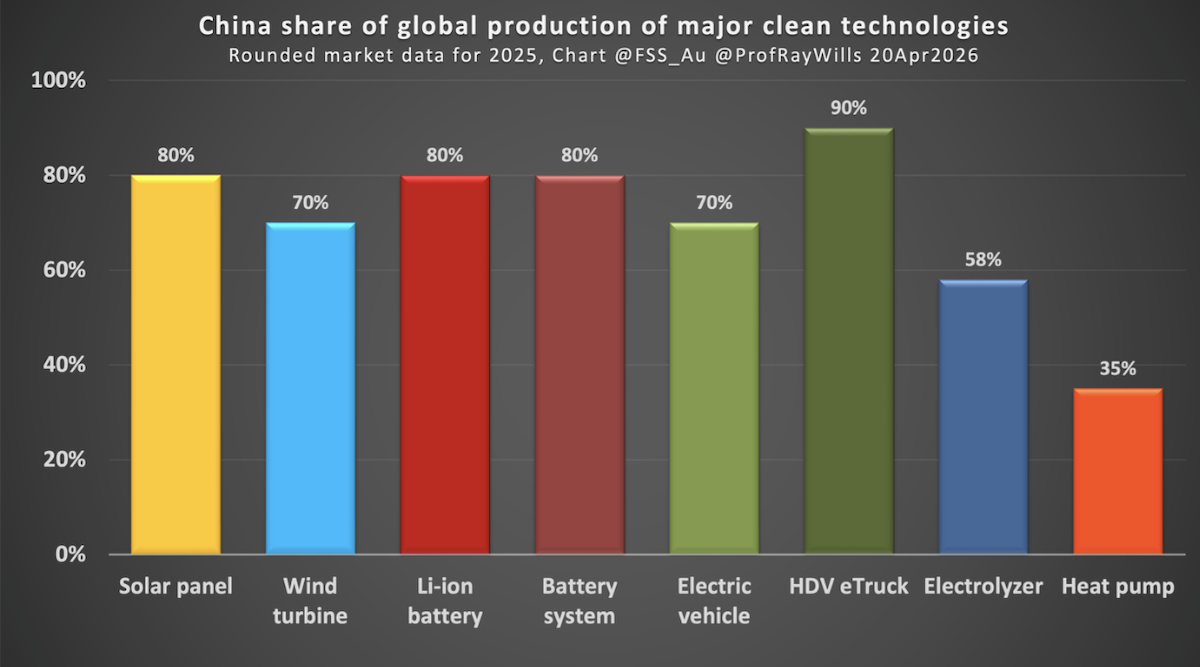
Beijing’s new carbon‑peaking action plan requires new energy vehicles (NEVs) to reach 30% of the entire national fleet by 2030 — not just 30% of sales. That implies well over 100 million NEVs on Chinese roads, more than double today’s level. And the direction of travel is only hardening: China’s new 15th Five‑Year Plan explicitly calls for expanding the supply of NEVs, and Hainan has just become the first Chinese province to finalise a 2030 ban on new fossil‑fuel car sales, targeting 45% NEV fleet share. The point isn’t just climate: it locks in domestic scale, learning, and supplier depth that are already driving China’s rise as the world’s biggest car exporter, with EVs now accounting for a rapidly growing share of those exports.