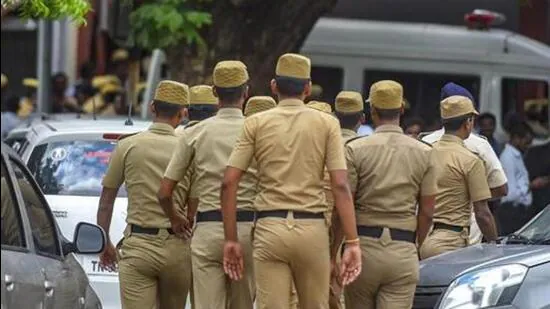
In the climax of Singham, the cornered villain appeals to the director general of police. The reply is now folklore: “DGP hai hi kahan? Woh toh mast so raha hai.” On record, the chief lay sedated; in reality, he stood in that room—one uniformed family protecting its own.Trust returns when police protect citizens. (Picture only for representational purpose)Fifteen years later, Chandigarh has inverted the plot. On paper, everyone is awake: Rosters are full, nakas are manned, and budgets are consumed. In truth, the force sleeps—and this time, it is the citizen’s family under threat.Look at the scoreboard: Daylight shootings in Sector 14, Sector 9, and now Sector 11, where a cashier took 13 bullets in a crowded market just steps from a police chowki. The killers drove across the city while officers stood at checkpoints. And where goes the force’s energy while bullets fly? Traffic challans—a blitz so relentless that residents now call the city “Challangarh.” Cameras that could track criminals are instead mapping wallets.Four files, one broken systemI write not from newspaper clippings, but from my own case files. Behind each is a family that trusted the uniform, only to run from pillar to post for nothing.The FIR that took a court order: A family suffered a planned home invasion—hammers, step-ladders, smashed doors, and death threats, all captured on CCTV. Policemen witnessed it firsthand, with one drawing his weapon to restrain the goons. Yet, the FIR took 15 days to register. The investigation then stalled for nearly a year on a non-existent “stay,” until the Punjab and Haryana high court intervened. The departmental inquiry’s response? Branding the victim a “habitual complainant.”The missing daughter: A 21-year-old went missing; her family reported it immediately. Instead of filing an FIR as mandatory precedent demands, the police recorded a mere daily diary register (DDR) entry and concluded, without checking, that she “left of her own will.” Only after persistent follow-ups forced a phone trace was she found within days. The capability was always there; the will was not.Failure to protect children: Minors at a sports academy alleged physical and sexual assault during a match. Despite immediate complaints, the FIR took six weeks. Police insisted on recording the children’s statements at a police post—a clear violation of the POCSO Act—and tried to re-interrogate a child already heard by a magistrate, all while pushing to close the case. To top it off, the closure notice was sent to the wrong address.The theft nobody would register: A Kishangarh tenant woke up to find his phone, cash, ATM cards, and identity papers stolen—a clear cognizable offence. Refusing an FIR, the police blamed the victim and redirected him to an online portal. Though his stolen phone stayed active for hours, no one traced the live signal. A formal representation to the SSP sat unanswered for weeks.These cases reveal a clear pattern. The weight of the system falls squarely on the victim. A turned-away citizen stops reporting; a harassed witness stops speaking. Trust is a force’s true intelligence. When it collapses, criminal elements step into the vacuum. The Sector 11 shooters read that signal long before pulling the trigger.Force not the enemyTo be fair, the average constable is not the villain. Junior ranks endure gruelling rosters, sleepless weeks, and thin salaries. An exhausted force cannot police effectively.Yet this city transforms when a VIP visits or strong leadership demands accountability. Kiran Bedi’s 44-day tenure in 1999 put beats on motorcycles round-the-clock and streamlined traffic. Former DGP Surendra Singh Yadav’s standing orders demanded unbiased inquiries and made investigating officers (IOs) and station house officers (SHOs) personally accountable for delayed chargesheets. But these tenures were brief; the reformers left, and the old system returned. Meanwhile, officers facing grave criminal allegations remain on active duty in stations.Six signatures to fix the forceSingham’s heroes broke the law to deliver justice; Chandigarh’s police simply need to follow it. No extra budget is required—just six actionable steps:Operationalise e-FIRs: Enforce electronic FIRs under Section 173(1) of the Bharatiya Nagarik Suraksha Sanhita (BNSS) with strict digital tracking. The SHO’s habit of stonewalling complaints will end overnight.Audit registration: Mandate a weekly SSP audit comparing complaints to registered FIRs in cognizable cases. Refusal to register an FIR must be treated as misconduct, as mandated by the Supreme Court.Smart policing over revenue collection: Dismantle redundant nakas that only harass commuters. Reorient existing CCTV networks and crime records data to build predictive heat-maps reviewed monthly—similar to New York’s CompStat model.Restore beat policing: Assign named constables to designated sectors with hot-spot patrols and human-centric shifts that allow officers proper rest. Rested, familiar beat officers are why Kerala consistently ranks top in public trust.Enforce time-bound SOPs: Revive strict timelines for investigations and scrutinise cases that end in acquittals to eliminate diluted or fabricated chargesheets.Clean up the thanas: Remove any officer facing serious criminal allegations from station duty until cleared. Implement 90-day inquiries with published outcomes—a simple transfer of duty requires only the stroke of a pen.In Singham, the sleep was fiction and the vigilance was real. In Chandigarh, the vigilance is the fiction. This force is not part of a movie script; it is bound by the Constitution. Its citizens—and its exhausted constables—are waiting for it to wake up and play its part.(The writer is a practising advocate at Punjab and Haryana high court. Views expressed are personal)theeamitsharma@gmail.com
Guest column | Singham’s wake-up call for Chandigarh Police
While police personnel chase traffic challans, daylight shooters have their way; it’s time to rebuild public trust and hold the uniform accountable
884 words~4 min read