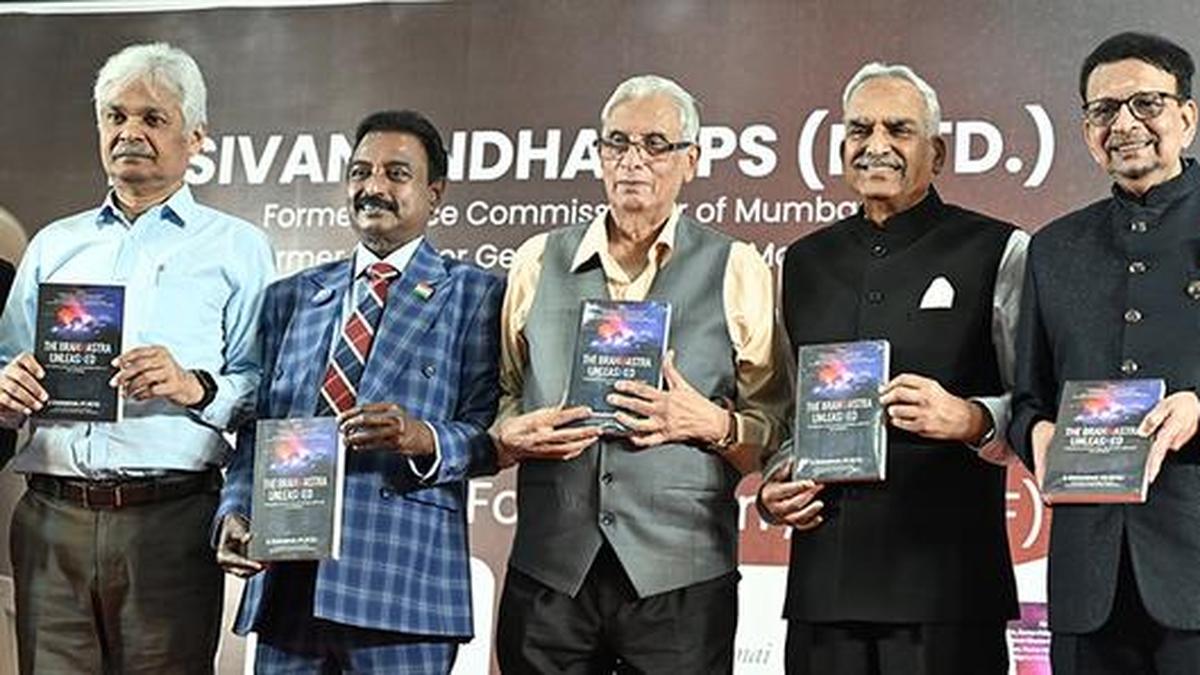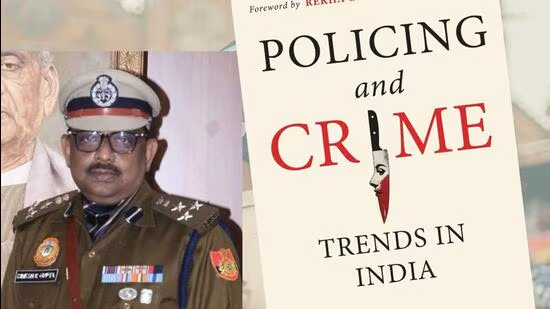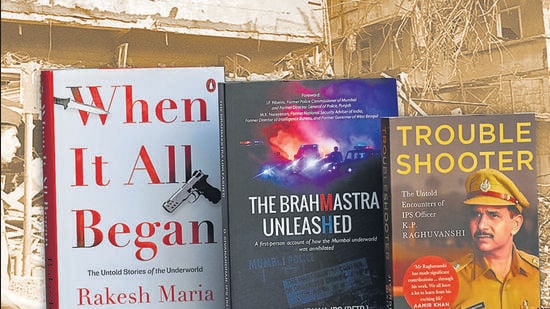
One day, towards the end of the 1990s, the phone rang in the office of the newspaper I then worked at. The caller spoke gruffly, but not roughly, to complain about a story on Dawood Ibrahim the paper had run. It was one of those reader complaints to which there was no real response, for the man speaking at the end of the landline said he was Chhota Rajan.Top cops who fought Mumbai’s underworld chronicle its historyAt the time of this call to the newspaper, Chhota Rajan was supposedly living on a ship somewhere off the coast of Malaysia. Was it really him calling on a satellite phone? Hard to tell. But this is to illustrate how so much of the underworld, and the reportage around it, was smoke and mirrors despite the real terrors Mumbai was then undergoing.A slew of recent books by officers retired from the top rung of Mumbai police now attempts to offer authoritative police accounts of the underworld. Rakesh Maria, former Mumbai police commissioner, has published ‘When It All Began: The Untold Stories of the Underworld,’ a riveting account of the OG gangsters, Karim Lala, Haji Mastan, Varadarajan Mudaliar and the early days of a stripling Dawood. The book ends tantalizingly at the point where Dawood Ibrahim has fled India, and is just starting to grow his business empire in Dubai. What happens thereafter? “That’s for the next book, inshallah!” writes Maria.His senior in the force, Dhanushkodi Sivanandhan who was also Mumbai CP, and retired as director-general of police, Maharashtra, has written ‘The Brahmastra Unleashed: A first-person account of how the Mumbai underworld was annihilated.’ Sivanandhan was one of the key formulators of MCOCA—the Maharashtra Control of Organized Crime Act—which was so effective that it was adopted by several states including Delhi which retained even the nomenclature. Sivanandhan asserts it was MCOCA, and not the spate of police encounters, which cut the underworld at the knees.‘Troubleshooter: The Untold Encounters of IPS Officer KP Raghuvanshi,’ is an authorized biography by journalist Jitendra Dixit. Raghuvanshi headed the Maharashtra Anti-Terror Squad during the 2006 7/11 serial train blasts in Mumbai in which 209 people died, and then again after Hemant Karkare’s death in the 26/11 terror attacks in 2008. Later in the year, Rupa Books is publishing former Mumbai police commissioner MN Singh’s memoir in which he writes at length about the Mumbai underworld and the 1993 serial blasts case. Singh also writes about arresting Bal Thackeray when the Shiv Sena founder presided over Bombay as its unelected ruler.Read together, these books document some of the most troubled years in Mumbai’s history. Like the Yakuzas did in Japan, the Mumbai underworld too rose and thrived amid social churn, corruption and political turpitude. What distinguishes the Mumbai underworld however was the sway it held even years after most of its key protagonists had left India, and their eventual morphosis into trans-national terrorists.As Rakesh Maria points out in his book, Dawood Ibrahim left India 40 years ago but has remained an outsized presence. And when he left India in mid-1986, it wasn’t so much from fear of law enforcement as from rival Dongri gangsters with whom he had been engaged in a bruising battle for dominance. ‘Sar salamat toh pagdi pachaas’ (honour can be regained but first you have to survive) was his pragmatic motto, writes Maria.But it wasn’t just Dawood and his gang who operated from abroad. Ravi Pujari worked from Burkina Faso and Senegal, Hemant Pujari from Malaysia, Abu Salem from Portugal, Babloo Shrivastava from Nepal, Munna Jhingada from Pakistan, Ejaz Lakdawala from Canada, Ghana and Nepal, Chhota Rajan from Malaysia, Cambodia and Australia. Some of these men were eventually brought back by to India and are facing trial, some died, while yet others remain at large.The impunity they operated with is revealing. Chhota Shakeel, Sivanandhan writes in his book, terrorized Mumbai with a proxy he created. Rahim Merchant, a Karachi businessman, learnt to mimic Shakeel’s voice perfectly, and it was he who would make those dreaded extortion calls to businessmen in Mumbai. “The con fooled almost all law enforcement agencies in India…Its audacity was such that Shakeel started calling anyone at any time, confusing law enforcement agencies, journalists and others for decades.” It was Shakeel who recruited Abu Salem into the gang as a driver, and parted ways with him when Salem executed an unauthorized hit on Gulshan Kumar. And it was Shakeel again who masterminded the daring attack on Chhota Rajan in Bangkok in September 2000 nearly killing him.Much has been said in the media and elsewhere of the split between Dawood and Chhota Rajan after the 1993 blasts with Dawood portrayed as the Muslim don and Rajan as the Hindu countercharge. But Sivanandan writes the split occurred even before the demolition of Babri Masjid. In April 1992, Rajan executed a hit on Shiv Sena corporator Khim Bahadur Thapa without Dawood’s consent, leading to a furious Dawood issuing a kill order against Rajan. Rajan fled to Dubai before that could be enforced. He stayed out of India from 1992 until his extradition in 2015. The gangs were religion agnostic—some of Dawood’s closest associates in the early days were people like Subash Singh Thakur, Sunil Sawant, Gopal Rajwani, Dilip Buwa and Maya Dolas while his biggest threat came from the Pathan gangsters Samad Khan, Alamzeb and Amirzada.When Chhota Rajan was hospitalized in Bangkok after Shakeel’s attack on him in 2000, India was unable to convince the Thai authorities to hand him and Munna Jhingada, one of the attackers, to her. While the Jogeshwari-born Jhingada was deported to Pakistan on the basis of a fake passport, Rajan was allowed to stay on in hospital for two months. Famously, one night he rapelled down his third-floor hospital room even as four Thai cops stood guard outside, and escaped to Sydney.After these diplomatic setbacks to get the gang leaders, Mumbai police began using the blunt instrument of encounter killings against the rank and file. What these books, despite the occasional self-congratulatory note, also reveal is the larger investigative shortcomings of law enforcement. KP Raghuvanshi tells his biographer that the lower-ranking officers would be in such awe of Abu Salem that they would not meet his eye while interrogating him. “Mumbai, in those days, was a dream city that was at war with itself,” says MN Singh. Breathless reportage and films first mythologized the gangsters and then the encounter specialists. Nayakan, Dayavan, Satya, Company, D, D-Day, Shootout at Lokhandwala, Ab Tak Chhappan, Once Upon A Time In Mumbai, Gangubai, Hasina Parkar were just some of the films based on the underworld. The recent blockbuster Dhurandhar 2 has a fantasy sequence, in the vein of the scalp hunters of Inglorious Basterds, of an Indian agent poisoning Dawood Ibrahim.But a close reading of these books written by police officers who were at the frontlines of the war against the underworld, shows up the gangsters as men with fragile egos and hair-trigger tempers.Mumbai has thankfully lost the reputation of a megapolis run by larger-than-life men suffering from God delusion. But it remains to be seen what the new forces of development, the rise of the new rich and the marginalisation of the underclass will unleash. Like the sea, the city is always in churn.
Top cops who fought Mumbai’s underworld chronicle its history
A recent slew of books by retired top cops goes beyond the myth-making, revealing insights into the terrifying decades of the underworld’s hold over Mumbai | Mumbai news
1,210 words~6 min read