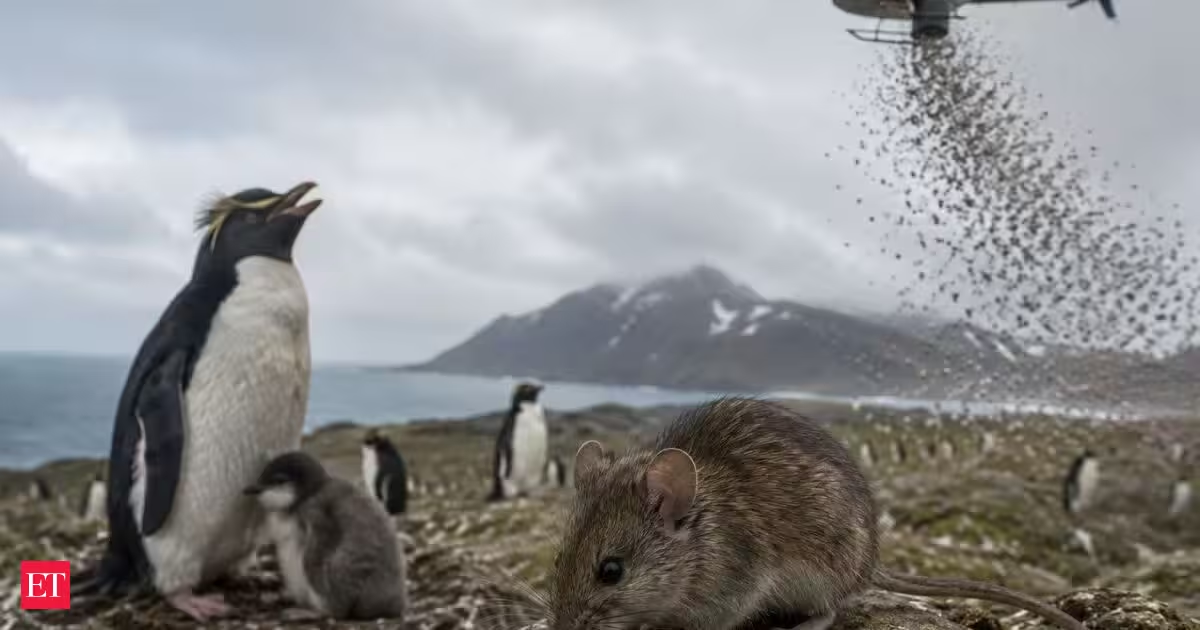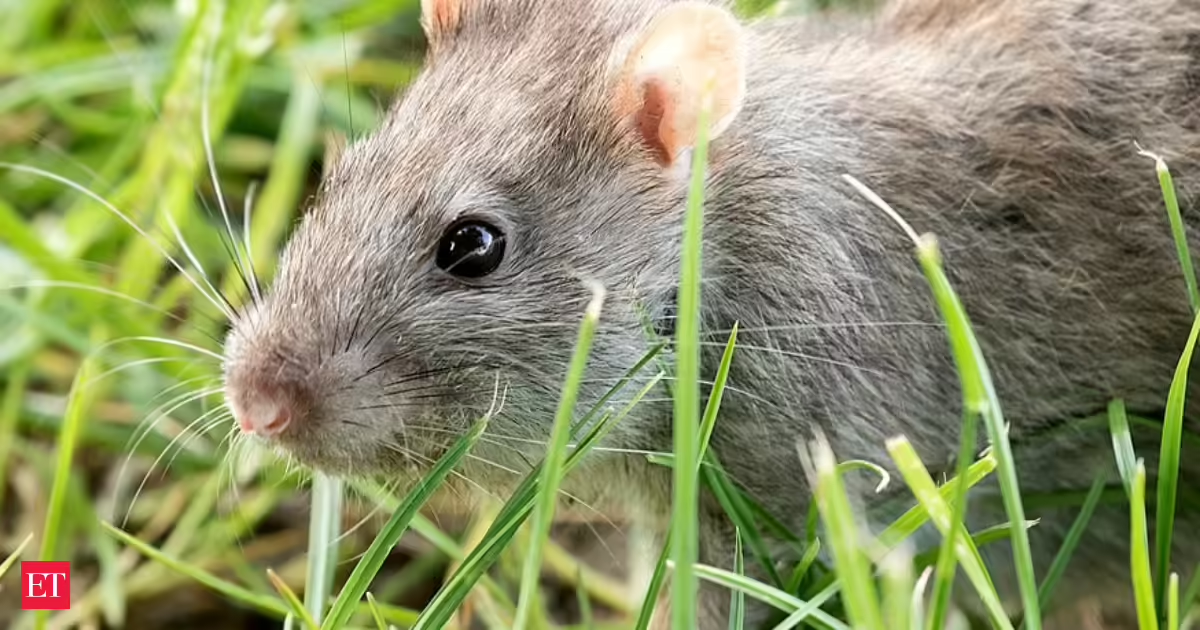
South Georgia is a remote island in the chilly South Atlantic. It's about 800 miles from the nearest town. For two centuries, rats ruled this island. Then, in 2018, every single one of them was gone.According to Smithsonian Magazine, a British charity began dropping more than 300 tons of poisoned bait on the island in 2011. The drops continued, in phases, till 2015. This was confirmed as the largest island rat eradication ever completed anywhere in the world in a peer-reviewed paper in the journal Oryx. The poison was brodifacoum, and a single dose is often enough to kill a rat.The project was staggeringly large: crews flew 100 helicopter days over three field seasons and spread roughly 1,500 tons of bait across 1,650 square kilometers of rugged terrain, then followed up with intensive monitoring before declaring success. The paper says the effort was designed to hit every likely rat refuge on the island, including glacier edges and steep coastal slopes.The paper describes a three-phase campaign between 2011 and 2015, using bait drops timed to take advantage of winter conditions and rodent biology. It also notes that after the last island wide treatment, years of detector dogs, cameras and bait stations found no sign of surviving rodents, allowing the team to call it the largest successful rodent eradication on record.How rats took over the islandRats didn't decide to go to South Georgia. They got there as stowaways. Sealing and whaling ships introduced them in the late 1700s. Old whaling stations gave the rats food and shelter. There were no natural predators on the island to stop them.According to the Government of South Georgia & the South Sandwich Islands, the rats gradually spread along about two-thirds of the coast. Most of the local birds nest on the ground, and since there are no trees on the island, eggs and chicks became easy meals for rats. The South Georgia pipit is the world’s southernmost songbird, found nowhere else on Earth. Rats almost wiped it out. A local duck called the South Georgia pintail struggled too.Once nearly extinct, the South Georgia pipit is now a symbol of the island's recovery. Image Credits: Wikimedia CommonsOne of the biggest rat eradications ever attemptedThe South Georgia Heritage Trust is a UK charity for conservation. The group decided to clear the whole island at once. No one had tried this on such a large scale before. The island’s glaciers that run from the mountains to the ocean actually helped. According to the Oryx study, the glaciers acted as walls and divided the island into different zones that the rats could not cross. So the team could treat one zone and then move on to the next. The project was called the Habitat Restoration Project. It was implemented in three phases, in 2011, 2013 and 2015.Helicopters dropped poisoned pellets over more than 100,000 hectares of coastline and valleys, the Government of South Georgia noted. The first stage alone lasted just 28 days. The weather was brutal the whole time. This alone already made it the largest island rat removal ever attempted at the time, and two more stages still lay ahead.How they proved the rats were really goneKilling the rats was only half the job. Proving they were gone was even harder. In late 2017, a team called "Team Rat" arrived. They spent six months searching the island. They used more than 4,600 detection tools, like chew sticks and tracking tunnels. Specially trained dogs sniffed for rats too. This comes from the Government of South Georgia.The search found nothing. No droppings. No chew marks. No tracks. On May 18, 2018, officials declared South Georgia free of rats and mice. The cleared area was more than eight times larger than Australia's Macquarie Island. That island had held the old record, at 12,780 hectares.What happened to the birds nextAccording to the Oryx study, seven of the island's 30 breeding bird species did lose some numbers from the poison itself. But every one of those species bounced back within five years. The South Georgia pipit was the first bird recorded breeding in the newly cleared areas. The Oryx study also tracked one seabird species near the island's main research base: sightings jumped from just a few dozen before the cleanup to several hundred within five years.South Georgia's glaciers split the island into zones, making the rat removal possible. Image Credits: Wikimedia CommonsThis kind of comeback is not just a South Georgia story, either. A global study titled ‘Invasive mammal eradication on islands results in substantial conservation gains,’ in the Proceedings of the National Academy of Sciences, looked at island cleanups worldwide. It was led by ecologist Holly Jones. According to the PNAS study, clearing invasive mammals from islands has likely helped about 6 percent of the world's most threatened birds, mammals, and reptiles. Scientists now point to South Georgia as one of the clearest examples of this pattern.Why this matters to American readersThe full project cost about £10 million, according to the Government of South Georgia. Some of that money came from American donors, through a US-based partner group called Friends of South Georgia Island. So even if you never visit South Georgia, you may have helped fund its comeback.The island still needs protection. South Georgia now runs one of the strictest biosecurity programs in the world. Trained dogs check ships and cargo before they land. It would only take one pregnant rat to undo years of work. Other places are watching closely. New Zealand, for example, wants to remove all invasive predators by 2050. For many conservationists, South Georgia proves that even a badly damaged ecosystem can heal. It just takes patience, funding, and a lot of helicopter flights.
Britain dropped more than 300 tons of poison across South Georgia to kill every rat; by 2018, over 100,000 hectares were rodent-free
In a groundbreaking conservation effort, South Georgia has successfully eradicated rats from the island using over 300 tons of poisoned bait, allowing local bird populations to recover. Learn about the project’s phases, challenges, and ongoing conservation measures.
948 words~4 min read