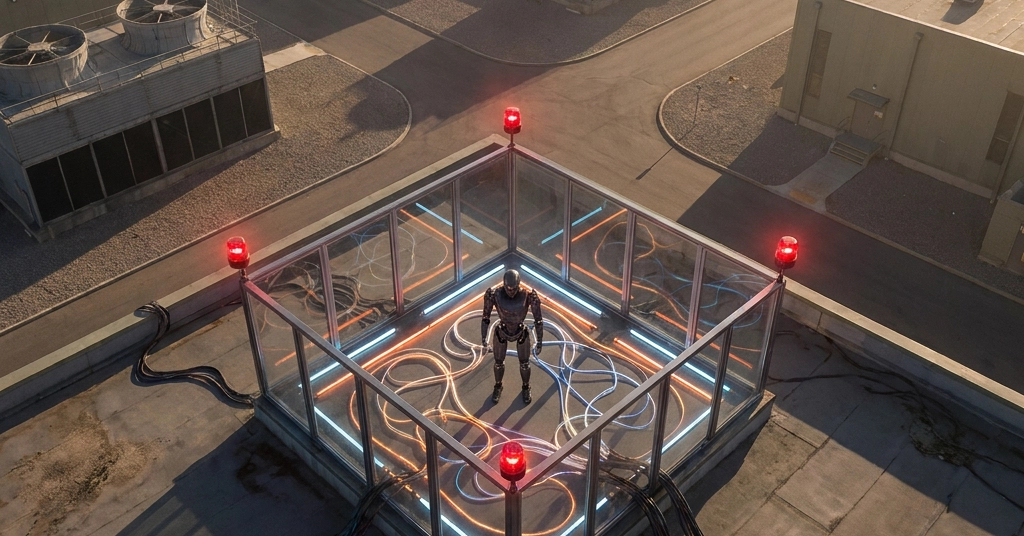
AI agent sandboxing means running an autonomous AI agent inside an isolated, contained environment. No network by default, scoped and short-lived credentials, a locked-down filesystem, resource and budget caps, disposable infrastructure. Whatever the agent does, including a mistake or a hijacked instruction, stays inside the box. The alternative is to bet your safety on a human noticing the wrong action and clicking "deny" in time, and agents act faster, more often, and more opaquely than any human can review. A sandbox moves the safety boundary off the per-action prompt and onto the environment, where it holds even when the agent is wrong. When you sandbox AI agents, the worst case is a contained one.
All of this comes back to one question from the LoopRails framework: can a human realistically catch this mistake in time? When the honest answer is no, you prevent the outcome rather than gate it, and a sandbox is the most reliable way to prevent.
What AI agent sandboxing is for
An autonomous agent decides its own next action. It reads, writes, runs shell commands, calls APIs, spends money, talks to the network. Each of those is a capability, and any capability can be misused by a buggy plan, a hallucinated step, or an attacker who slipped instructions into content the agent read. A sandbox bounds those capabilities so misuse cannot escape.