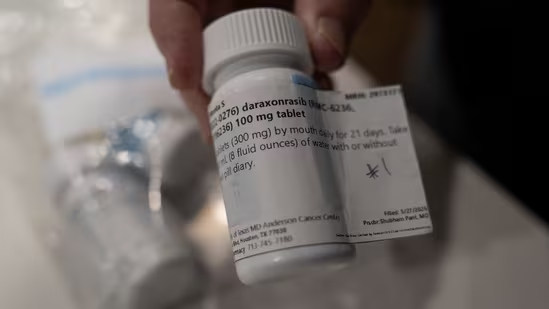
You might have seen, in early June, more than 10,000 oncologists and drug developers gave a standing ovation mid-presentation. The slide that moved the room showed survival curves for Revolution Medicine’s daraxonrasib. For the first time, a drug showed a path to beating pancreatic cancer, nearly doubling survival. Thanks to social media, millions more shared that moment.
Over the last half-dozen years of my 25-year career in biotech, I’ve enjoyed more and more moments like this. The vast majority have been thanks to U.S. leadership in drug innovation. But we are at an important crossroads. American patients face high healthcare costs at home, while the rise of China and AI adds new anxieties. As America celebrates its 250th anniversary, we should reflect on what made this country the world’s engine of drug innovation and how we can sustain it for American patients.
The Innovation Treadmill: America’s Hidden Longevity Machine
America’s leadership in drug innovation was built on a simple bargain: reward new therapies, then force rapid generic substitution once patents expire. Consider Pfizer’s Lipitor, a leading statin that reduces cardiovascular mortality by roughly 25%. Within months of losing exclusivity, generic substitution reduced Lipitor’s price by 90%.