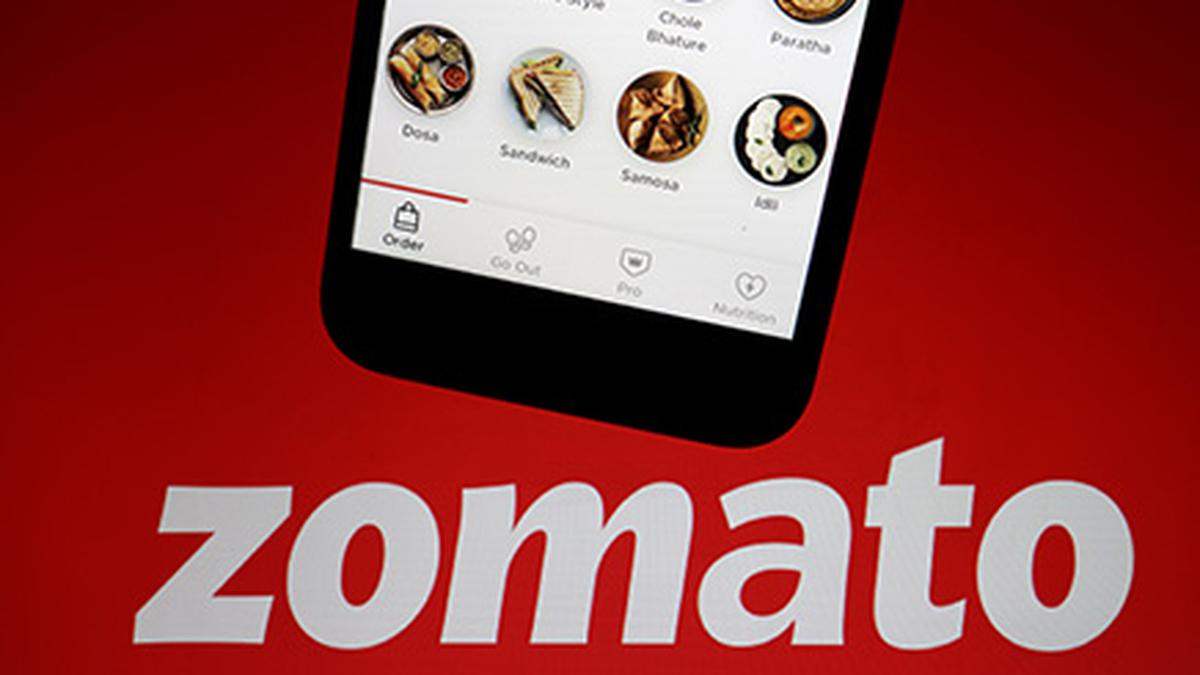
The story so far: The Competition Commission of India (CCI) on Thursday (July 24, 2026) closed a complaint against Eternal Ltd, holding that no prima facie case of abuse of dominance was made out in relation to the platform fees and pricing practices on its food delivery platform, Zomato. In its preliminary assessment, the Commission found no violation of the Competition Act, 2002 (2002 Act), in the company’s pricing practices, including platform fees, delivery charges and the difference between menu prices charged by restaurants and the prices displayed on the app. Eternal Ltd is the parent company of food delivery platform Zomato and quick commerce platform Blinkit.What did the complaint allege?The complaint was filed by an individual consumer, R. Suresh, who alleged that Zomato was abusing its dominant position in the market for online food delivery platform services in India. Under the Competition Act, 2002 (2002 Act), a dominant position refers to a position of economic strength that enables an enterprise to operate independently of competitive forces or influence the market in its favour.The complaint arose from an order Mr. Suresh placed through Zomato on April 13, 2026. He ordered a serving of Ghee Pongal from Sree Ariya Bhavan, which was listed on the app at ₹123.50. According to the complaint, the final bill increased to ₹198 after the addition of a ₹43 delivery charge, a ₹14.90 platform fee and applicable GST. Mr. Suresh subsequently purchased the same item directly from the restaurant for ₹105, inclusive of GST.Relying on this price difference, Mr. Suresh alleged that Zomato was leveraging its dominant position to impose unfair charges on consumers while compelling restaurants to raise menu prices. He claimed that restaurants inflate prices on the platform because Zomato deducts commissions of around 33% on orders.The market regulator was also informed that the delivery app had made a steep increase in its platform fee over the years. Mr. Suresh alleged that the company introduced the fee at around ₹2 per order in 2023 but had raised it to ₹14.90 per order within less than three years, a jump of more than 645%, without any “transparent rationale” or corresponding improvement in services. According to the complaint, these practices amounted to an abuse of Zomato’s dominant position, prohibited under Section 4 of the 2002 Act.What was the relief sought?The complaint alleged that Zomato had violated Sections 3 and 4 of the Competition Act, 2002 (2002 Act), which prohibit anti-competitive agreements and the abuse of a dominant position, respectively. According to the complainant, the platform had imposed excessive commissions, levied an arbitrary platform fee, adopted “drip pricing” practices (where additional mandatory charges are disclosed only at later stages of a transaction), and imposed unfair and discriminatory pricing conditions.Accordingly, Mr. Suresh urged the regulator to order an investigation into Zomato’s conduct. He also sought disclosure of the company’s pricing methodology and commission structure, an end to the levy of platform fees, corrective measures to address the alleged anti-competitive practices, the imposition of penalties, and a cease-and-desist order directing the company to discontinue such practices.Other than the complaint, Mr. Suresh also filed an interlocutory application seeking interim relief pending the CCI’s decision. He asked the Commission to restrain Zomato from continuing to levy platform fees and to direct it to transparently disclose all charges upfront. He argued that the continued collection of platform fees caused irreparable harm to consumers and that the balance of convenience lay in favour of granting interim relief.What happens after the CCI finds no prima facie case?The CCI closed the complaint under Section 26(2) of the 2002 Act. Under the Act, every complaint first undergoes a preliminary scrutiny to determine whether it discloses a prima facie case of contravention. At this stage, the Commission does not undertake a detailed examination of the evidence or determine whether the allegations are ultimately proved. Instead, it considers whether the material before it is sufficient to warrant a formal investigation. If it finds a prima facie case, it passes an order under Section 26(1) directing its investigative arm, the Director General (DG), to conduct a detailed investigation and submit a report. The DG’s report is, however, not binding on the Commission, which takes the final decision on whether there has been a violation of the Act after considering the report and hearing the parties.In the present case, however, the Commission concluded that no prima facie case was made out, and also rejected the complainant’s plea for interim relief seeking an immediate halt to the collection of platform fees.A closure order under Section 26(2) is appealable before the National Company Law Appellate Tribunal (NCLAT) under Section 53A of the 2002 Act. The consequences of such a closure have also assumed greater significance following the insertion of Section 26(2A) by the Competition (Amendment) Act, 2023. The provision empowers the Commission not to entertain a fresh information based on the same or substantially the same facts and issues that have already been decided. Intended to discourage repetitive complaints, it lends greater finality to a Section 26(2) order, making an appeal before the NCLAT the principal avenue for challenging such an order.What were the watchdog’s findings?The Commission rejected the complainant’s allegation that the price of the Ghee Pongal on Zomato was unfair by observing that food sold through an online delivery platform cannot be directly compared with food purchased at a restaurant. It reasoned that online food delivery involves additional services beyond the food itself, including online ordering, platform access and doorstep delivery. Consumers who choose to avail of these services pay additional charges, such as delivery fees and platform fees. Since the business models of restaurants and online food delivery platforms are fundamentally different, the Commission held that differences in the final price of a food item do not, by themselves, indicate anti-competitive conduct.The CCI also rejected the allegation of “drip pricing”. It observed that drip pricing is a recognised sales practice in which a business initially displays only part of a product’s price before disclosing additional mandatory charges, such as platform fees, delivery charges, taxes or surcharges, during the checkout process. In the present case, the Commission noted that these charges were levied for distinct services provided by the platform and that consumers remained free to accept or reject the order until the final stage of checkout. It therefore held that the practice did not, by itself, raise any competition law concerns.Addressing the allegation that restaurants inflate menu prices to offset Zomato’s commissions, the Commission observed that online food delivery platforms operate as multi-sided businesses. They charge consumers platform and delivery fees for facilitating online ordering and delivery, while also charging restaurants commissions for listing and selling food through the platform. Restaurants may choose to recover those commissions by increasing menu prices on the app, but the Commission held that this, by itself, did not establish a violation of the 2002 Act.The Commission also found that the complainant’s comparison was based on a single, low-priced food item that showed an 88% price difference. It noted that because delivery charges are largely fixed, the percentage difference would be considerably lower for higher-value orders. Accordingly, the regulator held that none of the allegations disclosed a prima facie case of anti-competitive conduct or abuse of dominance warranting a formal investigation under the 2002 Act.What are the implications?According to Toshit Shandilya, who is a partner in the competition law practice at AZB & Partners, while consumers may feel aggrieved by Zomato’s pricing, the CCI does not deal with individual consumer grievances.“The CCI examined the business model and found that each charge, whether a platform fee, delivery fee or restaurant commission, was linked to a distinct service being provided. That is why it found no basis to order a formal investigation. To secure a favourable order under the Competition Act, a complainant must show a distinct anti-competitive design, which ordinarily requires market-wide evidence rather than evidence drawn from a single transaction,” he told The Hindu.Mr. Shandilya, however, said the order does not deal with consumer law. “A finding by the CCI under competition law does not determine the outcome under consumer law. This order is confined to Competition Act. It has no bearing on how a claim on drip pricing would be assessed under consumer law” he said.
Why did CCI reject ‘abuse of dominance’ claims against Zomato’s platform fees and delivery charges? | Explained
CCI cleared Zomato's platform fees and delivery charges, finding no abuse of dominance in the food delivery market.
1,373 words~6 min read