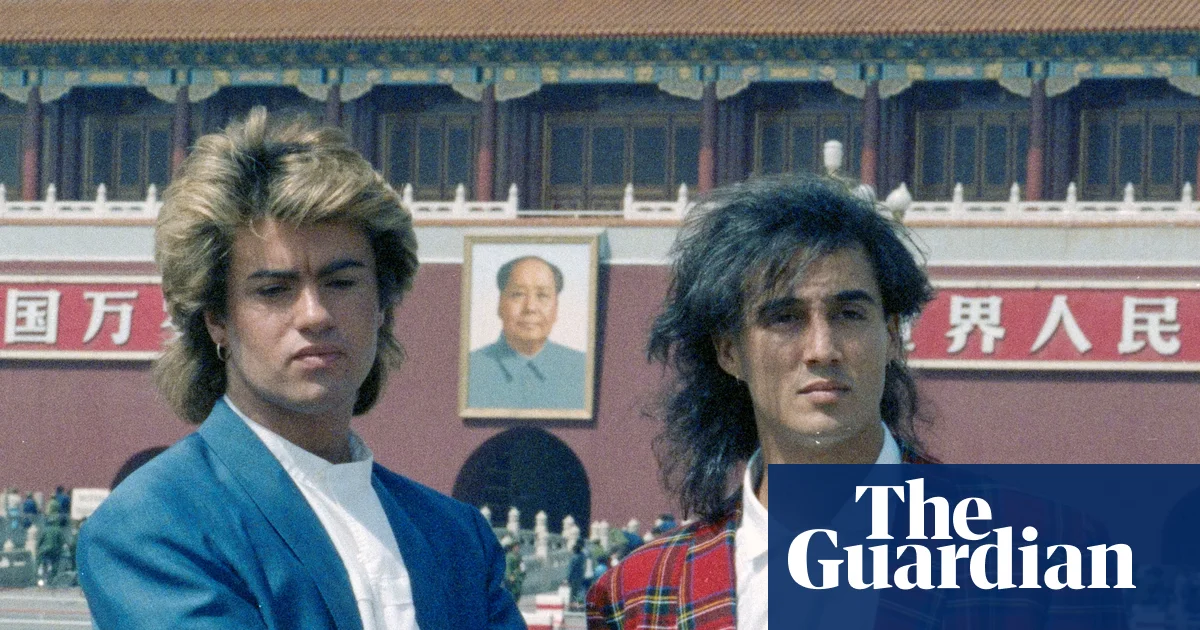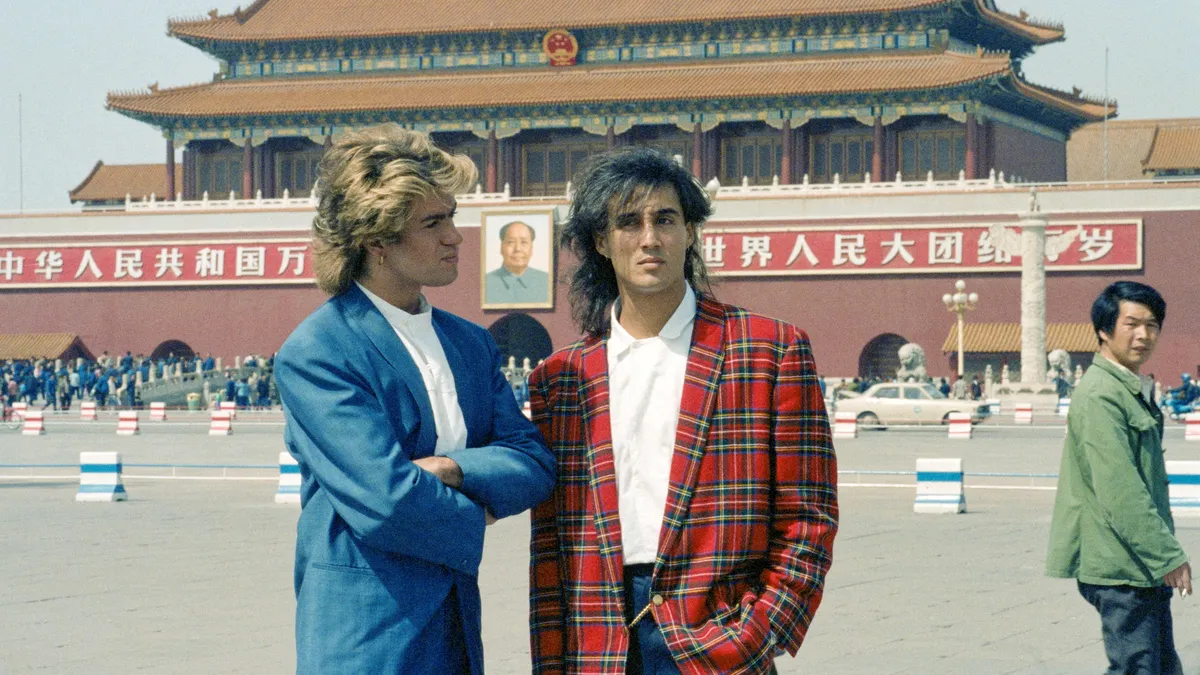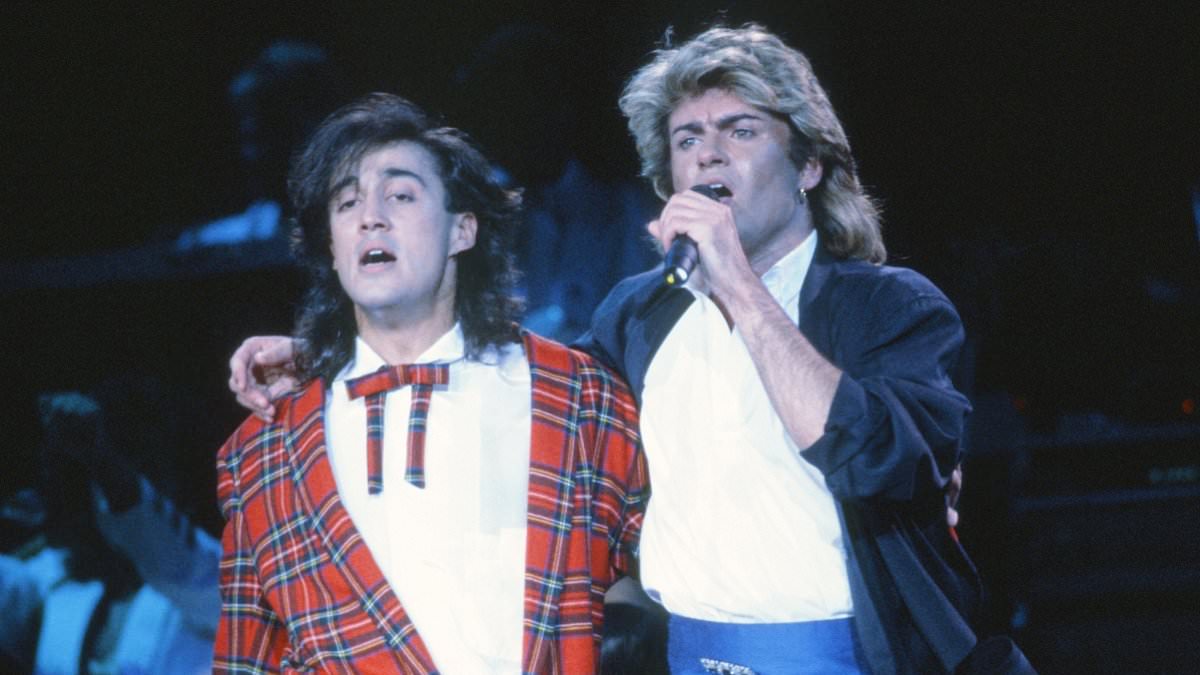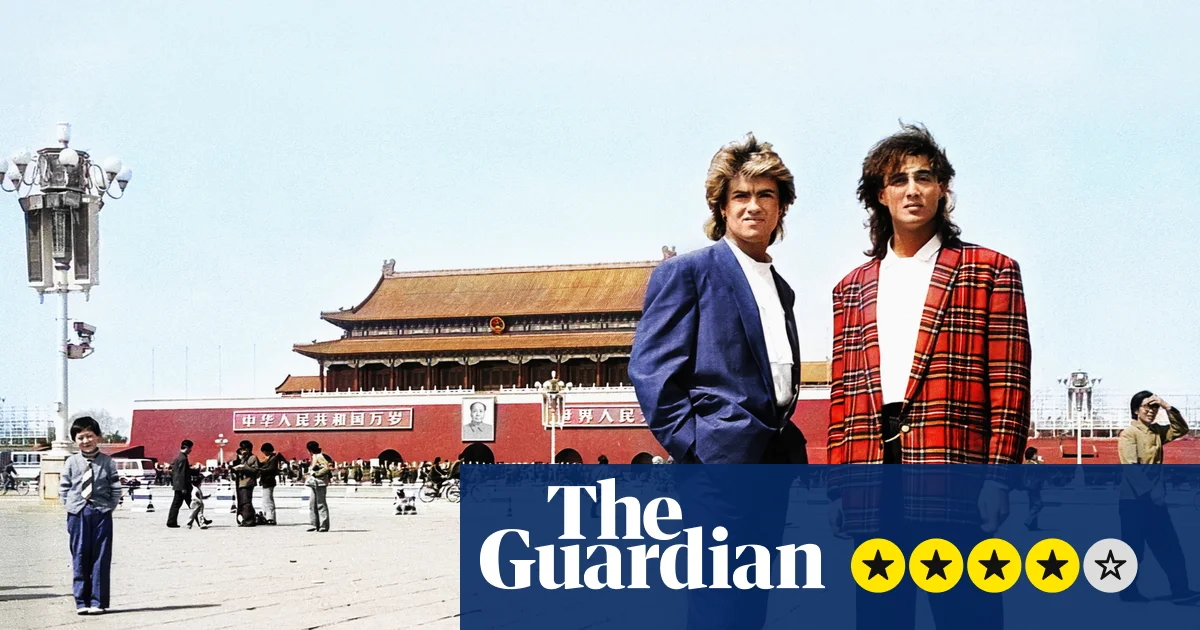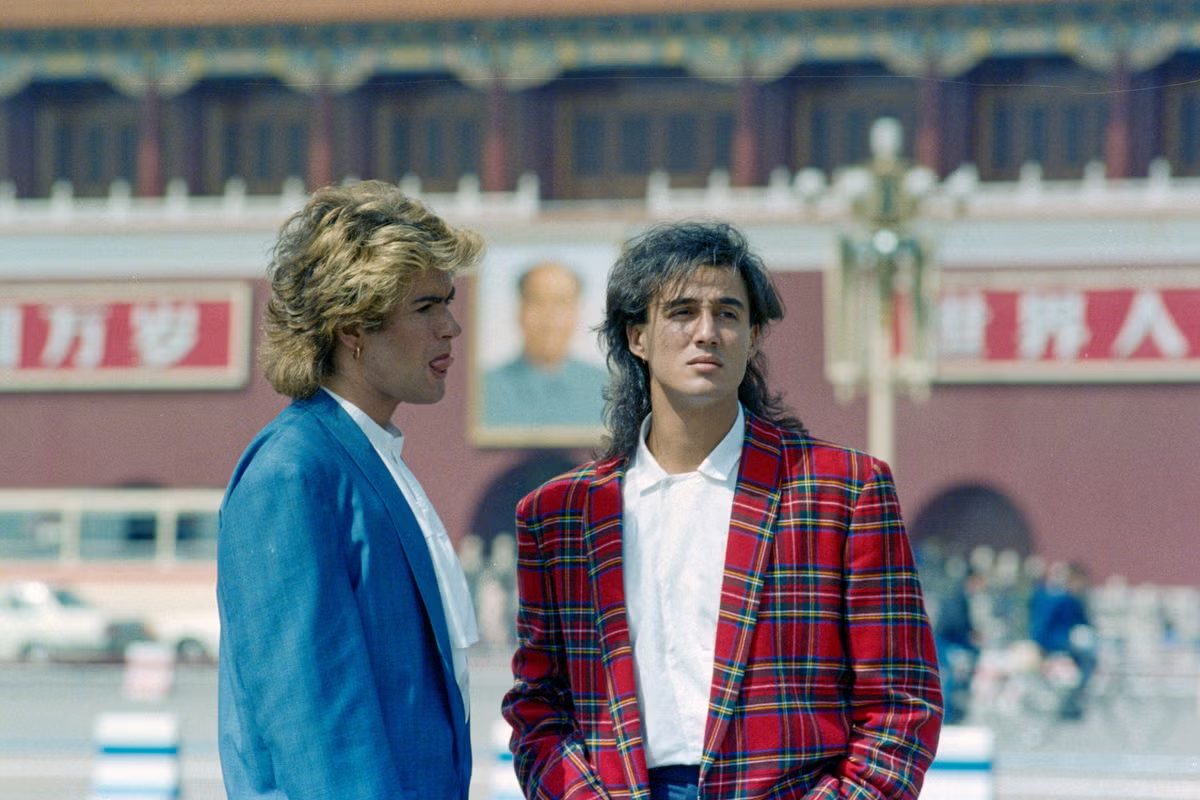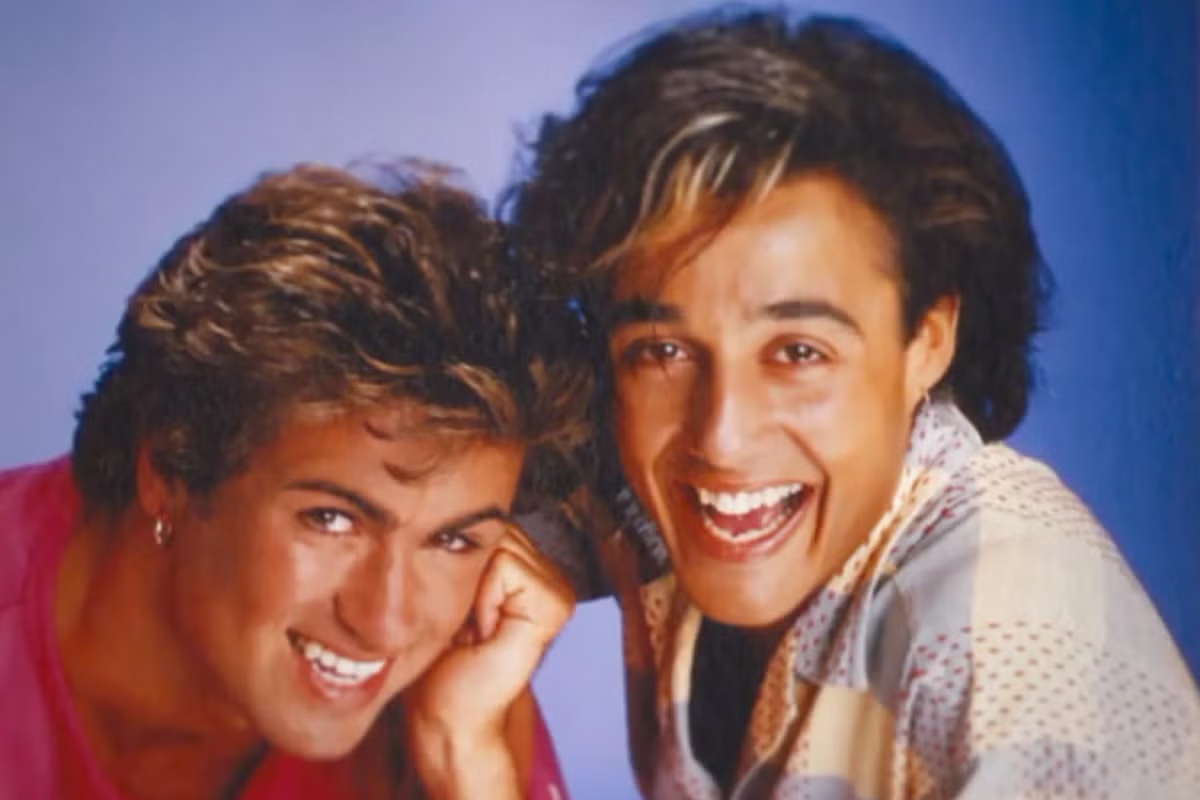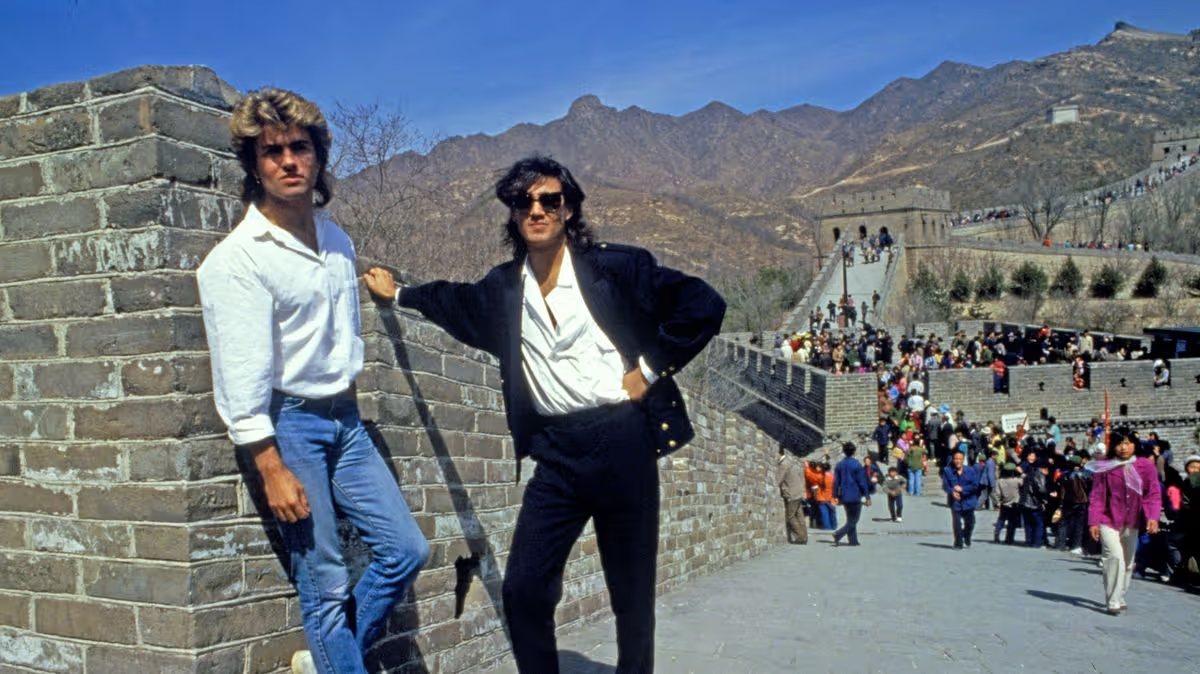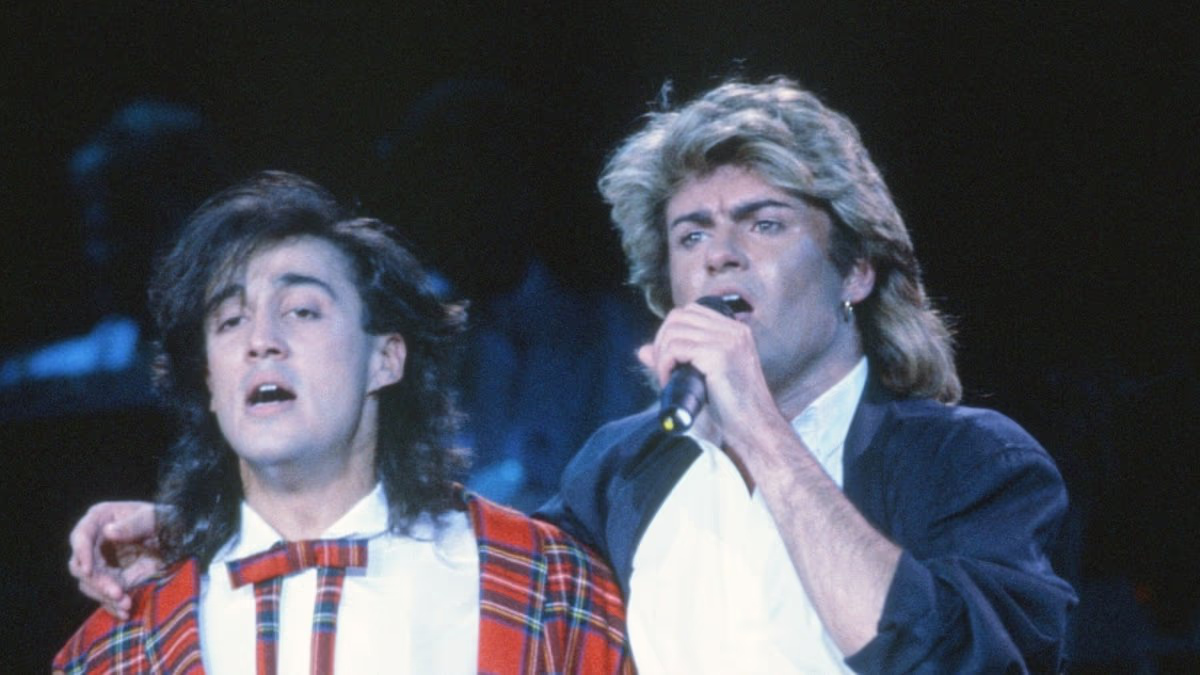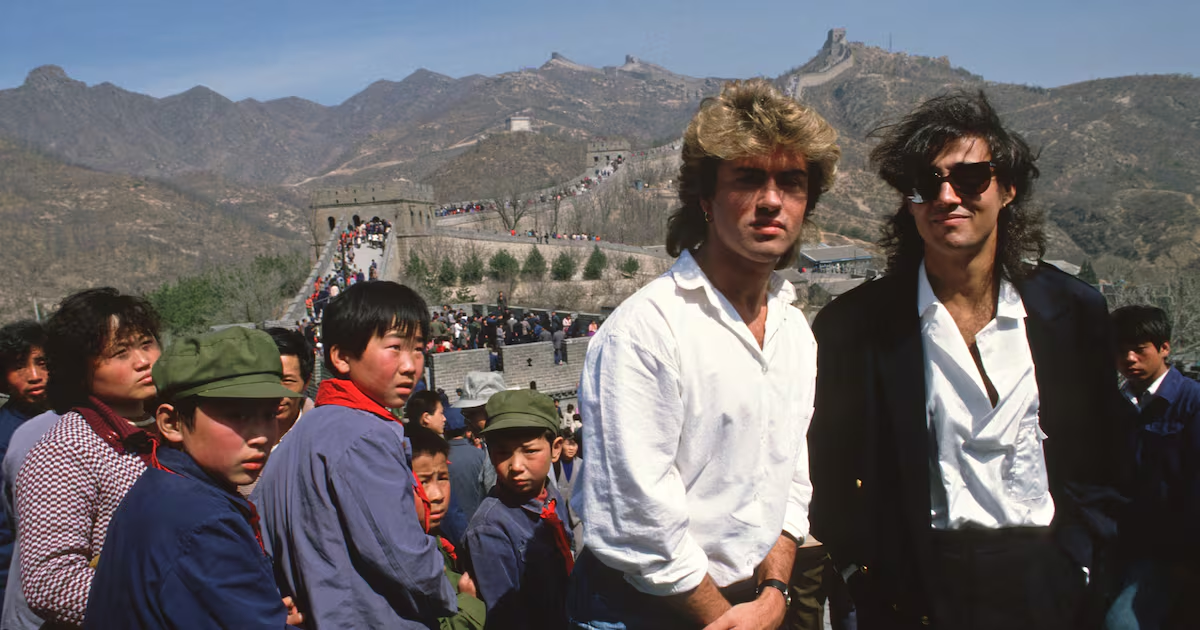
In April 1985 the British pop duo Wham! – George Michael and Andrew Ridgeley – became the first western pop stars to tour the People’s Republic of China. Four decades later, the director Mike Christie revisits the duo’s historic stopovers at Beijing Workers’ Gymnasium and Sun Yat-sen Memorial Hall in Guangzhou for a new documentary, Wham! 10 Days in China.“For me it was about taking something that had only ever been two-dimensional and making it three-dimensional,” he says. “It had acquired this mythological status, but it needed depth. I did 60 or 70 hours of interviews with people who were involved, and what struck me was how complete everybody’s memories were. It was such a significant event in their lives.”The gigs took place at the moment when China, under the leadership of Deng Xiaoping, was expanding cultural and economic exchanges with the outside world. Western popular music had only a limited presence in the country at the time, making the concerts a seismic happening.China was having that first contact with western culture, Christie says. “Neither they nor their parents had experienced it before. It really was completely unknown.”Wham!’s landmark tour was chronicled at the time in two radically different, contentious films, one a charming puff piece, the other effectively buried.The latter, If You Were There ..., was directed by Lindsay Anderson, the Palme d’Or-winning film-maker behind If..., whom Michael and Ridgeley improbably hired to chronicle their seminal trip to China. Anderson (being Anderson, a scourge of public schools) delivered not a glossy concert film but an observational essay on a country tentatively opening to the world. Wham!’s performances were secondary to scenes of bicycles, markets, official banquets and the first inklings of consumer capitalism, with the band’s biggest hits frequently interrupted by images of everyday Chinese life.“Lindsay Anderson is from a different era,” Christie says. “He has an Oscar, made If ..., and is a British institution. I read his diaries, and they were quite damaging. He admits he basically did it for the money. In a weird way, I realised I was finishing a project he was never really going to finish. He wasn’t interested enough. “There’s a little interview at the end where someone asks Lindsay, ‘What’s the film about?’ And he says, ‘I don’t know. I’ve been wondering what it’s about for the last two weeks. If anyone’s got an idea, tell me.’ [ Cactus Pears review: Grief and familial convention frame quiet queer romanceOpens in new window ]“It’s sad that a director of his reputation was in a position where he didn’t think he could get another film made, so he took the money to make one he didn’t really want to make and didn’t know how to make.”Wham! wanted something entirely different. Michael rejected Anderson’s contemplative cut, prompting the director’s dismissal after a famously acrimonious dispute.Anderson accused the production of “waste, silliness”. Publicly, he called Michael “a young millionaire with an inflated ego”. Privately, he wrote that, “though talented in his very limited range, [Michael] is a spoiled, conceited dumbbell”. Wham!’s manager, Simon Napier-Bell, countered that Anderson had forgotten who was paying for the film; Wham! needed a showcase, not thoughts on changing communist China.A second cut, Wham! in China: Foreign Skies, assembled by the band’s collaborators from Anderson’s footage with newly shot material, transformed the same journey into a brisk promotional documentary, foregrounding rousing performances, backstage bops and pop spectacle. The two films were bipolar interpretations of the same significant moment, one treating China as the subject, the other treating China as the backdrop.Wham!: George Michael and Andrew Ridgeley at the People's Stadium in Beijing. Photograph: Peter Charlesworth/LightRocket via Getty Wham!: Fans at the concert. Photograph: Peter Charlesworth/LightRocket via Getty Anderson’s original was locked in the archive of the University of Stirling, in Scotland, viewable only by appointment, a “lost film” whose absence has become part of its lore. Finally, in 2024, with permission from the George Michael estate, the film was screened twice at the BFI in London as part of its O Dreamland: Lindsay Anderson’s Dark British Cinema season. Its Wham!-crafted rival, Foreign Skies, is similarly obscure. The film was briefly available on VHS after premiering for the 72,000 fans attending the band’s farewell gig. It has never been released on DVD or BluRay.Ripe for revisiting? Not quite. Remarkably, Wham! 10 Days in China, which is composed largely of archive footage – albeit supplemented by extensive, personal interviews from Ridgeley, other bandmates and Chinese fans – features entirely new material from 1985.“There was a point where we only had Foreign Skies and If You Were There ...,” Christie says. “It was strange for me because you’re stepping into a film made by Lindsay Anderson. I spent a lot of time philosophically thinking, ‘What am I doing here?’ “But we didn’t use any of Lindsay’s film or Foreign Skies, which surprises the fans to hear. When we set out to make the film, we didn’t know what footage existed in the warehouse in the cans, or whether it had rotted or not. “We didn’t know whether we’d be cutting a film from two existing films and doing a lot of interviews, or what was going to happen. As it worked out, there was a lot of footage once we had it restored.”I always say it’s a film about pressure. For a young man to be a global pop star is enough pressure. To be a global pop star and try to deal with your sexuality is a whole other levelIt wasn’t simply a hunt for old cans. Wham! 10 Days in China proved quite the detective story.“Finding contributors, especially the Chinese contributors, who ultimately became rock stars in China – I understate it in the captions – was difficult,” Christie says. “And with George in particular, there were so few recorded interviews of him talking about China. I think there are only three interviews where he talks about China in any real depth. One of the main ones we use, bizarrely, we found in the Library of Congress: a very long interview where he talks about China quite openly.”Behind the scenes, Wham!’s management, led by Napier-Bell, spent more than a year negotiating with Chinese officials to secure approval for the performances. Napier-Bell later said that competing western artists, including Queen, had also sought permission to perform in China. He argued that Chinese authorities viewed Wham!’s youthful, clean-cut image as more acceptable. (It can’t have hurt that Michael was a card-carrying member of the Young Communist League of Britain.)Christie’s film poignantly captures just how alien Wham! were in China. During their first performance in Beijing, fans sat in quiet appreciation for a band accustomed to screaming girls singing along. The group’s busy visit included official meetings, sightseeing along the Great Wall and extensive media coverage. It’s a whirlwind to watch.Wham! George Michael and Andrew Ridgeley on the Great Wall of China. Photograph: Owen Franken/Corbis via Getty “The programme was quite packed,” Christie says. “There were about four different things they were filming each day, endless banquets, and there were 120 or 130 people on the tour with the documentary crew and press. The level of surveillance was pretty high. Ultimately, George was really private. I don’t think he was expecting it.”Christie has spent more than three decades moving fluidly between art, music and documentary film-making. His career began in early-1990s London, where, through the Aids activist group Act Up, he met the artist and film-maker Derek Jarman, becoming one of his primary collaborators during the director’s final years. Christie subsequently collaborated with the Pet Shop Boys, created the Jubilee 2000 campaign to cancel developing-world debt and introduced parkour to a mainstream audience with the films Jump London, from 2003, and Jump Britain, in 2005. One of Britain’s most accomplished chroniclers of popular music, he has previously made documentaries about New Order, Suede and Nick Cave. His early activism couldn’t be further from George Michael’s experience.The singer-songwriter realised he was gay during the shoot for their Club Tropicana video. When he quietly came out to his best friends, Ridgeley and the Wham! dancer Shirlie Kemp, he was discouraged from telling his parents, let alone the wider world. In a 1988 interview with The Advocate, Michael insisted, “I don’t want people thinking of me as a sexual object, straight or gay,” while continuing to deny persistent speculation. Friends later recalled that the Aids epidemic, his devotion to his mother and fears about the commercial consequences of coming out all contributed to his caution. Michael’s position changed only after his arrest in a Beverly Hills public restroom in April 1998. Days later, he confirmed publicly that he was gay, telling CNN, “I have no problem with people knowing I’m in a relationship with a man.” [ Thirty-seven Irish film locations to visit, from Gene Wilder’s Dublin to Sean Connery’s WicklowOpens in new window ]Looking back in the 2005 documentary A Different Story, he acknowledged the weight of self-censorship: “I spent most of my life terrified people would find out I was gay. Then my mother died, and I thought, what am I frightened of now?”The version of Michael that appears in Wham! 10 Days in China is visibly years away from such an admission. Although he has blossomed from the East Finchley teenager known as Yog to his friends – he was Georgios Kyriacos Panayiotou on his birth certificate – into a pop star, there’s an uncertainty and reticence about the 25-year-old Michael who visited China. There is a fascinating story, Christie notes, in Michael’s body language alone.“I always say it’s a film about pressure. For a young man to be a global pop star is enough pressure. To be a global pop star and try to deal with your sexuality is a whole other level. “I think one of the things that’s forgotten is the political context of the mid-1980s, particularly Aids. I remember really clearly the hostility in the press. You had red-top newspapers running headlines like ‘Aids blood in supermarket pies plot’. “The moral panic about sexuality was extraordinary. That’s all part of the pressure.” Wham! 10 Days in China is in cinemas from Tuesday, July 28th
Wham! 10 Days in China: George Michael and Andrew Ridgeley deliver a seismic culture shock
Mike Christie’s film poignantly captures just how alien Wham! were in the country in 1985
1,693 words~8 min read