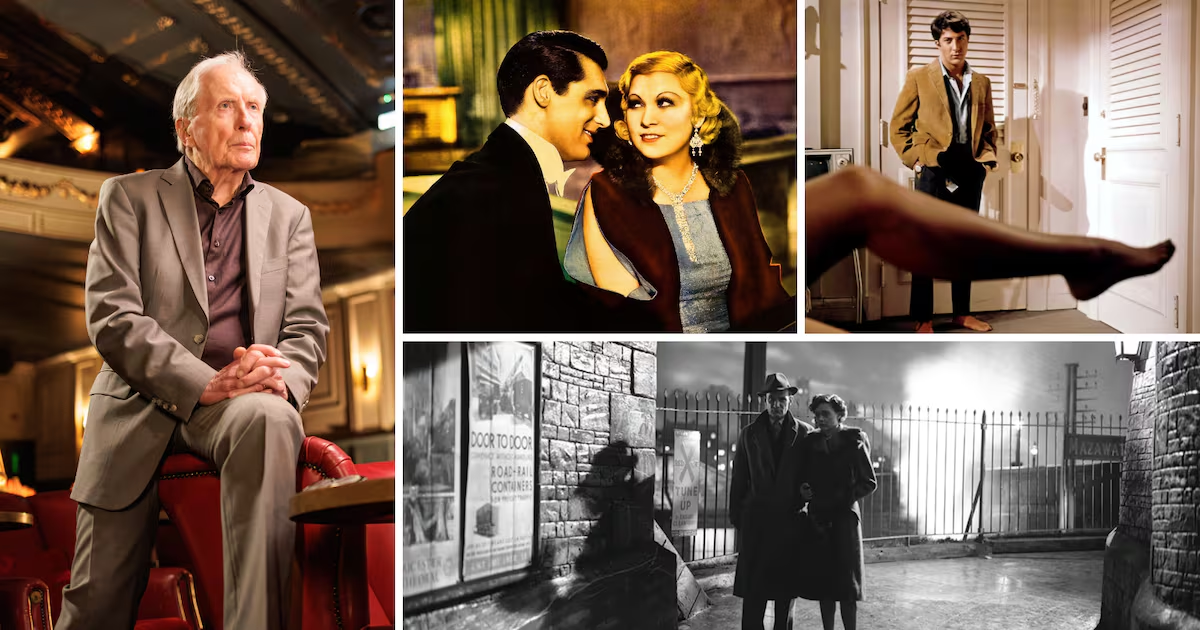
A generation of Irish cinemagoers has grown up with no memory of the bad old days when theocratic censors kept comically unthreatening material from the nation’s supposedly fragile eyes. Films banned included such unmitigated filth as Casablanca, Brief Encounter and Mildred Pierce. When supposedly risqué films did make it through, they were often so mangled as to make little sense.John Kelleher, who took over as censor in 2003, came into the office with weary memories of what had been kept from the keen cineaste.“I was a young adult in the 1970s, in my 20s and early 30s,” he tells me. “That’s your prime cinemagoing age, and 200 movies were then banned in Ireland. It’s outrageous. “Obviously, working in the business, I was pretty familiar with the background, and I was always very interested in it. That’s why I applied. I thought there was more to be done in terms of modernising the outfit.”[ Ireland used to ban films. Now it’s more relaxed than Britain or the US about what’s on screen. Why?Opens in new window ]Keheller, a famously genial man with a distinguished CV as producer and executive, played a significant part in bringing that grim era to an end. In 2008 he changed the name of the Irish Film Censor’s Office to the Irish Film Classification Office, reflecting a change in emphasis from prohibition to clarification. By the time his tenure came to an end, in 2009, the banning of films was, essentially, a thing of the past.After the fall of the Berlin Wall there was much foolish chatter about “the end of history”. That didn’t quite work out. But the words might reasonably, in this limited field, be applied to what Kelleher accomplished in the early years of the century.It was a watershed, he says. “For a whole variety of reasons. Change of name. Change of a lot of things.”Kelleher is, therefore, the ideal person to present and co-write a documentary about the often sorry history of film censorship in Ireland. In the Opinion of the Censor, co-produced by Oireachtas TV, takes us from the introduction of the Censorship of Films Act in 1923 through squabbles over Mae West’s double entendres on to Elvis’s dangerous torso and up to the last throes with a ban on Natural Born Killers in the 1990s.Mae West with Cary Grant in
Pure filth! Ireland’s banned films – and why the censor didn’t want you to see them
The Irish Film Censor’s Office cut some of the greatest lines in cinema, to the dismay of the last censor, John Kelleher
2,340 words~11 min read