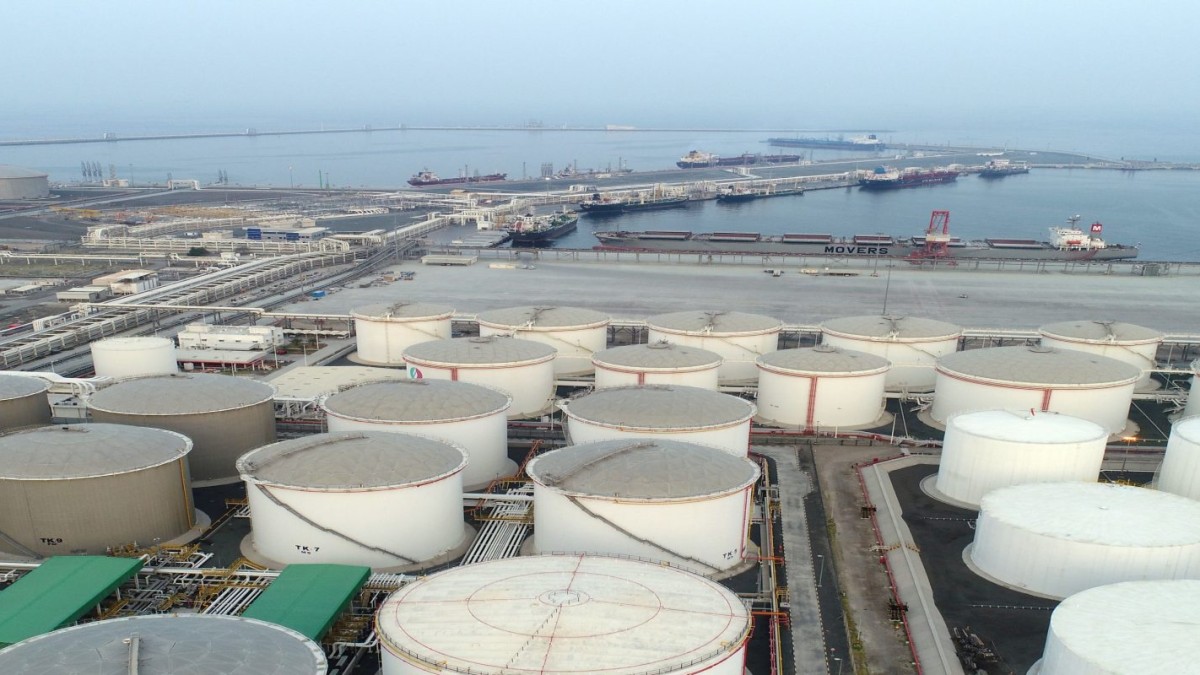
The latest US tariffs on 60 countries announced this week underline that trade barriers are becoming an increasingly persistent feature of the global economy, rather than a temporary disruption.The news that DP World is planning to build a new port on the east coast of the UAE similarly points to the same conclusion. By creating an alternative route that bypasses the Strait of Hormuz, the Dubai ports operator is responding to the repeated disruption caused by the Iran war.There is also a lesson for companies: when a critical trade route’s very viability is called into question, simply rerouting cargo is not enough. DP World illustrates that you need to fundamentally rethink how supply chains are built.The Iran war has repeatedly disrupted commercial shipping in the strait. For decades, companies assumed such issues would be temporary but they can no longer afford to. The era of improving supply chains around the margins is over, because when geopolitics changes the rules of trade, companies must revamp the supply network itself.Play00:29UN chief: Middle East situation on 'edge of unimaginable’Donald Trump’s latest tariff wall is the clearest illustration of this shift. The President has also escalated US strikes on Iranian targets in recent days, pushing the two nations closer to all-out conflict. The implications extend well beyond shipping to world trade. Until recently, the Gulf looked well placed to benefit from the reordering of global supply chains, with the UAE and Saudi Arabia attracting growing interest as manufacturing and assembly hubs. The disruption in the strait has punctured that narrative.It comes on the back of a whole host of supply chain shocks, from the coronavirus pandemic to the war in Ukraine and the return of broad-based US import tariffs. These successive shocks mean companies are having to carry out far more scenario planning because they can no longer assume that today’s trading conditions will persist tomorrow.Looking at the impact of the strait’s repeated closure, it’s clear some companies are better prepared than others. In the pharmaceutical industry, for example, some firms have scrambled to secure alternative medical supplies and raw materials, because costs soared and inventories were depleted. Others were better prepared to deal with the shock because they had already spread inventory and even production across multiple countries. So what does a supply chain redesign actually look like in practice?It means rethinking where products are made, assembled and moved, going far beyond finding another shipping route. Lego offers a good example as, over the past decade, the Danish toymaker has steadily expanded its manufacturing footprint across Europe, Asia and North America. This not only brought production closer to the markets it serves, but made it less exposed to problems in any single region.The important thing to remember is that such decisions cannot be made overnight. Factories and production networks take years, even decades to build and rewire. For this reason, a supply chain strategy now frequently outlasts the business strategies it is designed to support.And that is changing how companies now optimise. For decades, supply chains were engineered to squeeze out cost but now, executives need to weigh those savings against the profit and market share they stand to lose when disruption leaves customers with no choice but to buy from elsewhere. Play01:37IEA executive director: The Strait of Hormuz is a broken vaseA leaner supply chain is not necessarily a stronger one.The current race for AI memory chips reinforces the point. An input which businesses once assumed would always be available has become a major constraint, forcing them to lock in supply years in advance. Apple’s recent warning that soaring memory costs will force it to raise prices shows how supply itself has become a competitive advantage rather than simply a purchasing decision. It also shows how supply is now dictating corporate strategy as much as demand. And that shift is forcing a new conversation in the boardroom. Chief executives have long judged supply-chain teams on how aggressively they cut costs. They are now being asked to work out: how much revenue can you protect when disruption strikes? Because a factory may cost more to build in one location than another, but if it keeps products flowing when trade routes fracture, the extra cost quickly pays for itself.In that sense, a more expensive supply chain can be the more profitable one if it keeps products on the shelves. The lesson for chief executives is that the cost of redesign must be weighed against the revenue and market share lost when a supply chain fails.Not every company has reached that conclusion. Many still hesitate to relocate production because that requires a long-term investment. And geopolitical crises often appear temporary. Boards, however, should be less willing to accept that gamble.Increasingly, they need to understand the risk of doing nothing. And they should start to ask a simple question: are we saving pennies only to lose dollars?Carlos Cordon is professor of strategy and supply chain management at IMD
How Strait of Hormuz crisis is forcing companies to rethink supply chains | The National
More expensive supply chain can prove more profitable if it keeps products on shelves
822 words~4 min read