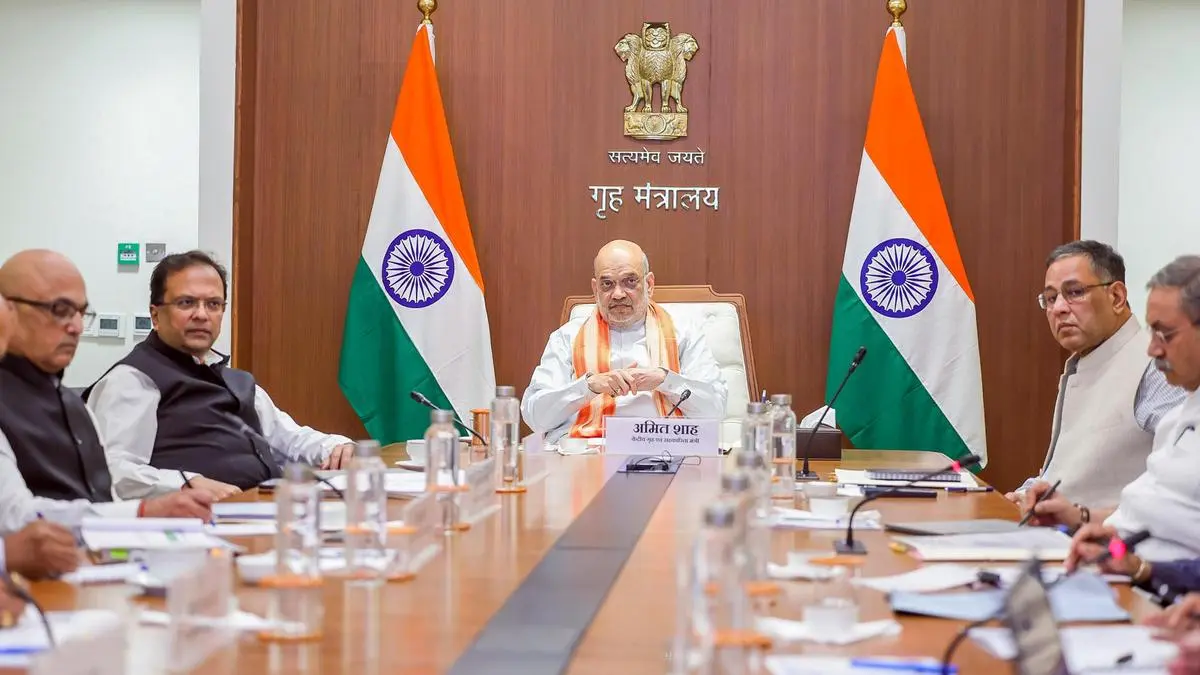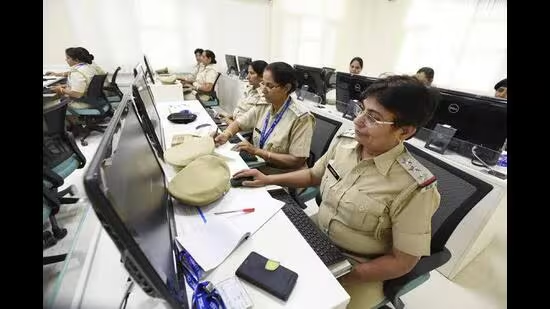
Haryana has emerged as a top-performing state in cybercrime response, restoring money to victims at nearly five times the national average, with 38% of reported fraud cases resulting in restoration orders against the national average of 8%, according to a review chaired by chief secretary Anurag Rastogi on Friday.State issued restoration orders in 38% of cases, enabling returns through the MRM developed by I4C. (HT File)An official spokesperson said of the 14,731 cybercrime complaints received till July 22, 2026, the state had issued restoration orders in 38% of cases, enabling the return of ₹2.51 crore to victims through the money restoration module (MRM) developed by the Indian Cyber Crime Coordination Centre (I4C).Regarding enforcement against cybercrime hotspots, the spokesperson said that major action took place in Nuh, the only district identified as a cybercrime hotspot in the state. Between January 2025 and July 22, 2026, police registered 491 suo-motu FIRs, arrested 949 cybercriminals, and seized 772 mobile phones and 1,481 SIM cards. The mobile blocking unit has proactively blocked 55,323 mobile numbers and 25,202 linked IMEIs in Nuh during the same period using tower dumps, IMEI linkage and location data from the Pratibimb Portal.Additional director general of police (ADGP), cyber, Charu Bali, said of the 9,437 assistance requests received from other states through the Samanvaya Portal, the state police disposed of 9,156, recording a 97% response rate.The ADGP said since its rollout on June 25, 2026, all complaints received on the 1930 cybercrime helpline involving losses exceeding ₹1 lakh are being automatically converted into e-zero FIRs and forwarded to the concerned cyber police station. “So far, 233 e-Zero FIRs have been registered, of which 204 have been converted into regular FIRs for investigation,’’ she said.The spokesperson said that using the Sahyog portal, Haryana police took down 5,169 URLs of unlawful content through 2025, a figure that has already nearly tripled to 15,853 in under seven months this year (January 1 to July 22, 2026).Superintendent of police, cyber, Mayank Gupta said that 764 of 897 requests received on the grievance redressal module have been disposed of, with the remaining 133 still within the mandated 15 day window.Gupta said the State Cyber Crime Coordination Centre (S4C), set up in 2023, has been expanded this year with the addition of a social media monitoring unit, an OCWC unit, a creative awareness unit, an AI integration cell and a secret cell. Further expansion — including a training cell, policy division, R&D division, and dedicated dark web, virtual digital asset and AI divisions are also on the cards.
Haryana restores ₹2.5 crore to cyber fraud victims
An official spokesperson said of the 14,731 cybercrime complaints received till July 22, 2026, the state had issued restoration orders in 38% of cases, enabling the return of ₹2.51 crore to victims through the money restoration module (MRM)
422 words~2 min read