Story audio is generated using AI
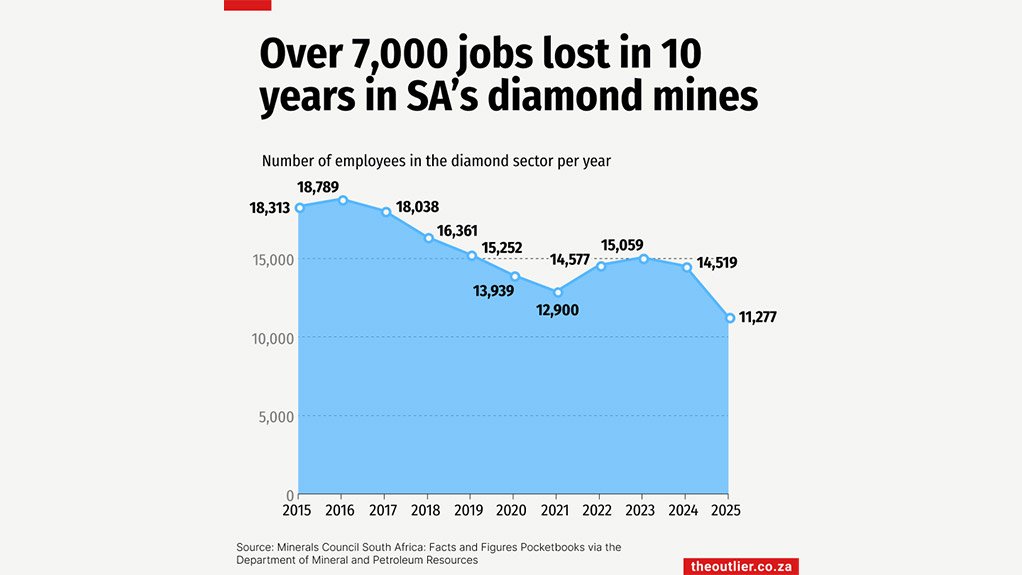
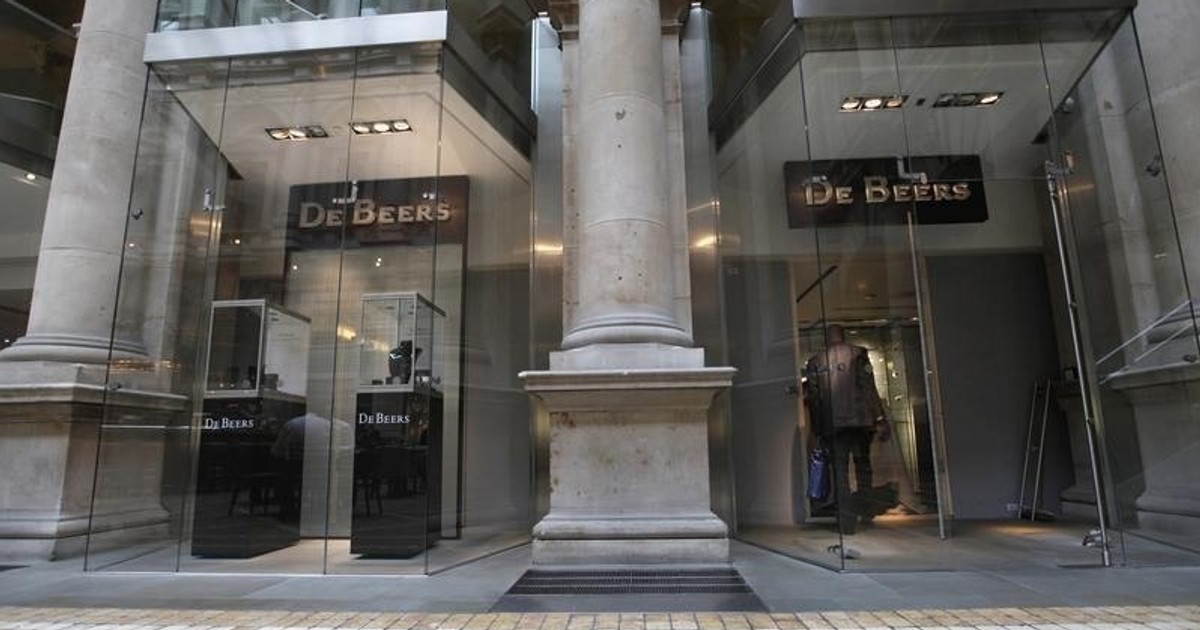
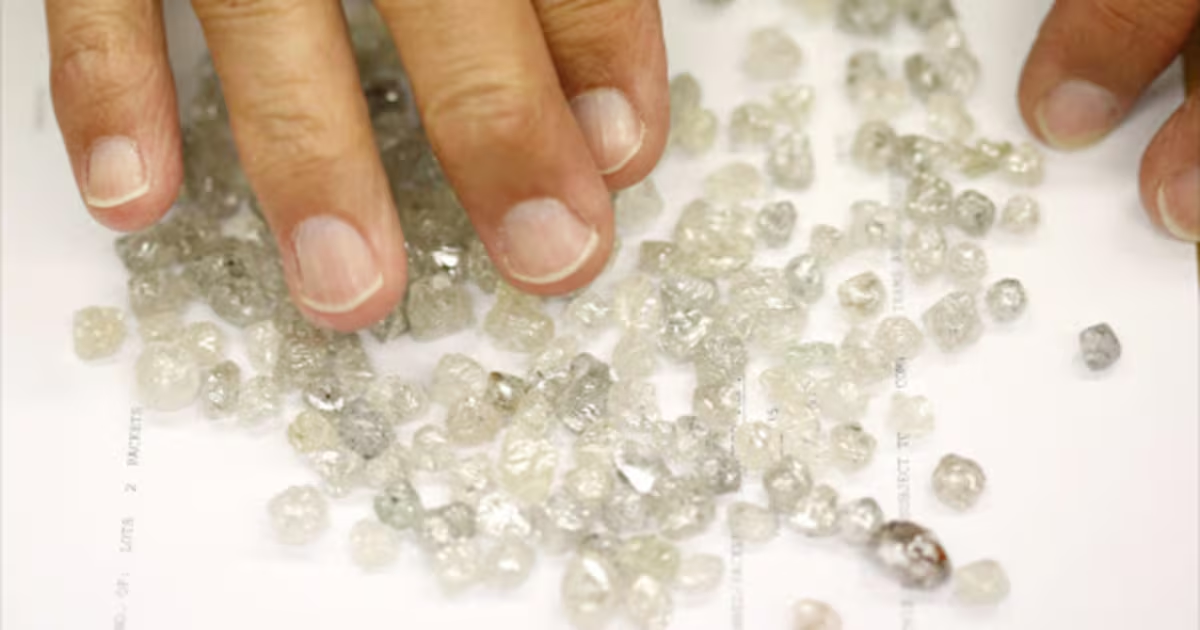
The decision by De Beers to halt production at its flagship Venetia mine in Limpopo outside Musina for two years is the latest blow to production, jobs and investment in the diamond industry, which is grappling with a prolonged downturn in demand.Rough diamonds, formed up to 190km beneath the earth’s surface and brought to the surface through volcanic eruptions, have been mined in South Africa for more than a century. They have long been regarded as a symbol of endearment, featuring in engagement rings and other jewellery for celebrations, including Diwali. However, with Chinese demand for synthetic diamonds, the picture is changing.The discovery of a diamond by 15-year-old Erasmus Jacobs on the banks of the Orange River in 1867 sparked South Africa’s diamond rush and marked a turning point for the economy, placing the country at the centre of global trade led by De Beers.De Beers, which has been at the core of producing and promoting rough diamonds globally, was founded in 1888 and was controlled by the Oppenheimer family for 80 years until it sold its 40% stake in the company to Anglo American in 2012.It remains a significant player as it recovers a third of the global rough diamonds in countries including Botswana, Namibia and Canada.Consecutive impairmentsHowever, it has also been one of the biggest casualties of the diamond crisis. Anglo American has booked consecutive impairments over the past three years, including reducing De Beers’ carrying value to $2.3bn in February. On Thursday, Anglo American announced a 32% decline in prices to $105 a carat in the first six months of 2026.Some say De Beers has been a hard sell for Anglo American due to the persistent woes in the diamond sector since it embarked on selling its 85% stake as part of plans to restructure.De Beers’ Venetia is South Africa’s largest diamond-producing mine, accounting for 40% of the country’s output and supporting about 4,000 jobs.Venetia contributed to 10% of De Beers production in the first quarter of 2026. Earlier in July, De Beers proposed a two-year production pause at Venetia. The National Union of Mineworkers (NUM) flagged that more than 1,200 employees, including 1,134 staff at Venetia and another 80 at De Beers Sightholder Sales South Africa, would be affected.The proposed pause signals that diamonds are not forever as prices for smaller stones continue to slide. It follows the decision by London-listed Petra Diamonds to place its financially distressed Finsch mine in the Northern Cape under business rescue in May. Also in May, Ekapa Mining was placed under the hammer after a mudslide in February.The process at Finsch, South Africa’s second-largest diamond mine, puts 689 jobs at risk. Petra suspended production after an agreement with creditors pending the completion of a business rescue plan for the mine. Meanwhile, the restructuring of Petra’s Cullinan mine means a further 1,090 livelihoods in the industry are on the line.David Precious, a senior market analyst at EBC Financial Group, said De Beers may have options that South Africa does not.“The group can rely on production from other mines, while the jobs, suppliers, and local spending tied to Venetia remain in Limpopo. That is why a two-year pause at one operation could have a much wider effect on the country’s diamond sector.”Further delays at Venetia might reduce production after reopening, postpone supplier contracts, and weaken the case for retaining skilled workers throughout the shutdown, Precious said.If Finsch and Venetia remain below normal production, other operations may need to increase output substantially to limit a decline in the national total.The group can rely on production from other mines, while the jobs, suppliers, and local spending tied to Venetia remain in Limpopo. That is why a two-year pause at one operation could have a much wider effect on the country’s diamond sector.— David Precious“Less activity at the two mines could also reduce work for transport, engineering, maintenance, and equipment suppliers in Limpopo and the Northern Cape. Problems at more than one major operation may make investors more cautious about funding other diamond projects in the country,” he said.Organised labour said this week despite challenges in the diamond market, all is not lost.There is still a future for the diamond industry, said Nico van Rooyen, divisional manager for the minerals sector at the United Association of South Africa (Uasa), pointing to historical trends in which diamond prices were inclined to move in the opposite direction to gold: when gold prices are high, diamond prices tend to soften.As global economic conditions stabilise, “we expect this relationship to normalise as well, which should support a recovery in diamond prices over time”, he said.“In the meantime, Uasa’s priority remains the workers affected by De Beers’ decision to pause production at Venetia for two years, and we will continue to engage on their behalf to ensure they are properly supported throughout this period,” Van Rooyen said.Willie Venter, deputy secretary general at trade union Solidarity, said while it made sense for De Beers to halt production due to the slump in demand, the union is concerned about the trend that affects jobs also at Finsch and Cullinan, which are stationed in areas where employment prospects are scarce.“The trend with all the diamond mines is to cut the number of positions, a number of employees, and those who are skilled employees stationed in areas where alternative employment is scarce. To say you will temporarily close Venetia for two years leaves those employees basically unemployed not just for a period of two years but until they can find alternative employment,” he said.NUM spokesperson Livhuwani Mammburu said it is better for operations to be sold than to retrench workers as South Africa can ill afford further job losses.“Investors and companies that feel that they can’t deal with the challenges that the diamond industry is facing must sell the mines to people who are positive and can deal with the challenges that the industry is facing,” he said.The effects of the downturn have been felt in neighbouring Botswana, where diamonds historically accounted for 70% of exports and a quarter of GDP. The country was downgraded by S&P due to the prolonged weakness in the diamond market.Business Times