Contractor says New Jersey never flagged issues with its software despite claims of a voter registration glitch.Show Caption
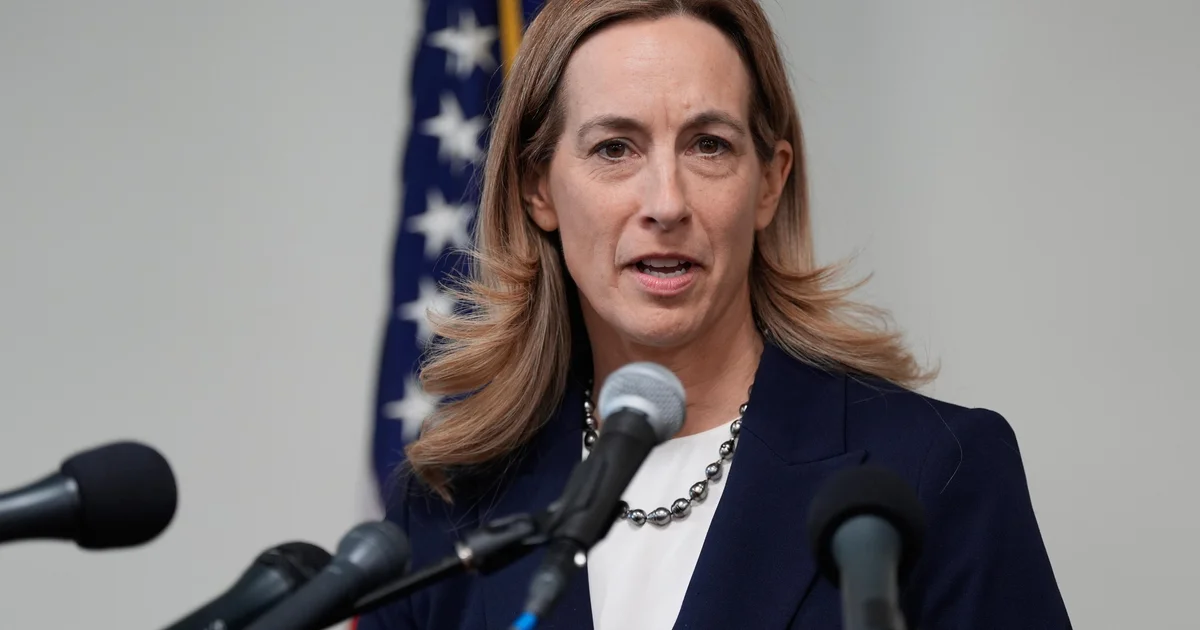
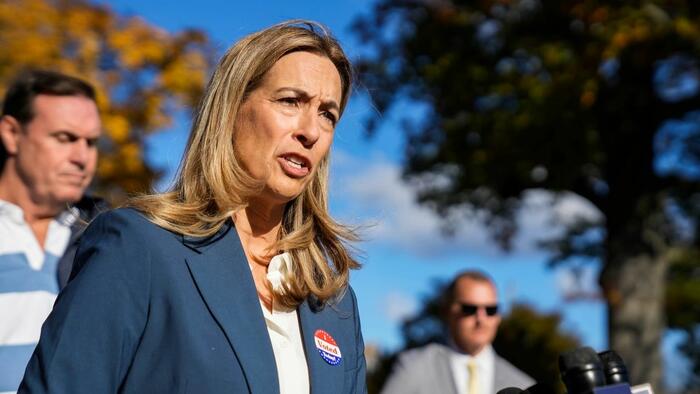
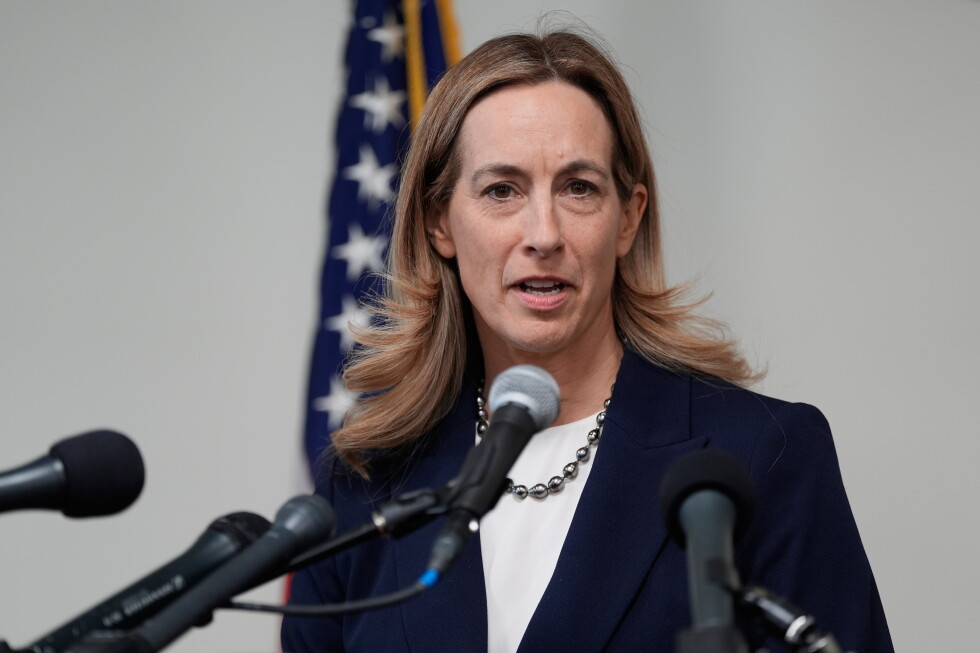
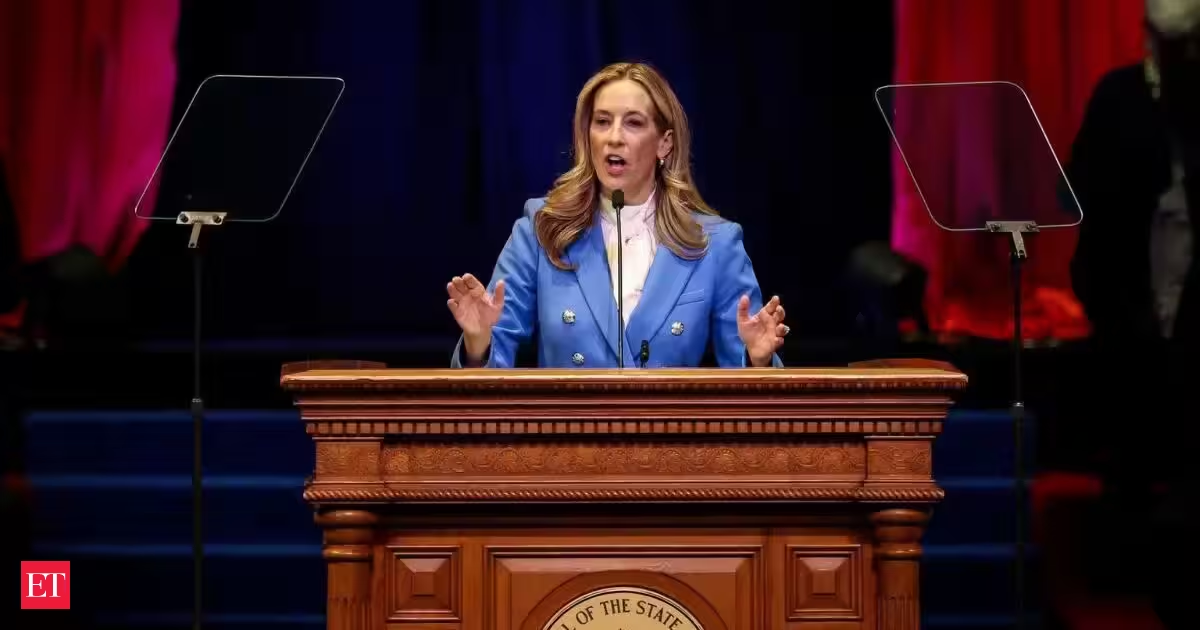
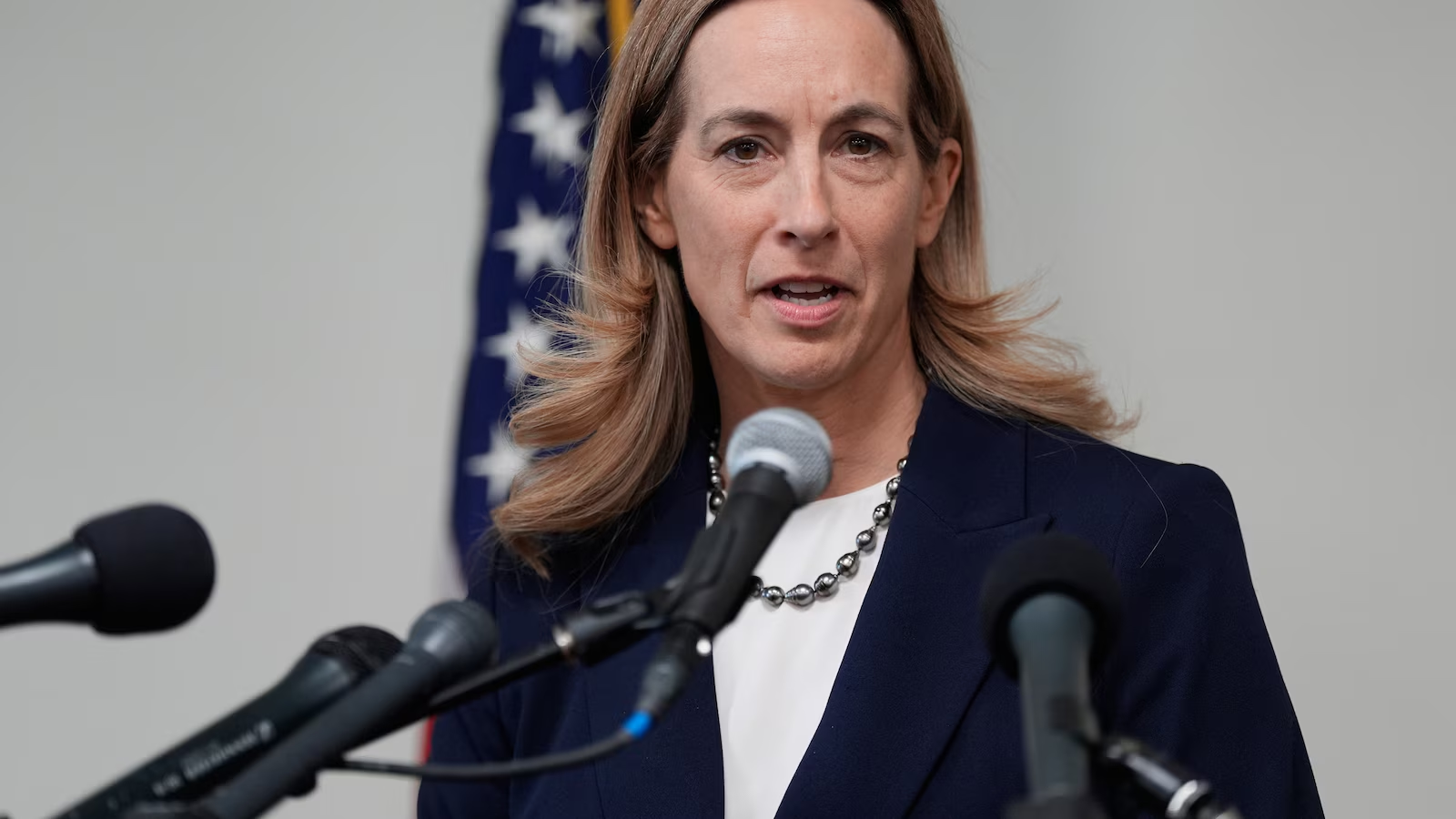
A firm that handles New Jersey's drivers' licenses denies responsibility for 6,600 noncitizens ending up in the pipeline to voter registration, a company spokesperson told USA TODAY.New Jersey Gov. Mikie Sherrill announced July 21 that as many as 6,600 non-U.S. citizens registered to vote in New Jersey in 2023 and 2024 because of a software flaw. Fewer than 400 of them cast ballots, she said. Sherrill said she first learned of the problem in July, ordered the noncitizens removed from the rolls and ordered an investigation into why the administration of her predecessor Phil Murphy, a fellow Democrat, didn't tell the public about it.“It’s unacceptable that the vendor released software with such a glaring error," Sherrill said of the contractor, IDEMIA, which has worked for New Jersey for four decades.But IDEMIA spokeswoman Lisa Shoemaker told USA TODAY on July 23 that "the characterization that a glitch occurred is not accurate."”There was no glitch or software error," said Shoemaker, whose firm also handles a wide array of federal contracts, including TSA Pre-Check at airports and "biometric and secure identity solutions" at the Pentagon.The dispute has cropped up amid a national fight over noncitizen voting, with supporters of President Donald Trump saying the state allowing hundreds of noncitizens to vote was proof that Democrats cheat on elections and that Congress needs to pass Trump's SAVE America Act election integrity legislation.On July 24, Rep. Jeff Van Drew, R-New Jersey, led 18 of his Republican colleagues in the House in demanding answers from Sherrill.“Republicans have been sounding the alarm for years about weaknesses in voter-registration systems, inadequate voter-roll maintenance, and the danger that noncitizens may be registered and permitted to vote in national elections, which is illegal under federal law,” Van Drew wrote. “These concerns have too often been dismissed as exaggerated or unfounded. New Jersey's admission demonstrates that these vulnerabilities are real and that even a system supposedly designed to screen out ineligible applicants can fail on a massive scale.”Democrats deny these allegations and say Trump supporters have offered no proof that anyone intentionally allowed non-citizens to register or vote.Sherrill said those who improperly cast votes were registered as Democrats, Republicans and unaffiliated. "We have no evidence at this time that any elections were swayed," she said at the July 21 news conference.The governor's office declined to comment while the investigation is ongoing.A New Jersey state official with knowledge of the situation, who spoke on condition of anonymity because of the ongoing investigation, said the governor's office is standing by its comments as an investigation occurs into how her predecessor's administration learned of the issue and how it responded."Anytime somebody answers 'no' to the citizenship question, that record should not be transmitted to the Division of Elections. That was the software error by IDEMIA," the official said, citing the name of the private government contractor.The Department of Justice has also announced that it would investigate the incident, which became public days after the Trump administration said it had found more than 250,000 potential noncitizens who were illegally registered to vote in California, Nevada, Pennsylvania and New Jersey. All of the states issued denials, saying there weren't large numbers of noncitizens on their voter rolls.Days later, New Jersey's governor blamed the contractor for the error of adding several thousand noncitizens between 2023 and 2024. Those names have since been removed.IDEMIA handles drivers' licenses for many statesIn emailed responses to USA TODAY inquiries, the contractor denied responsibility for the mistake.IDEMIA, which says it produces the majority of drivers' licenses in the United States, has contracts with motor vehicle departments in 36 states.Shoemaker told USA TODAY the firm followed the written specifications issued by New Jersey in 2023, when it won a contract to collect self-attested responses, including a box to check about interest in registering to vote for people applying for or renewing a driver's license or state-issued identification card.Those written specifications, Shoemaker said, included the order of the questions. First, would you like to register to vote? Second, are you a U.S. citizen? And third − and only for those who answered yes to citizenship − select a party affiliation.The state tested the software itself and approved it for deployment in 2023, Shoemaker told USA TODAY.In June 2024, the New Jersey Division of Elections flagged the 6,600 files that did not include a political party affiliation among the data received from the Motor Vehicle Commission and asked why.The answer, Shoemaker said, was the state's own design. Anyone who answered no about citizenship was never prompted for a party, but their records were saved in the Motor Vehicle Commission (MVC) database because the system retained everyone who said yes to the first question.Per the specifications of the contract, the records went no further than the MVC's own servers, Shoemaker said. They basically retained a record of people who said they wished to register. It did not register them."IDEMIA does not control or manage voter enrollment; our role is simply to collect self-reported citizenship and interest data," Shoemaker said. "The IDEMIA software is not now and has never been set up to send any data whatsoever to the NJ Division of Elections."The IDEMIA software customized for the state of New Jersey is designed to collect self-attested answers to questions according to the state's requirements. And that data sits within a database at MVC, Shoemaker said."The criteria that the MVC uses to pull the reporting − including any questions regarding citizenship − and transmit to the Division of Elections is ultimately up to them" at the Motor Vehicle Commission, she added.In June 2024, the Motor Vehicle Commission requested that IDEMIA change a setting in the system so that anyone who wanted to register to vote but answered "no" to the citizenship question would be automatically treated "as a voter registration decline in the system," Shoemaker said.IDEMIA made that change, and it became effective September 2024.Company loses New Jersey contractLater that year, New Jersey said it was rebidding the MVC contract, but IDEMIA insists that had nothing to do with its performance in the initial contract, including the request for the change.Shoemaker said her company wasn't replaced because of the revised citizenship question. The company competed in a competitive process to continue as the driver services provider but lost out to a lower bid by a company called Thales.Moreover, Shoemaker told USA TODAY, New Jersey "did not indicate there was an error" and did not escalate the issue beyond what's known as a system request change. "There was no letter or formal notice," she said. "The state’s requested system change was handled as part of the normal customer relationship."To bolster that claim, Shoemaker said IDEMIA was one of only two finalists invited to submit a Best and Final Offer for the new contract in 2026.The newly appointed chief administrator of the Motor Vehicle Commission, Rosalie Johnson, was already phasing IDEMIA out and working with a new vendor to make improvements to longstanding issues like long wait times when the registered noncitizens incident was found in July, said the New Jersey state official.IDEMIA says it's up to New Jersey to explain how the information left the MVC and landed on the voter rolls without being verified.The New Jersey Department of State's Division of Elections, "is ultimately responsible for verifying eligibility to vote," Shoemaker said. "Information submitted by IDEMIA must still be validated and adjudicated by the Division of Elections."Multiple states told USA TODAY this week that they have systems in place to check citizenship once voter registration submitted at the DMV reaches election officials, a process meant to prevent the type of issue that occurred in New Jersey.