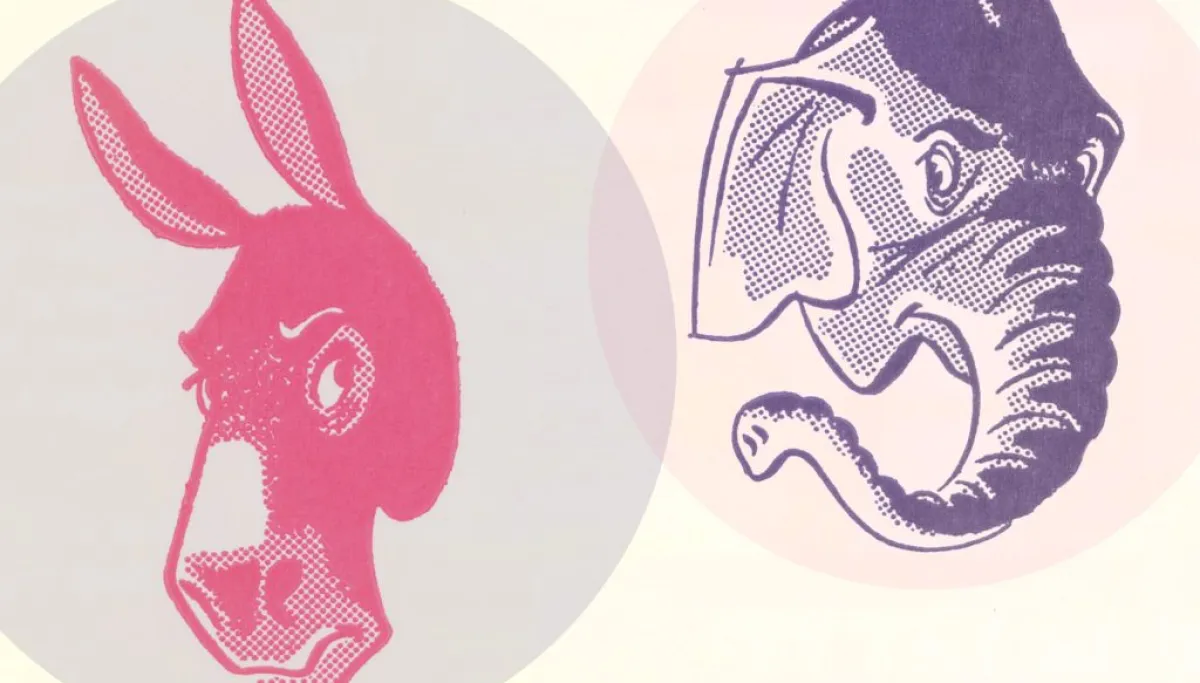
Having the humility to change your mind isn’t a skill all of us have.Our brains are wired to learn, adapt and update our understanding as we encounter new experiences and information. But when it comes to our beliefs — especially our political ones — many of us dig in our heels. People on both sides of the aisle can find it difficult to admit they got something wrong or accept that new facts may have complicated or changed their views.“Political identities have become so much more tribal. Changing your mind means you have to change your tribe,” said Joshua Coleman, a psychologist and author of “Rules of Estrangement: Why Adult Children Cut Ties and How to Heal the Conflict.” Once beliefs become part of our identity, changing our minds can feel like risking rejection by people we care about, said Keith M. Bellizzi, a professor of human development and family sciences at the University of Connecticut and the author of “Falling Forward: The New Science of Resilience and Personal Transformation.” “That makes persuasion less about facts and more about relationships, trust and belonging,” he said. There’s clear evidence from the Pew Research Center that people are more dug into their views and hostile to the other side, even than they were 10 years ago: In 2016, about half of Republicans (47%) and slightly more than a third of Democrats (35%) said those in the other party were a lot or somewhat more immoral than other Americans. Today, 72% of Republicans consider Democrats more immoral, and 63% of Democrats say the same about Republicans.John M Lund Photography Inc via Getty ImagesToday, 72% of Republicans consider Democrats more immoral than other people, and 63% of Democrats say the same about Republicans.The current administration has only added fuel to the partisan fire. One academic analysis found that President Donald Trump, like other presidents before him, predominantly used the word “evil” during his first term in office to describe foreign threats. Since taking office a second time, he has primarily used the word for political opponents, journalists, federal prosecutors and other critics.If you’ve come to see the other side as morally corrupt or “the bad guy,” changing your opinion can feel like crossing a moral line. In reality, admitting you were wrong isn’t a moral failing, but psychologically, it can feel uncomfortably close to one.What happened to us? Americans have always held strong political beliefs, but today’s environment makes those beliefs much more central to personal identity, Bellizzi said. “Social media, 24-hour news cycles and algorithm-driven content expose us to information that often reinforces existing views while reducing opportunities for thoughtful dialogue across differences,” he said.Plus, as Coleman added, we’re not an especially forgiving society. “Saying ‘I was wrong’ can feel like you’re setting yourself up to be hurt, criticized or shamed,” he said. simonkr via Getty ImagesAccording to research, 1 in 2 adults is estranged from a close relative, with 1 in 5 directly citing political differences as the reason.Entrenched political views haven’t just fueled congressional gridlock; they’ve also fractured American families. According to research from Coleman, 1 in 2 adults is estranged from a close relative, with 1 in 5 directly citing political differences as the reason. Younger generations are more likely to estrange a parent based on politics than older generations, Coleman said. How to build up your “I was wrong” skill set.Clearly, we could all benefit from understanding one another a little better, and part of that means becoming less hard-line in our views. So how do you get better at admitting you were wrong ― or that you’ve changed your mind based on new information? Be a humble learner. Intellectual humility ― recognizing that your knowledge is never really complete, your beliefs are fallible and that we all have our biases ― is a huge asset as we try to keep pace with the rapid changes in information.“Intellectual humility begins with recognizing that none of us has perfect information,” Bellizzi said. “The most effective learners are comfortable saying, ‘Based on what I know today, this is what I believe, but I’m open to new evidence.’” Let yourself be curious. Curiosity is equally important to staying humble, Bellizzi said.“Rather than asking, ‘How do I prove I’m right?’ we can ask, ‘What might I be missing?’” he said. “People are generally more willing to reconsider their views when they feel respected rather than judged.”Richard Drury via Getty ImagesThe assumption that “this is the way we’ve always done things” or “this is who we are” can sometimes stand in the way of growth. Realize that just because something is “the way we have always done things” doesn’t mean it’s for the best.Decisions are sometimes rooted in our values and who we believe ourselves to be, said Ibinye Osibodu-Onyali, a therapist in Houston. If we change our minds based on new information, then what does that say about who we are?“We don’t always know if we are allowed to evolve,” she told HuffPost. “Changing your mind can lead to a crisis of identity. It’s the idea of, ‘If I’m not a [insert political affiliation here], then who exactly am I?’”In some cases, a change in political views also means alienation or arguments among friends and family members. “When we change our minds, it feels like we are saying that our families, our culture, our values have all failed us. We are lost,” Osibodu-Onyali said. But the assumption that “this is the way we’ve always done things” or “this is who we are” can sometimes stand in the way of growth, the therapist said. It’s not a moral failing to change your mind based on new information. europhoto via Getty Images“Political views tend to be abstract, but when it hits close to home — when a family member needs a job, when someone dies, when a child is hurt — we realize that we need to create a new vision of who we think we are,” said Ibinye Osibodu-Onyali, a therapist in Houston.Consider how your political views are affecting others. People tend to change their minds when things get personal, Osibodu-Onyali said, when a political view we hold no longer works for our loved ones or us. When a view fails us, we are forced to take a look at what other options are out there for us.“Political views tend to be abstract, but when it hits close to home ― when a family member needs a job, when someone dies, when a child is hurt ― we realize that we need to create a new vision of who we think we are,” the therapist. “Suddenly, maybe we do want to rethink the way we vote about the economy, healthcare or the way seniors are treated.”Try to expand your circle of caring and really consider how your dug-in political views are affecting others. “Maybe it’s the beloved co-worker who has different views. After one has gotten the opportunity to notice that this co-worker is a ‘nice guy,’ one can wonder, ‘How can someone this nice believe something so different?’” Osibodu-Onyali said.“That’s how we begin to wrestle with what we believe,” she said. “The more we look around and realize the flaws in our beliefs, we begin to dismantle the belief and build something new.”
These 3 Words Are Incredibly Powerful... But Most Of Us Have Trouble Saying Them
It will change you (and maybe even the current political landscape) for the better.
1,210 words~6 min read