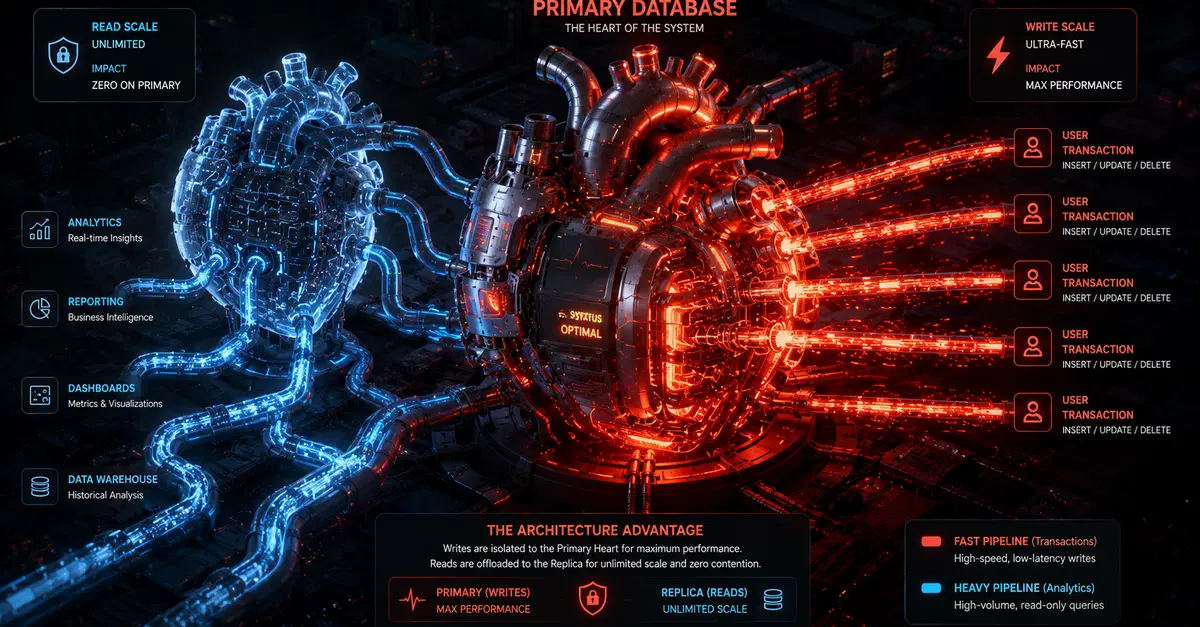
At seven o'clock every Monday morning, thousands of workers on active heavy construction sites log into their mobile devices to complete mandatory equipment safety checks. Early in my career working on enterprise platforms, our software system routinely struggled under this sudden surge. Every time a field supervisor submitted a safety audit, the system tried to write that multi-page record into our main database while simultaneously recalculating project-wide safety statistics for executive dashboards. The database locked up, background jobs backed up, and work on remote job sites ground to a halt while teams waited for digital clearance.
To eliminate this bottleneck, we redesigned our system using a pattern known as Command Query Responsibility Segregation, or CQRS. In plain English, this is an architectural approach where you separate the system pathway used to record incoming changes from the pathway used to retrieve and show information. Instead of forcing one database engine to handle both heavy writes and complex reporting queries at the same time, you split the responsibilities into two distinct software services.
When a supervisor submits a safety check, the app sends a lightweight command to our intake service, which is the front door software that receives incoming user requests. This intake service does only one job: validate and save the raw form entry as fast as possible. Once saved, the service publishes an event to Azure Service Bus, a cloud-based digital messaging queue that safely holds incoming tasks in order so other background systems can process them at their own pace.