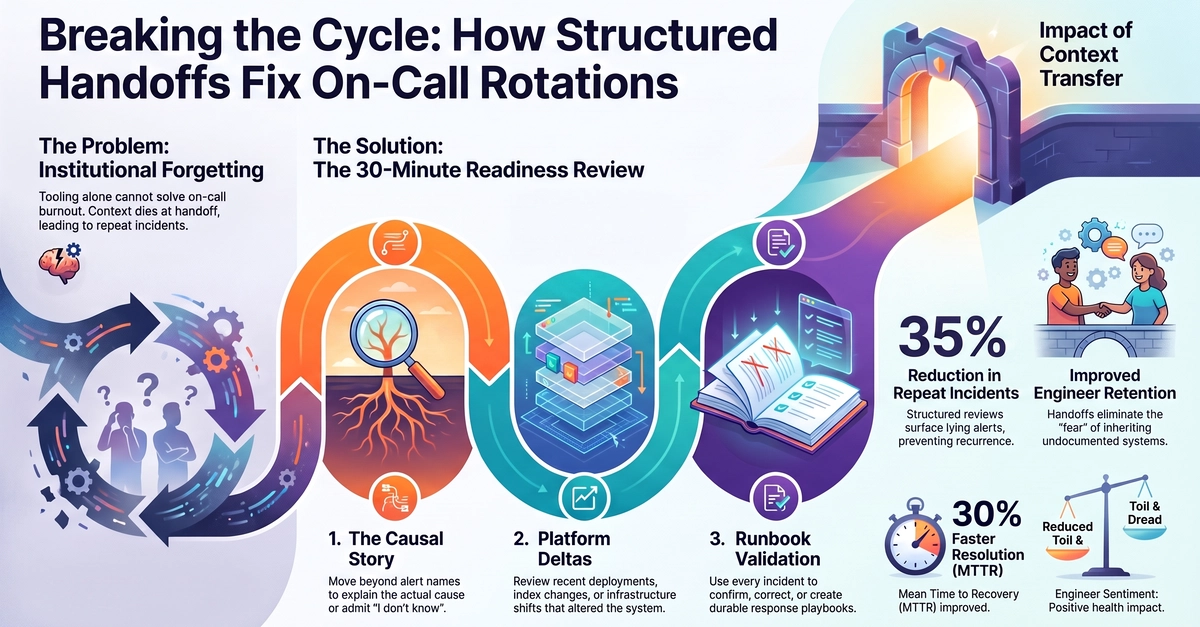
Most on-call rotations start with good intentions and end with someone updating their LinkedIn. The schedule ships as a shared Google Sheet, the team agrees to weekly handoffs, and for the first month things feel manageable. Then the 3 AM pages start compounding. Alert noise grows. The engineer on rotation spends their weekdays recovering from their nights, and the backlog doesn't care.
On-call engineer burnout is not a character flaw. It's a structural problem, and structural problems respond to structural fixes.
What makes on-call rotations unsustainable
The most common failure isn't the volume of incidents. It's the volume of noise that doesn't lead to incidents. A PagerDuty study found that operations teams spend roughly 30% of their time on unplanned work, and a large portion of that time goes to triaging alerts that require no action. When every alert feels urgent and most turn out to be nothing, the person holding the pager stops trusting the system.
Three patterns show up in almost every team that struggles with on-call: