“Watch a grey spot. Don’t look away. … Always look at each spot for five seconds. When they stop, they look like a stone.”
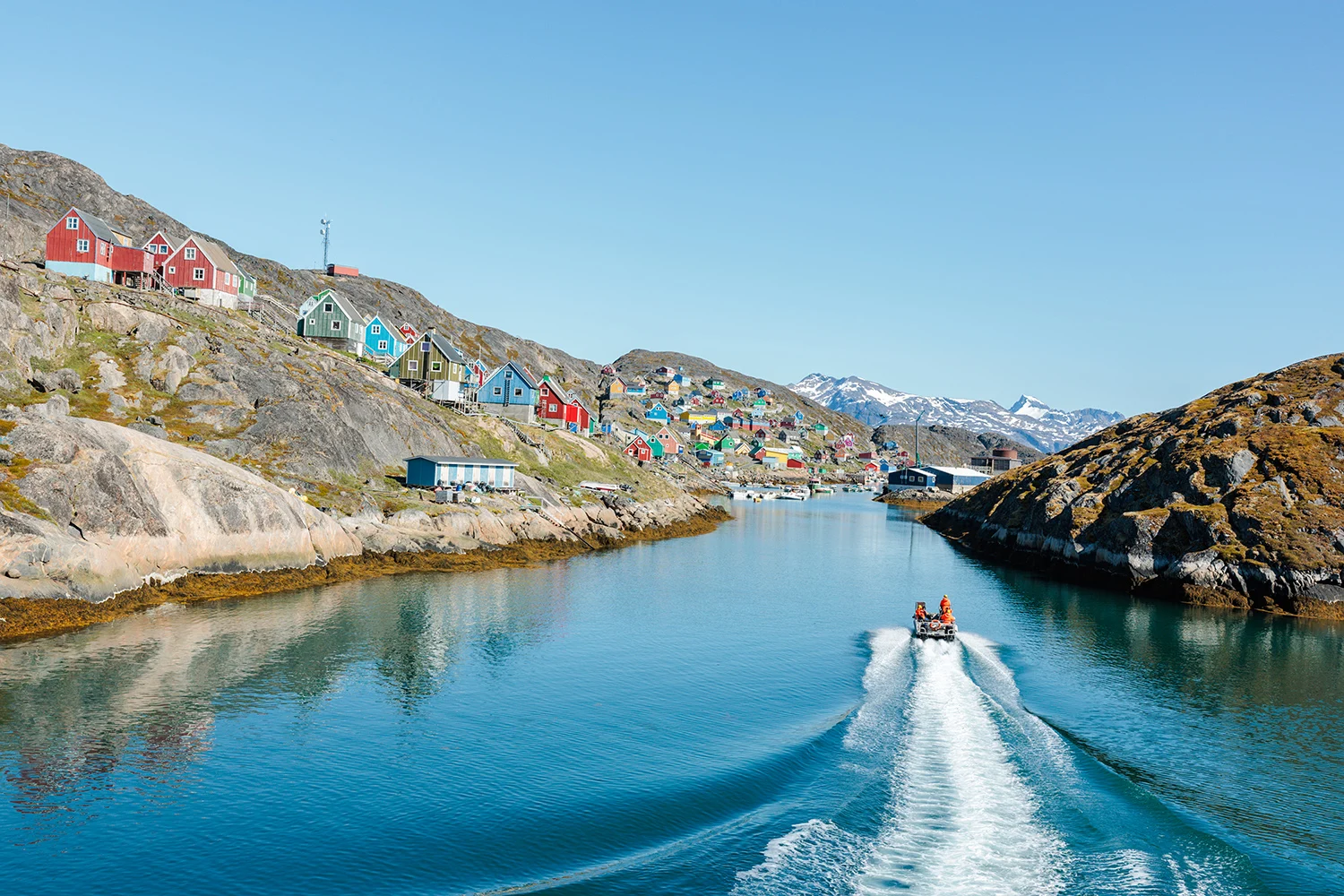
I’m on the deck of the ferry M/S Sarfaq Ittuk, steaming south along Greenland’s western shore, and Qulutannguaq Hammeken is teaching his 12-year-old daughter, Beathe, (and now me too), how to spot a reindeer. Hammeken is traveling south for the summer, and his conversation is full of hopes about the things he wants his daughter to learn now that the city of Nuuk is behind us: “All that experience I have, I want to show her [how] to travel in the landscape in the old ways.”
A woman and a young child lean against the red and white railing of a ferry deck, looking out over the water toward distant, hazy snow-capped mountains.
Ferry passengers scan the shoreline south of Nuuk on June 30.
I’m here to find out what Greenlanders think as their country comes under extraordinary and unprecedented geopolitical pressure. What many tell me, in different forms over the course of this voyage, is that the choice between Denmark or the United States or independence is ultimately secondary. More important, they insist, is that they be understood and treated as equals in any discussion about their island’s future.