German Chancellor Friedrich Merz yesterday named Minister of Health Nina Warken as his new chief of staff, as part of a reshuffle intended to inject momentum into the government before state elections in September.Merz added that more changes were to come. Two sources familiar with the matter said he was also set to replace his transport minister.
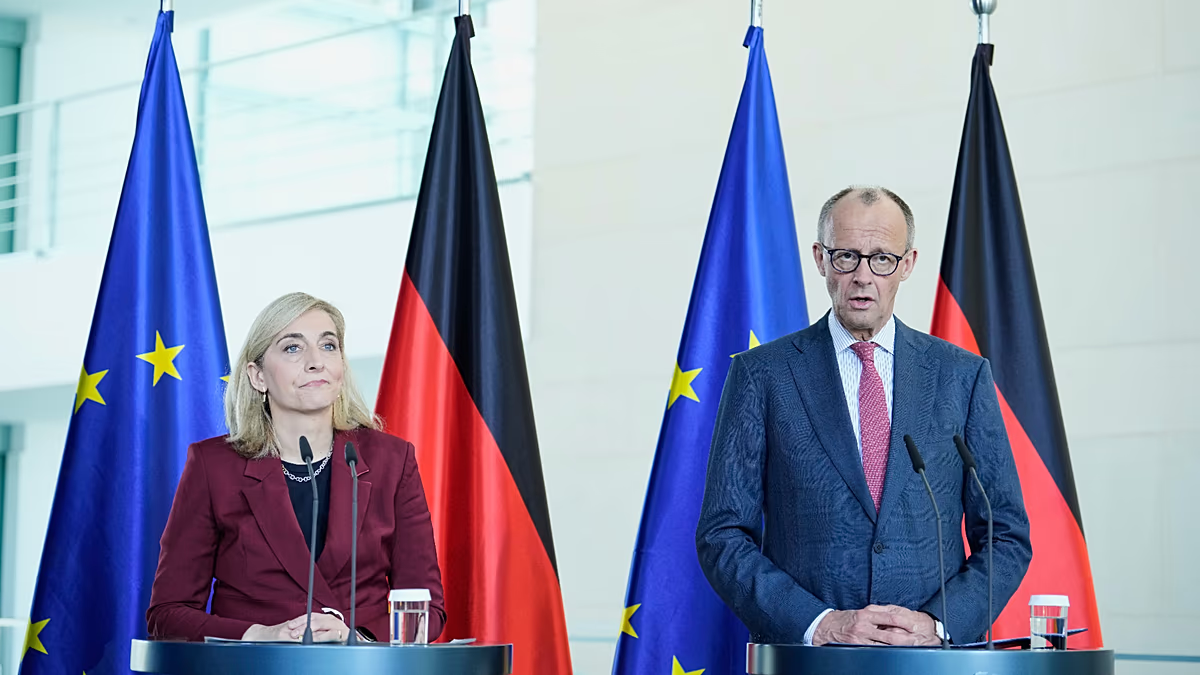
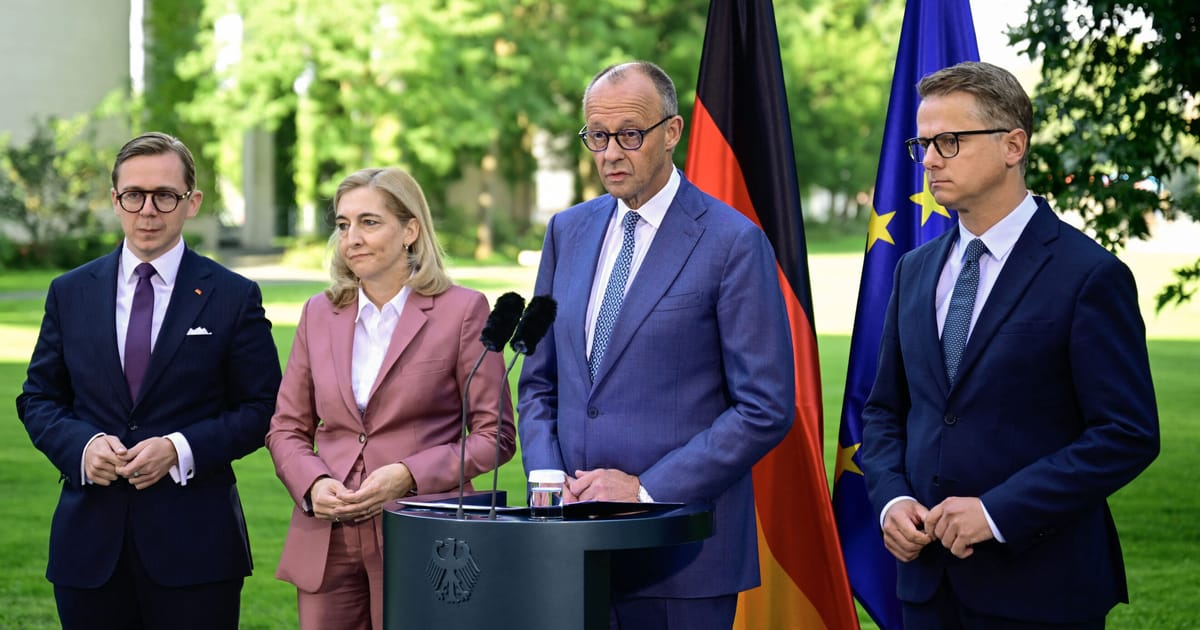
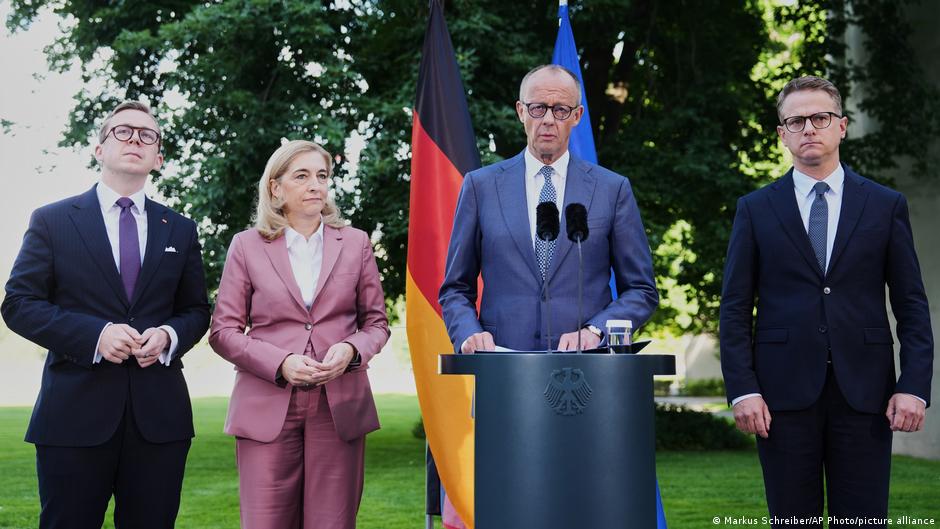
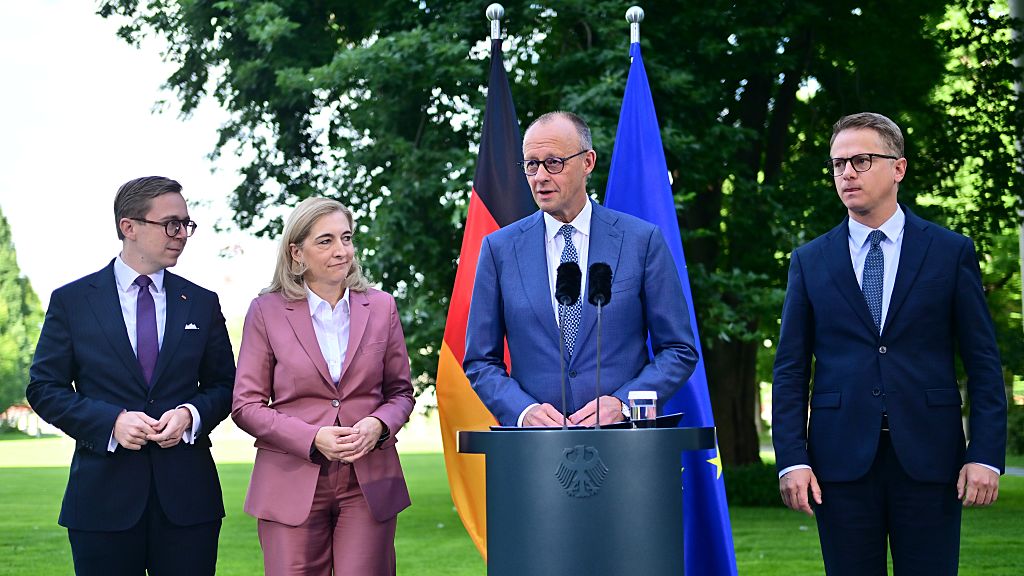
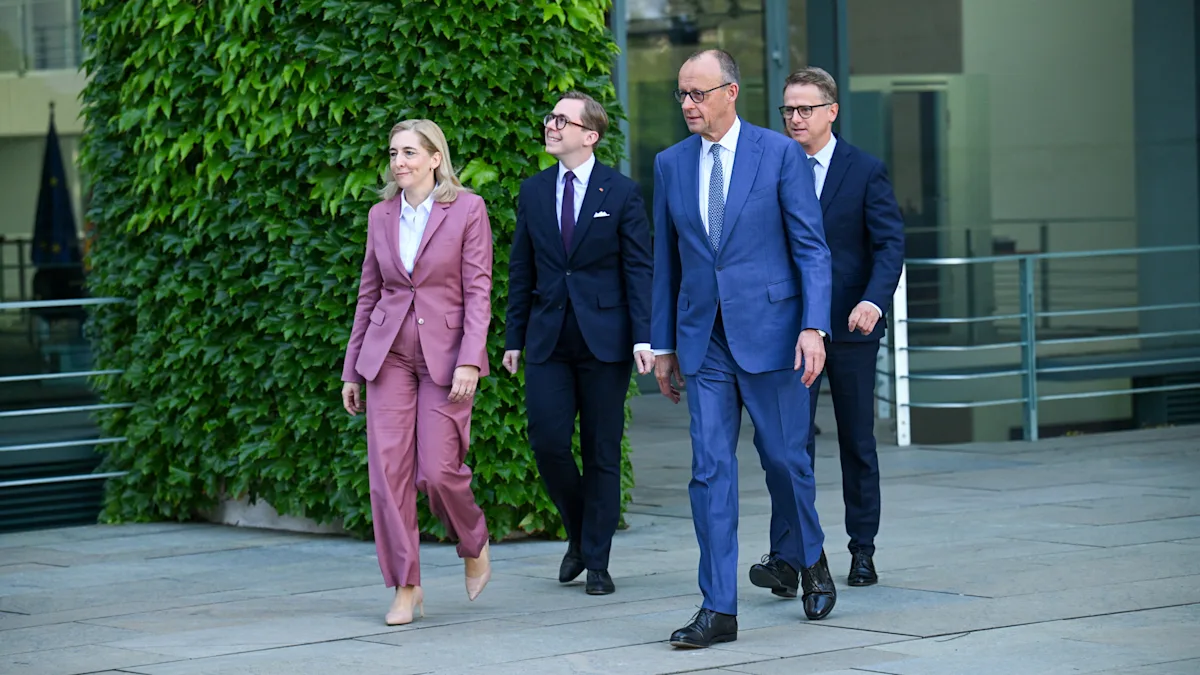
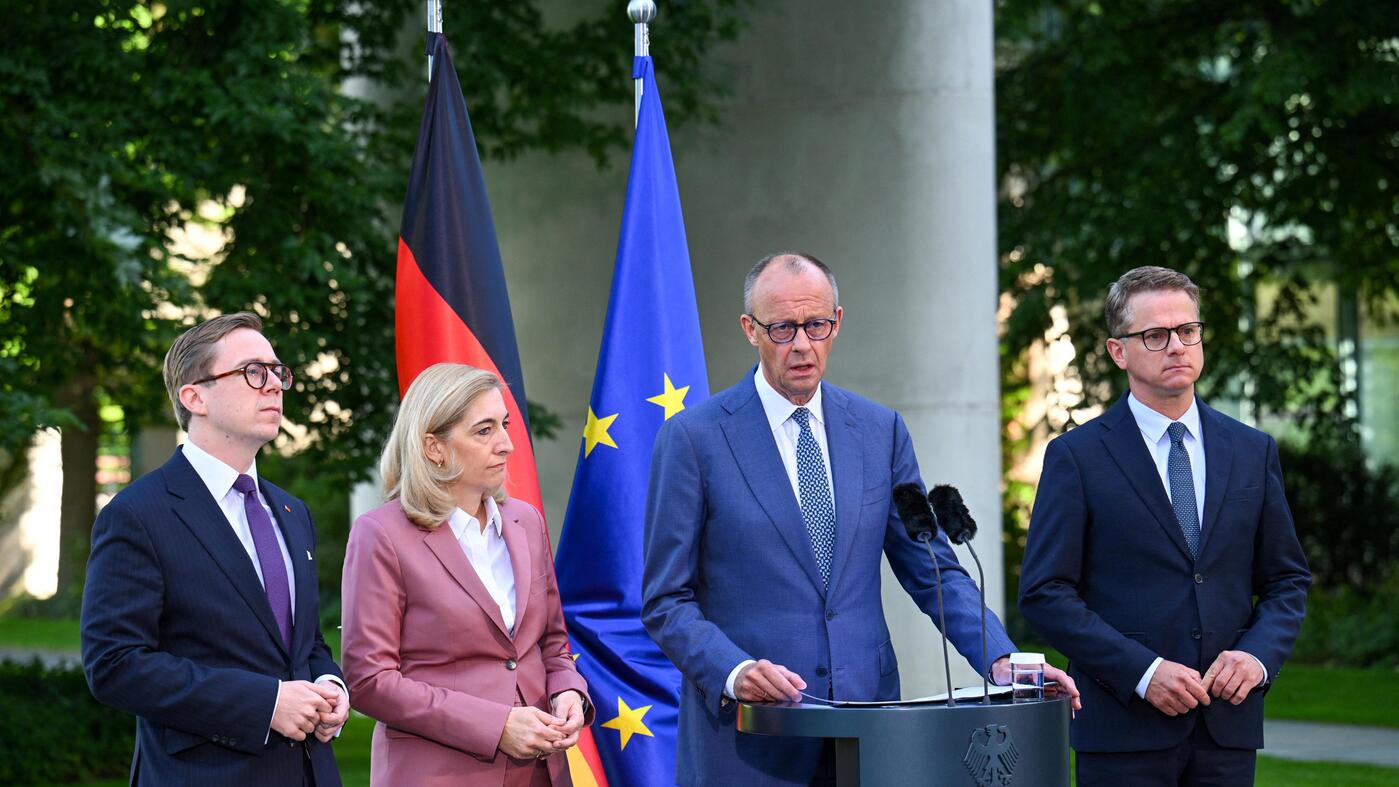
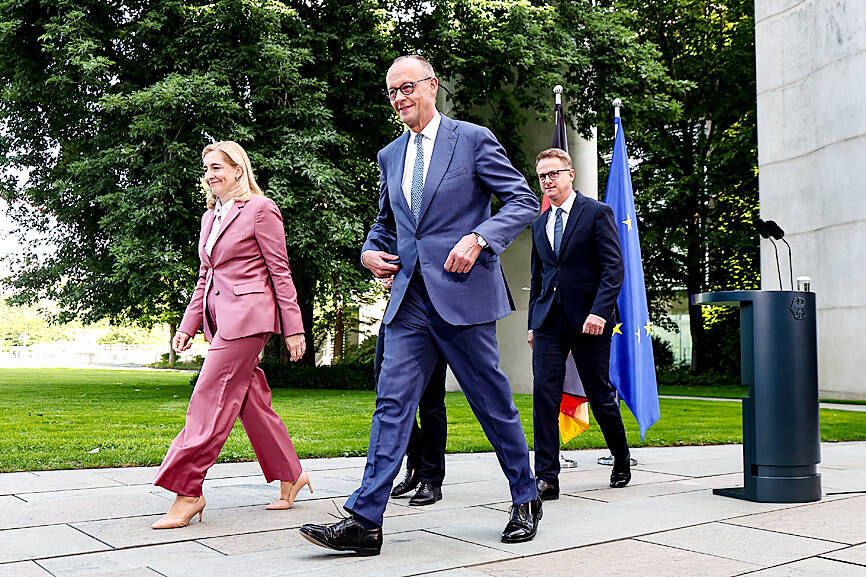
German Chancellor Friedrich Merz, front right, and incoming chief of staff Nina Warken, front left, leave after a press briefing on Cabinet changes at the Chancellery in Berlin yesterday.
Warken is to be the first woman to hold the post — an important position that serves as a node between the chancellery, ministries and lawmakers at a time when Merz is pushing reforms to revive Europe’s largest economy.The reset follows the abrupt resignation of conservative party heavyweight Jens Spahn as parliamentary faction chief, in a row over his decision to have a surrogate baby, despite his party’s staunch opposition to surrogacy.
Merz is under pressure to deliver after a difficult first year in office. He trails in opinion polls to the far-right Alternative for Germany and faces the prospect of the AfD gaining power for the first time at state level in September.Economic growth has struggled to revive, with Germany’s vaunted export-driven economy under threat from rising costs at home and competition abroad. Global tariff ructions and the energy shock from the Iran war are also hobbling growth.“We are a reform-oriented government, and we intend to continue demonstrating that,” Merz told reporters in Berlin, promising to “hit the ground running” when parliament reconvenes after a summer recess.Merz had picked Warken, 47, to oversee health reforms to rein in soaring healthcare costs, a job that would now fall to another party heavyweight, Carsten Linnemann.Warken is “assertive and well-versed in security policy” and “a tough negotiator,” Merz said.Merz is set to replace Minister of Transport Patrick Schnieder amid frustration over the state of the nation’s rail network and crumbling infrastructure, two sources said, with train delays now a national topic of conversation.The train drivers’ union cautioned against blaming the rail network’s problems on an individual, saying policymakers had for years failed to provide clear goals, binding mandates or consistent management.“Germany does not need further political reshuffles, but rather determination, expertise and reliability,” it said.Merz’s outgoing chief of staff, Thorsten Frei, is to succeed Spahn as head of the CDU/CSU faction in parliament.The chancellor said he would make further changes to his Cabinet, but declined to give further details, adding that these would take more time.Merz’s popularity is at an all-time low, according to a RTL/ntv Trendbarometer poll this week, with only 14 percent of respondents satisfied with his performance compared with 85 percent dissatisfied.The AfD tops national polls at 26 percent, ahead of the conservatives at 22 percent, before elections in the eastern states of Saxony-Anhalt and Mecklenburg-Vorpommern in September that the AfD hopes would help pave the way for national success.