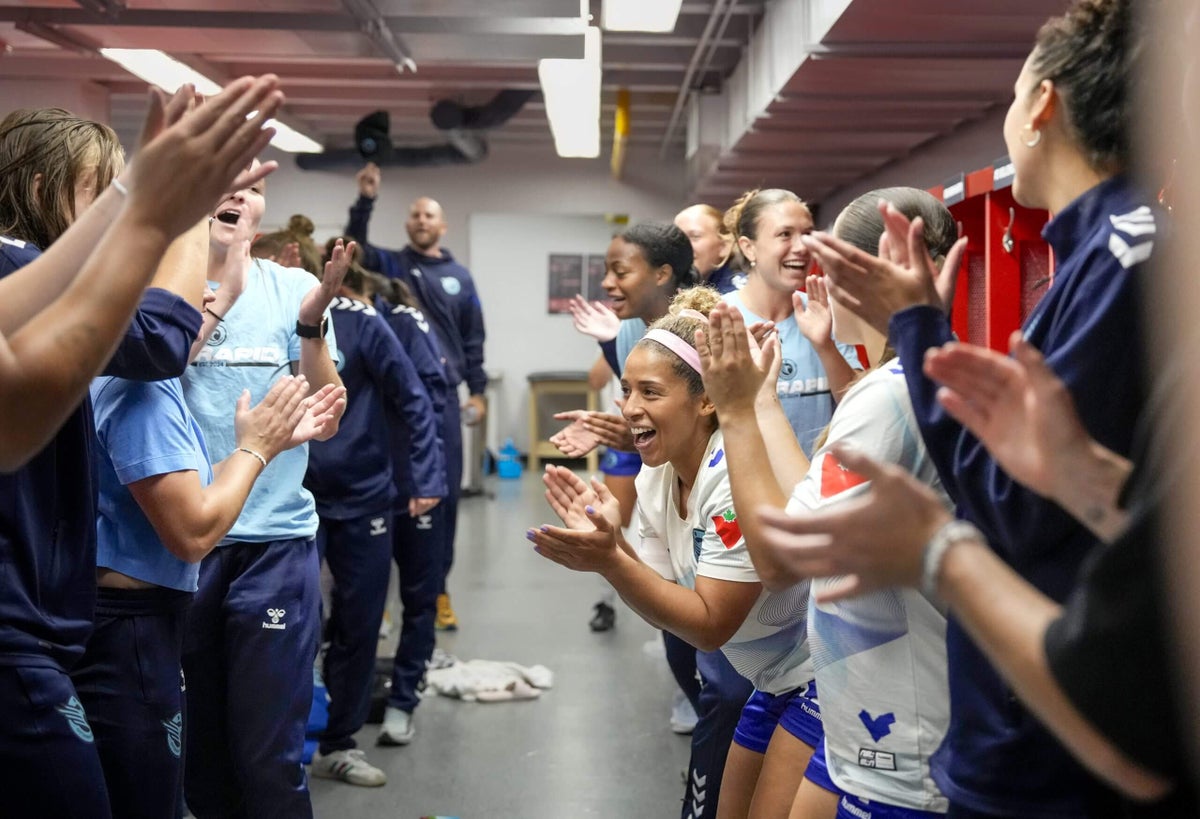
This article is part of our monthly series, “Soccer in ___.” Each article takes you inside the women’s game in a different part of the world. Whether through players’ stories, a standout moment or a snapshot of the history of the sport in a particular nation, the purpose of this series is to bring the world of women’s soccer closer together as we prepare for the 2027 World Cup in Brazil, the first to be held in South America.We recently took you to Mexico, Paraguay and Colombia. This month, we’re heading to Canada, following the nation co-hosting the 2026 men’s World Cup.For more than two decades, Desiree Scott built an accomplished career. The three-time Olympic medalist most recently won gold with Canada at the 2021 Tokyo Games and established herself as one of the most respected players in the National Women’s Soccer League, most notably in Kansas City. But her dream was always to play at home in Canada.In her final season, after 11 years playing abroad, that vision finally became reality with Ottawa Rapid FC when the midfielder took part in the inaugural season of the Northern Super League, Canada’s first professional women’s soccer league.With the NSL’s second year now under way, Scott is returning in a different role — this time, in the front office of the league’s first expansion club: Winnipeg’s unnamed franchise launching next year in her hometown.Desiree Scott was a key part of Canada’s gold medal run at the Tokyo Games. (Andrea Vilchez / Getty Images for USSF)“Never in my wildest dreams did I anticipate this,” the 38-year-old tells The Athletic. “Being part of this league, having played in its inaugural season — a league we talked about, dreamed about, finally seeing it come to fruition — was amazing.“On top of that, having an opportunity to lead the charge and help bring another opportunity for women and girls in our province, in our country. I’ve been on a journey that I never could have dreamed about or expected, and it’s incredible.”Not only is the NSL experiencing historic investment — private equity firm APEX recently committed to investing up to a reported $30million in the league, partly helping fund Scott’s expansion side — the NSL is also aiming to establish itself as a foundational step in Canada’s soccer pyramid.For the first time, women’s soccer players in Canada can stay in Canada, rather than being forced to turn pro in another country.Canada has long been a hotbed for talent, known for establishing players including Scott, Diana Matheson, Erin McLeod, Rhian Wilkinson, and, of course, all-time leading goalscorer Christine Sinclair. These players were all part of the 2012 Olympic team that won bronze, securing the country’s first Summer Olympic Team sport medal in 76 years — each making a lasting impact on the sport in Canada.NSL was the brainchild of Matheson, who began loudly advocating for professional women’s soccer in Canada after her retirement in 2021. After receiving her MBA, she co-founded Project 8 Sports with Thomas Gilbert in 2022, with guidance from Sinclair. After years of planning, NSL played its first match on April 16, 2025.Former Canada international Diana Matheson created the NSL after retiring from soccer and getting an MBA. (NSL)“For me, that’s when this story starts,” Christina Litz, the NSL’s president, told The Athletic. “It was Diana that kicked off the spark, but it was also Diana that brought this to the next level.“Bringing this league together truly was the collective will of a whole bunch of folks who saw the vision that Diana had, saw the vision the national team had, recognizing, based on our player pool — which is cited to be the third largest in the world — and the support this country has for women’s soccer and women’s sports in general, that this could be successful.”The league considers its inaugural year a resounding success, attracting strong fan interest as well as commercial demand that propelled it into year two. Across its six inaugural clubs, the league reported more than 275,000 people purchased tickets in 2025, ranking the NSL a top five league globally in average attendance, according to the league. Vancouver and Toronto’s season openers each surpassed 14,000 fans. (For comparison, 7 of the NWSL’s 8 opening week matches in 2026 drew crowds of more than 10,000 fans, which set a league record.)“It was an emotional moment that set the foundation for the rest of the season,” Litz said. “As we went through that season and we got to the end, we really did set out everything that we intended to accomplish in that year.Vancouver and Toronto’s season openers each surpassed 14,000 fans in the NSL’s first season (NSL)“But we’re not content with where we are at, long term — like every other woman’s football league around the world. There’s a lot more investment and a lot more effort needed to grow, not only just to be a top women’s soccer league but to be a top league, and that’s our ambition now.”Former players, including Scott and McLeod, praise the NSL for its early support of players — with a $1.6million CAD salary cap per club and a minimum salary of $50,000 CAD per player. The average salary, according to the league, is about $75,000 CAD, considered among the highest in the world. The league’s real success, especially at that existential level, is having seven NSL players in 2025 receive call-ups to Canada’s senior national team. Those players were Emma Regan, Holly Ward, Kaylee Hunter, Scott, Quinn, Samantha Chang and Latifah Abdu.Until NSL launched, playing professional soccer often meant going to the U.S. to play collegiately in the NCAA or, eventually, play in the NWSL or for teams abroad. Because of this, many players established themselves at clubs in the U.S., becoming beloved in cities such as Portland, where Sinclair was for 11 years.A Canadian legend, Christine Sinclair also endeared herself to the NWSL community with a career spent winning trophies for the Portland Thorns. (Ira L. Black / Getty Images)The NSL is hoping to reinvent that pathway, as Jose Maria Costa, the NSL’s vice president of sport, told The Athletic. The hope is that, as the league grows, it can become a destination for players in the country and, eventually, offer a regular pool of talent for its national teams. For now, having a league where players can develop professionally within the nation’s borders is a major step towards evolving the game locally, Costa says.“We’re probably the third and second largest player pools in the world, and the quality that we have in this country is just untapped,” Costa said. “If you cannot align the player development piece within your own borders, then you’re losing a lot of quality players to different countries, and you’re not controlling the process. The synergies that exist between a league and a national team needs to happen inside your borders because that’s where you control the process. That’s where you control the player pathway.”That is why it is important, Costa says, for players to see NSL as an example for what is possible. “It is really important for us to have this professional platform in the country, so we can actually give (players) that ambition of, ‘OK, I can start playing when I’m really, really young, but, at the end of the day, I can make a career out of this.”From a sporting perspective, the league also benefits from Canada Soccer’s recent announcement of the inaugural edition of the W Canadian Championship this summer. It will serve as the 2026-27 domestic pathway to the 2027 Concacaf W Champions Cup and the FIFA Women’s Club World Cup, meaning NSL clubs will soon have the chance to compete against leagues around the world. All six clubs in the NSL qualify for the competition, along with two clubs from the women’s Premier Soccer League, a lower division league in Canada.“That’s the moment where you’re competing against the NWSL, and that you’re testing yourselves against a more mature league that, for many, many people, is considered the best women’s league in the world,” Costa said. “We can play friendlies with them, but only when it counts do you really know the true value and the quality of your teams. That’s essential for us.”The existence of a professional sports league in Canada also allows the soccer ecosystem to develop beyond its players. A league means more coaches, more referees and, eventually, more teams, like Winnipeg’s new expansion club.Scott will serve as the club’s co-founder and vice president of community and player experience. Her co-founder is longtime NWSL coach and former player Rob Gale, a fellow Winnipeg local who will serve as the club’s chief sporting officer. He sees the growth of the NSL as helpful for the overall growth of soccer in the country.
Soccer in Canada: How the Northern Super League hopes to fuel Canadian women’s soccer
Canada has invested heavily in its first women's professional league. The hope is that it helps the nation succeed at the Women's World Cup.
2,048 words~9 min read