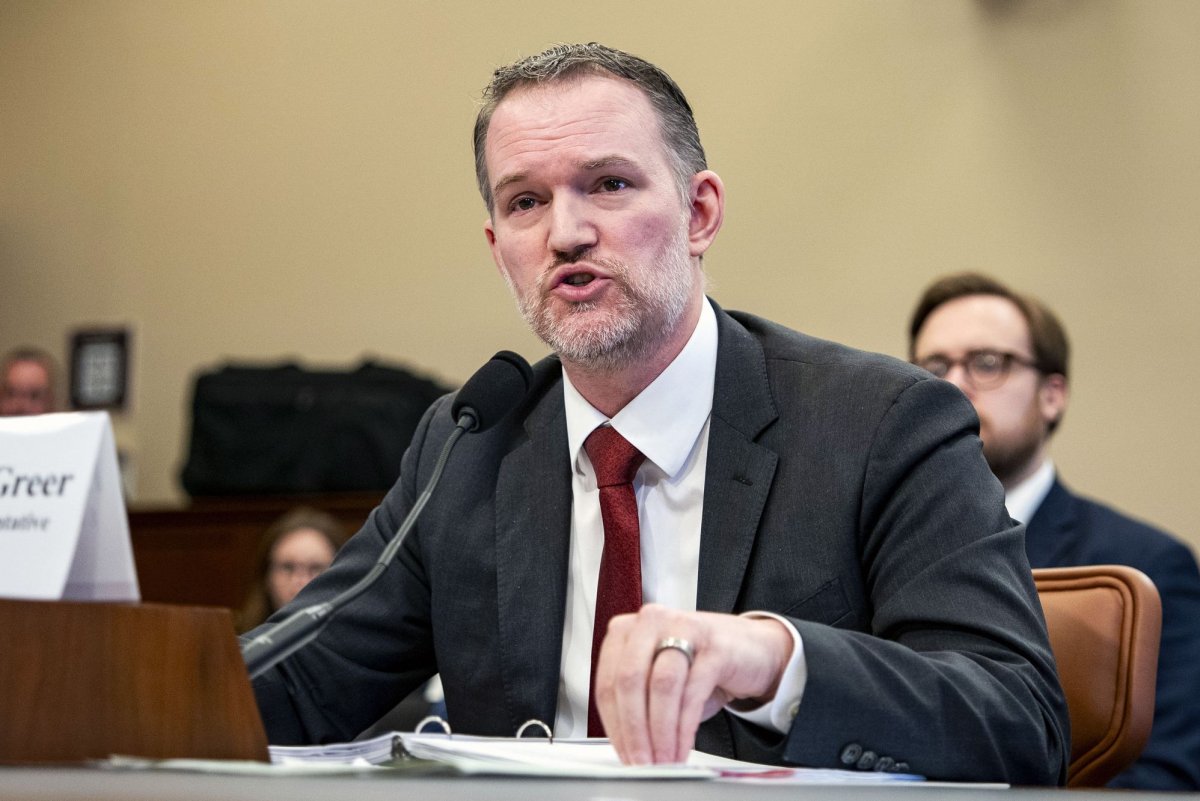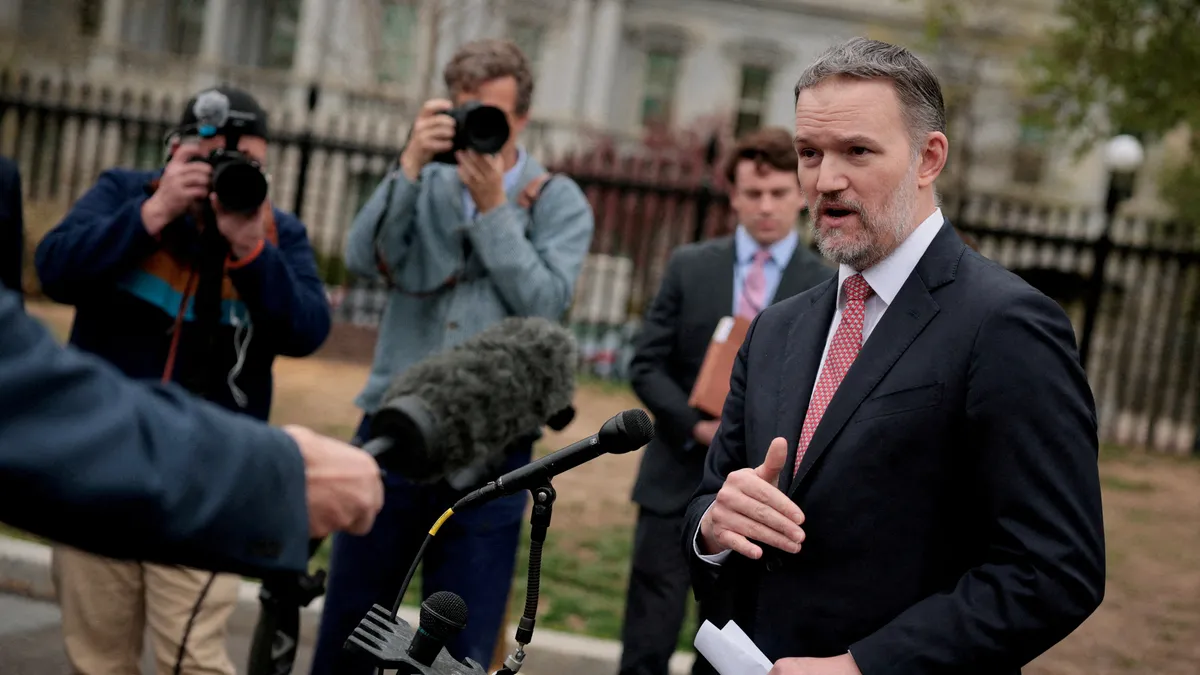
US Trade Representative Jamieson Greer recommended the latest tariffs on imports on 60 countries after a months-long investigation and public hearings. But targeted countries denied the accusations.Show Caption
WASHINGTON – The Trump administration announced tariffs of 10% to 12.5% on countries around the world accused of allowing forced labor, with the duties replacing the emergency tariffs that the Supreme Court invalidated in February.The 60 countries targeted with tariffs going into effect at 12:01 a.m. July 24 include the United States' largest trading partners – Mexico, Canada, China and the European Union. Countries on the list have challenged their designation. The earlier emergency tariffs were imposed on more than 90 countries.The move came after U.S. Trade Representative Jamieson Greer jumped through a series of legal hoops to justify the new tariffs. Greer imposed the tariffs after concluding through an investigation and hearings that the countries “failed to impose" or "effectively enforce a prohibition on the importation of goods produced with forced labor.”“Today’s action will begin to correct what is both a human rights abuse and distortive trade practice to improve the welfare of workers everywhere,” Greer said.The latest version of tariffs follow the elimination of President Donald Trump's emergency duties of 10% to 50%, which were imposed in April 2025 via executive order based on trade deficits and drug trafficking. The Supreme Court ruled in February that Trump didn’t have the authority to impose tariffs under the 1977 International Emergency Economic Powers Act.The administration is in the midst of refunding $166 billion to companies that paid tariffs later ruled illegal. Customs and Border Protection said it has processed about $85 billion worth of refunds through May that were the least complicated. But litigation continues in the Court of International Trade for companies still seeking refunds.The administration had a variety of options for imposing tariffs after crossing procedural hurdles. Trump imposed a temporary global tariff of 10% for 150 days after the Supreme Court decision. Those tariffs are set to expire July 24 and the forced-labor duties will pick up where those temporary tariffs left off."I think of the (temporary) tariffs as the bridge from the (emergency) tariffs, which were held to be illegal, to something longer-lasting and more durable," Dave Townsend, a partner at Dorsey & Whitney representing foreign clients in trade litigation, told USA TODAY. "They believe they’ll be able to stick indefinitely.”New tariffs 'in the ballpark' of replacing money from invalidated tariffsThe Committee for a Responsible Federal Budget, a bipartisan advocacy group, projected that the forced-labor tariffs could generate nearly $1 trillion during the next decade, or about half the revenue that the emergency tariffs were projected to produce. But Scott Lincicome, vice president of general economics at the libertarian Cato Institute think tank, said other tariffs, such as those on steel, aluminum, cars and perhaps pharmaceuticals, could make up the difference. Greer also continues to investigate whether 16 countries produced more than they needed to burden or restrict U.S. commerce.“They have a laundry list of tariffs that they have already imposed and that they could impose,” Lincicome told USA TODAY. “At the end of the day their objective is not to replace every single penny, but to get kind of in the ballpark.”Legal challenges are possible again. But Trump has argued that while he was the first president to invoke a statute for the emergency tariffs, other laws authorizing tariffs have been upheld in litigation.Lincicome said so long as the administration has checked procedural boxes to impose the tariffs, courts are unlikely to overturn them.“If you check all the procedural boxes, it’s more likely than not that a court is going to rubber-stamp it,” Lincicome said.Other tariffs have hit bumps. Trump acknowledged in a proclamation July 20 that domestic aluminum production hasn’t kept pace with the country’s needs after he imposed a 50% tariff on aluminum during his first term. He offered to cut the tariff in half for importers who commit to begin construction on new smelters by 2029.The forced-labor tariffs will not be stacked on top of national-security tariffs on steel and aluminum that countries are already paying. The latest tariffs also won't be applied to imports from Mexico and Canada covered under the trade agreement with those countries.Also on July 20, Trump threatened a new 50% tariff on Canada's auto, alcohol and dairy industries to begin Aug. 19. But he exempted oil, natural gas, critical minerals and other imports.In another vein, Trump threatened in a social media post July 21 to impose 100% tariffs on generic drugs starting Aug. 1, 2028, and 200% starting a year later – after he has left office. He aims to pressure manufacturers to produce the drugs domestically. The Food and Drug Administration says 90% of pharmaceuticals sold in the United States are generics.The forced-labor tariffs came under the 1974 Trade Act, after an investigation and hearings. Importers and foreign governments were able to contest the accusations of failing to curb forced labor. Some countries such as India were found to have taken steps to combat forced labor, which is why they were granted 10% tariffs rather than 12.5%.The countries targeted with 12.5% tariffs: Algeria, Angola, Australia, the Bahamas, Bahrain, Brazil, Chile, China, Colombia, Costa Rica, Dominican Republic, Egypt, Guyana, Hong Kong, Iraq, Israel, Japan, Kazakhstan, Kuwait, Libya, Morocco, New Zealand, Nicaragua, Nigeria, Norway, Oman, Peru, the Philippines, Qatar, Russia, Saudi Arabia, Singapore, South Africa, South Korea, Switzerland, Thailand, Turkey, United Arab Emirates, Uruguay, Venezuela and Vietnam.The countries hit with 10% tariffs: Argentina, Bangladesh, Cambodia, Canada, Ecuador, El Salvador, the European Union, Guatemala, Honduras, India, Indonesia, Jordan, Malaysia, Mexico, Pakistan, Sri Lanka, the United Kingdom, Taiwan and Trinidad and Tobago.New Trump tariffs prompt global responseInternational leaders react as President Donald Trump places new tariffs on countries accused of allowing forced labor including Canada, China and the EU.Europe and Vietnam have disputed accusations of forced laborThe European Commission said the tariffs were unjustified, reiterating its commitment to a U.S. trade deal that capped the tariff rate on most EU goods at 15%. International Chamber of Commerce Deputy Secretary-General Andrew Wilson said June 5 the "arbitrary nature" of the tariffs was a cause for concern.Vietnam's foreign ministry said June 2, after Greer’s recommendations were released, that the country strictly prohibits any form of forced labor and complies with the regulations of the International Labor Organization."Vietnam has been and will continue to exchange and work with the United States in a constructive and cooperative manner to resolve existing disagreements, while always trying to protect legitimate interests of workers and businesses," Pham Thu Hang, a foreign ministry spokesperson, told reporters in Hanoi on June 2.