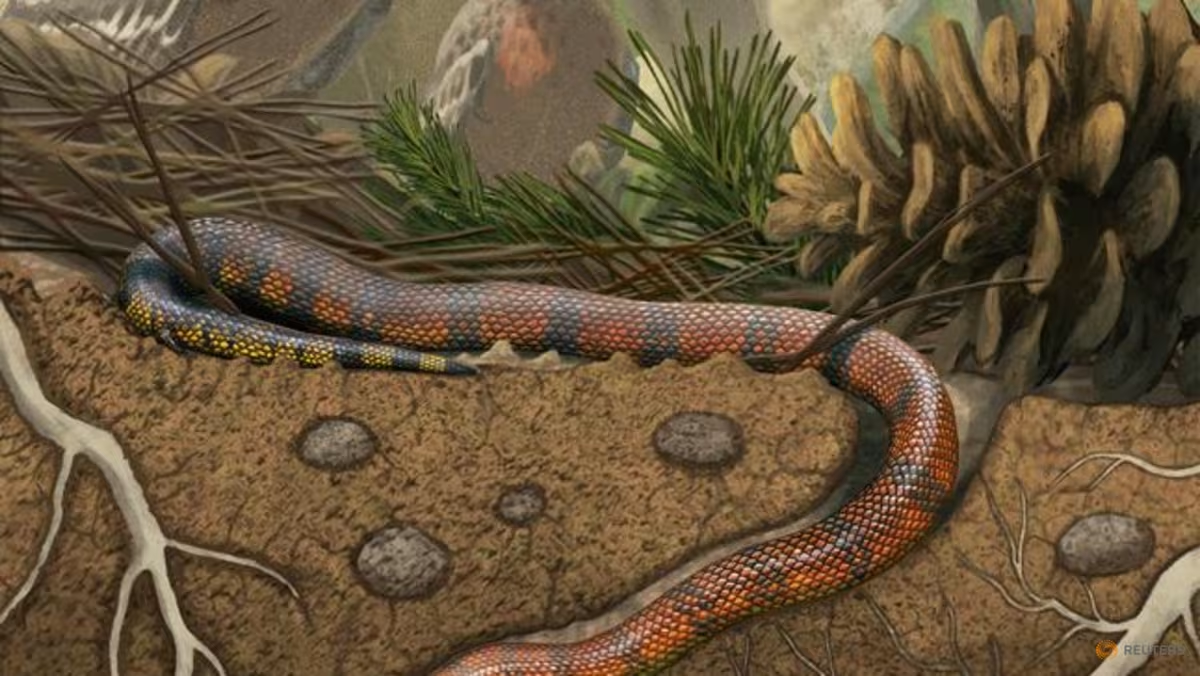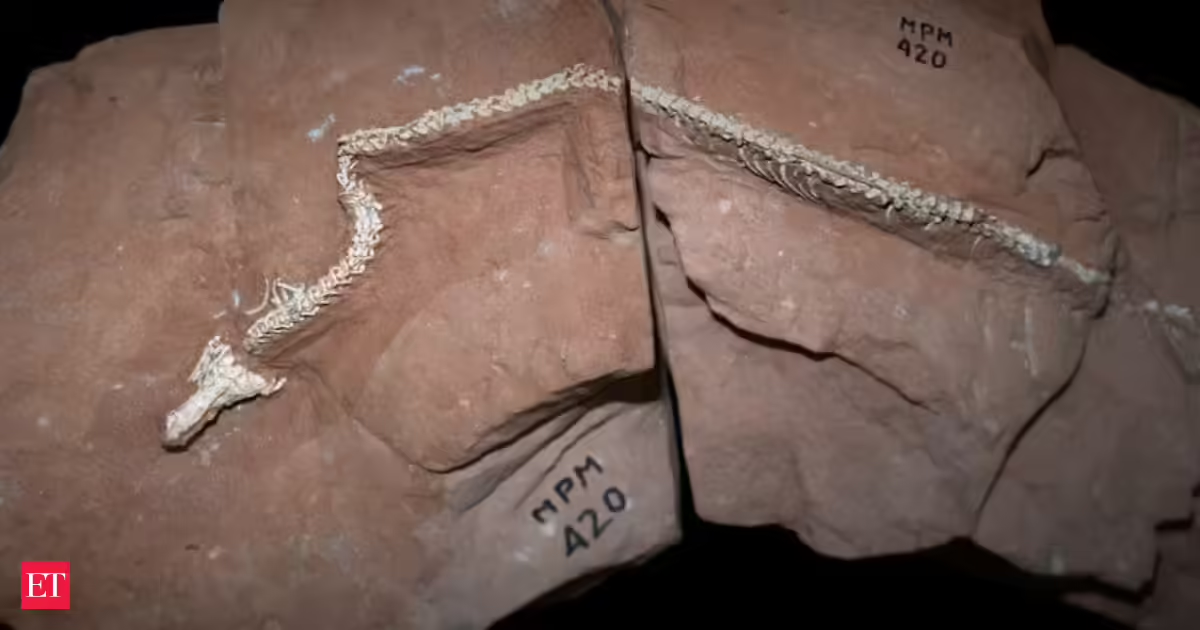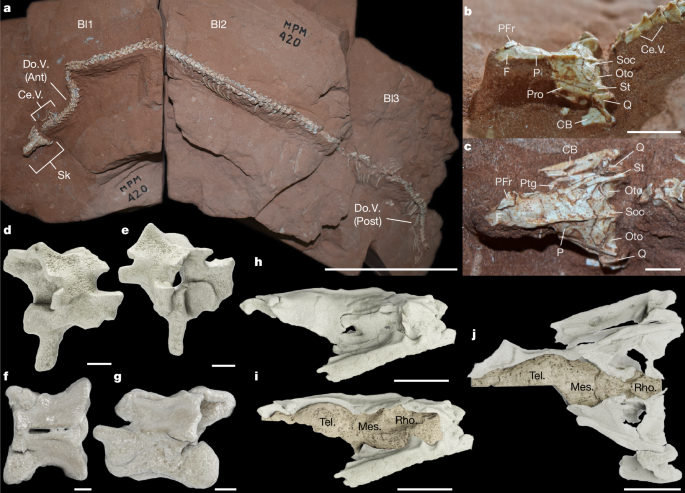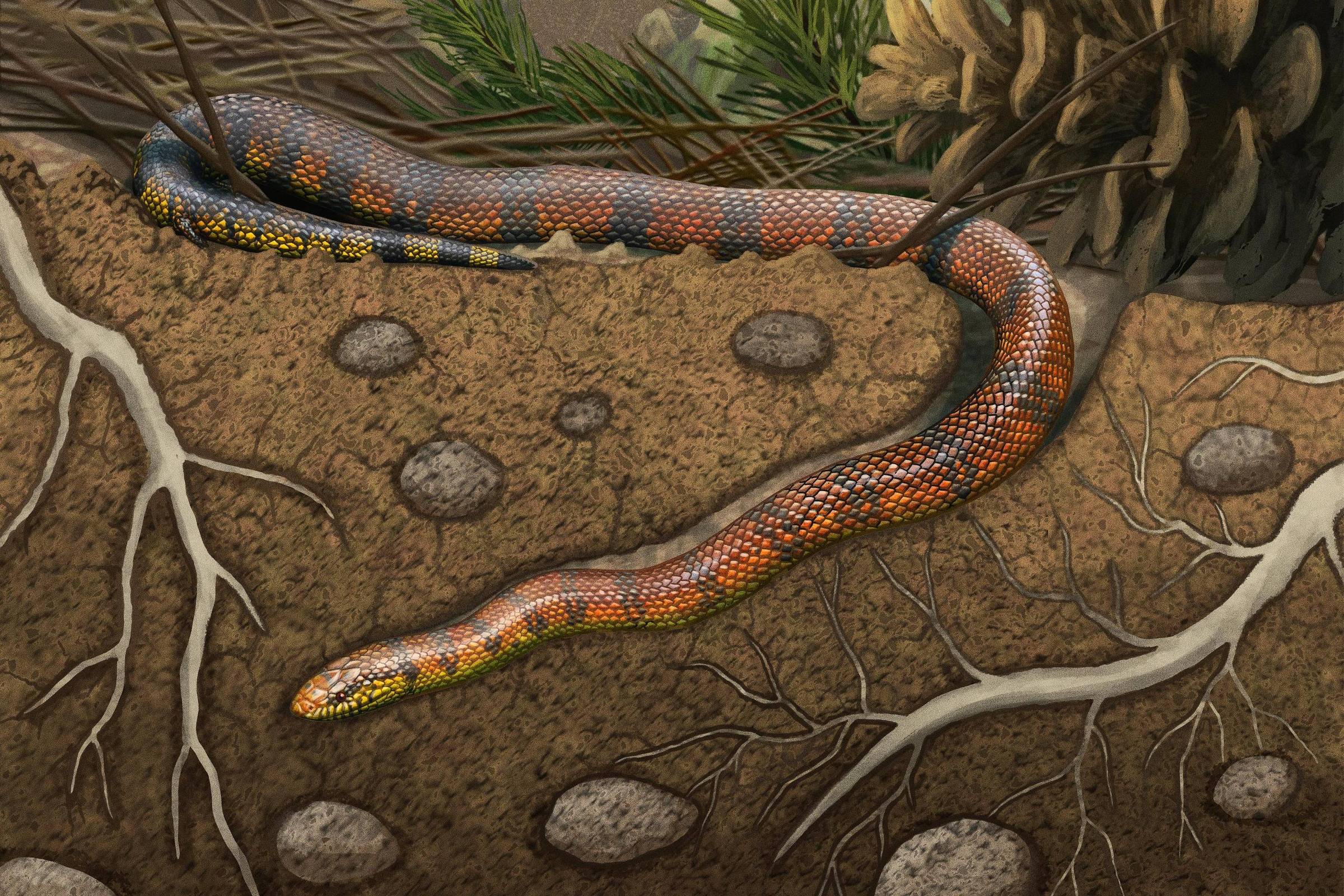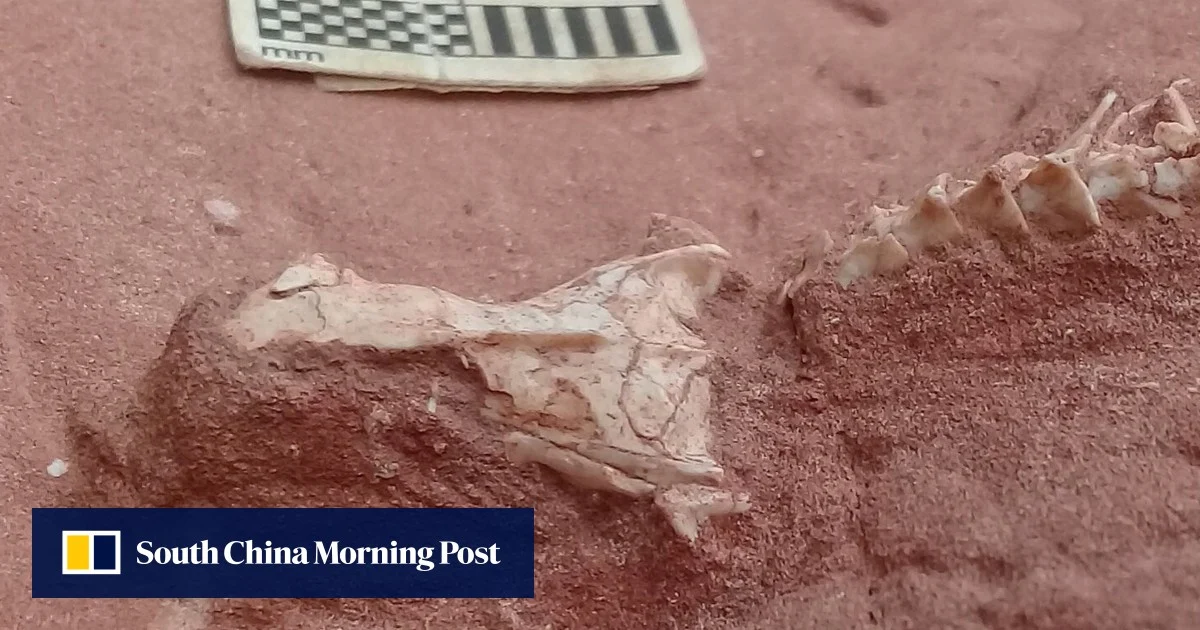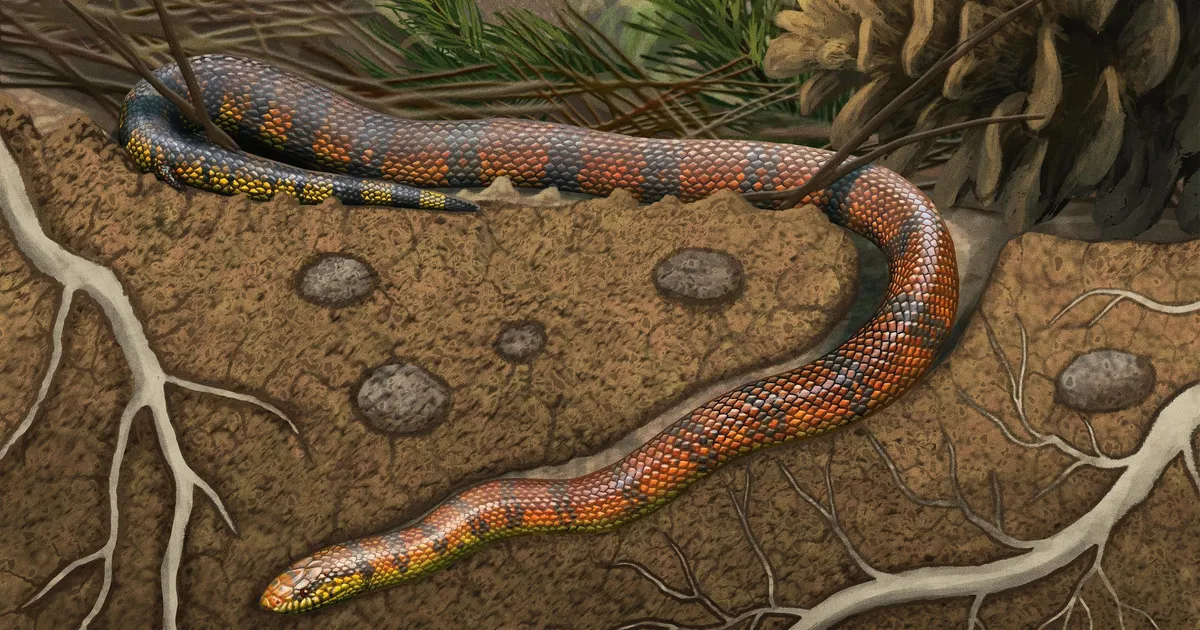
Current sectionArchaeologyIn the beginning, what was the first snake really like? Newly discovered ancient serpent in Brazil expands the possibilities to the chthonic realmShare to FacebookShare to XArticle printing is available to subscribers onlyPrint in a simple, ad-free formatSubscribeComments: Zen reading is available to subscribers onlyAd-free and in a comfortable reading formatSubscribeA reconstruction of the burrowing stem snake Tametara mirim against a background of sauropod dinosaurs and the enantiornithean bird Navaornis from the same locality in the Adamantina Formation, Late Cretaceous of Brazil. Credit: Gabriel UguetoA reconstruction of the burrowing stem snake Tametara mirim against a background of sauropod dinosaurs and the enantiornithean bird Navaornis from the same locality in the Adamantina Formation, Late Cretaceous of Brazil. Credit: Gabriel Ugueto05:05 PM • July 24 2026 IDTSnakes get a bad rap and have done so since time immemorial, in some parts. Giant serpents were venerated in prehistoric Africa and South America as much as tens of thousands of years ago, but come the historic period, the peoples of the Levant had developed a more jaundiced view.King David wrote in Psalms 58:3-4, "The wicked… go astray as soon as they be born, speaking lies. Their poison is like the poison of a serpent," adding, "they are like the deaf adder that stoppeth her ear." By the way, snakes aren't deaf, they're just not listening to you. A thousand years later, things were even worse for the legless reptile, which found itself equated with the ultimate evil: "And the great dragon was cast out, that old serpent, called the Devil, and Satan, which deceiveth the whole world," – Revelation 12:9, aka the Apocalypse of John.The chiapas burrowing snake, which is endemic to Mexico. Credit: Daniel Pineda VeraThe chiapas burrowing snake, which is endemic to Mexico. Credit: Daniel Pineda VeraThat is terrible. Let us ignore the garbled sentiment ostensibly handed down before all that – the Lord reportedly told Moses, "Make a snake and put it up on a pole; anyone who is bitten can look at it and live," so Moses reportedly made a bronze snake ostensibly possessing healing powers. Highly unlikely. Meanwhile, the snake probably returns the favor with a jaundiced view of Homo sapiens, since they have been around at least since the Middle Jurassic – at least 170 million years – and we monkeys have been around for perhaps 0.3 million years and do our utmost to fight them.The point being, they go back much farther than we do. One question is how far back; the other is, what was the first snake like? Could it be that the first snakes did not slither over the land like most of today's snakes do, but under it?A new paper published in Nature Wednesday reveals a fossil snake in Cretaceous Brazil that lived somewhere between 85 million to 75 million years ago, and it was... different. The shape of its skull suggests that unlike other early snakes that lived on the surface or in the water, this one had adapted to life underground.In other words, this snake midway in their evolutionary road was a burrower. Moreover, study of its little cranium suggests that its brain was quite different to that of other extinct and living snakes, which implies there was a wider range of brain anatomy in early snake evolution than today's reptiles might suggest.So? So, early snakedom was more dynamic than had been realized. Just as we discovered that human evolution wasn't some linear advance from monkey to ape to Us, snakes didn't slither across a linear path either. Over the last ~170 million years, their selves and their bodies adapted to shifting habitats, with the requisite adaptations in their sensory equipment.Could it actually be though that the newly defined snake, called Tametara mirim, is a throwback, not a subterranean pioneer? In fact, the theory that snakes began as burrowers, not surface animals, has been around for a century, lead author Tiago Simões told Haaretz by email."However, at least initially, it was entirely based on evidence from modern snakes, which is limiting because they are highly modified versions of the ancestral snake condition," he says. "Later, many studies using fossils proposed the same, but never really had robust, statistically validated evidence for a fossil snake from the Mesozoic to have fossorial behavior (including burrowing)."And now, that has changed. The team reports on not one but two independent lines of evidence for a fossorial (burrowing) life: the microstructure of the skull bones and the brain shape, around 80 million years ago.That's halfway through snakedom, so how does that cast on evolution?Let us point out that palaeontologists presume the very earliest snakes in the Jurassic still had either functional or vestigial hind legs, very small, but mainly they had that hallmark long torso adapted for slithering, and the flexible maw that could yaw open to swallow other animals whole, as snakes do. But there are very, very few fossils from the dawn of snakes, and they're fragmentary – only some jaw fragments.Fossil of the ancient snake Najash rionegrina, early Late Cretaceous, showing vertebrae – and vestigial pelvis and legbones. Unearthed in Argentina. Credit: PaleoninjaFossil of the ancient snake Najash rionegrina, early Late Cretaceous, showing vertebrae – and vestigial pelvis and legbones. Unearthed in Argentina. Credit: PaleoninjaCome the Cretaceous, we start to get well-preserved snakes, such as the new Tametara, and Dinilysia and Najash, which are basically the oldest available unambiguous fossil evidence regarding several aspects of snake evolution – now including their minds."Tametara enters this very select hall spectacularly preserved Cretaceous snakes (only four species in total) and tells us something we never thought we could learn from fossils until recently: the early evolution of their nervous system," Simoes explains.Also, he adds, "Cretaceous snakes provide valuable anatomical data that is much closer in time to the time of origin of snakes than any data that we could gather based exclusively on living species. So our predictive power to infer the ancestral anatomy and behavior of snakes is greatly determined by Cretaceous snakes, like Tametara."Which infers an underground past, as has been postulated time and again, most recently in 2015 in a theoretical paper suggesting that as a burrowing origin for snakes. And if they had stayed that way, perhaps the scowling sages of the Iron Age and Jesus' disciplines would never have developed that antipathy for what is, simply, another of the deity's creatures trying to make it through the day.In the NewsSnake in Brazil 80 Million Years Ago Lived in Burrow, to Surprise of ScienceEngraved Reed Found From Middle Bronze Age: Did It Have Meaning?Archaeologists Reveal More Massive Beams From Babylonian Attack on Ancient J'lemThe Original Ozempic Society of Ancient RomeEarliest Amber Found in China Changes Story of Plant EvolutionRemembering and rebuilding two years laterICYMIThe Most Optimistic Israeli in Jerusalem Is Leaving the CountryAs Ground Invasion Looms, U.S. and Iran Want Wild-card Israel Out of the FightBetween Messi and Milei: How Argentina Became Israel's Team at the World Cup'Choose Hope': Natalie Portman Backs Arab-Jewish Party Ahead of Israeli ElectionHélène Cixous: 'I Accept Israel's Existence, but I Don't Identify With It'An Israeli Election Surprise Called the Democrats
Snake in Brazil 80 million years ago lived in burrow, to surprise of science
In the beginning, what was the first snake really like? Newly discovered ancient serpent in Brazil expands the possibilities to the chthonic realm
1,184 words~5 min read