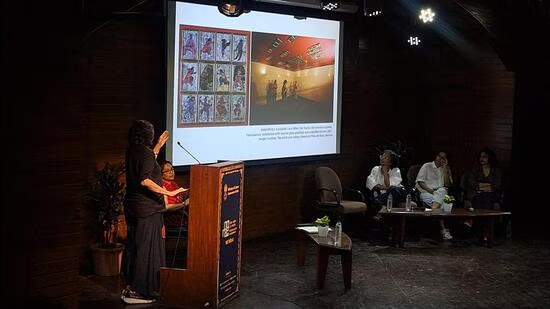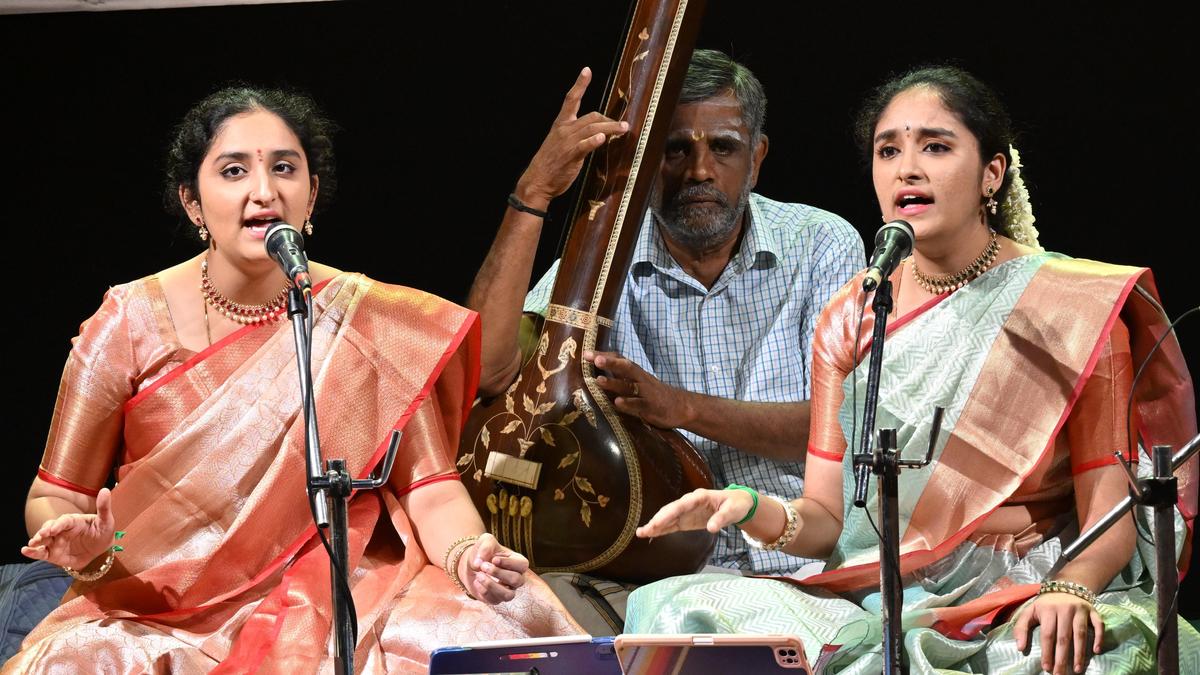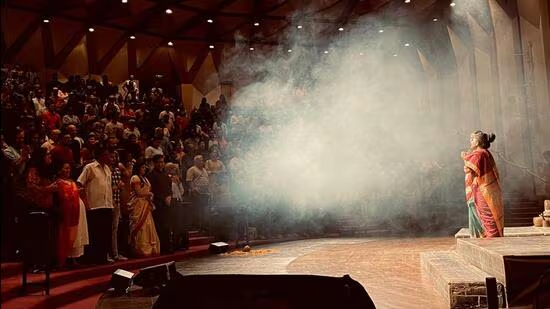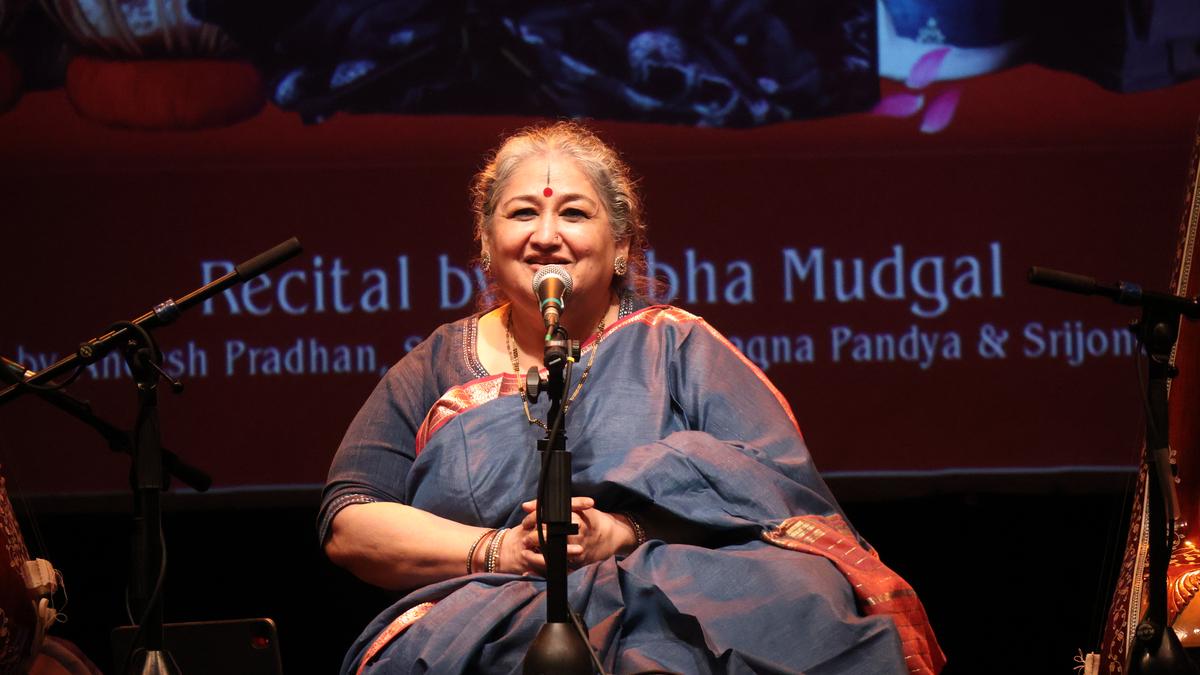
What does sexuality sound like in Indian music? The question lay at the heart of Women, Sexuality and Song, presented by Royal Opera House, Mumbai, in collaboration with AVID Learning. More than a conventional concert, Shubha Mudgal, joined by Aneesh Pradhan, Sudhir Nayak and Pratibha Singh Baghel, wove together music, poetry and storytelling, tracing how beauty, longing, desire, motherhood, shame and resilience have echoed through centuries of India’s literary and musical traditions.Few musicians are as well-equipped to undertake such an exploration as Shubha. During a conversation after the concert, she said the challenge lay in balancing the historical context of these poems with a contemporary woman’s perspective.“As an artiste, whatever I perform is inevitably shaped by my own thoughts, experiences and perspective as a woman. At the same time, these poems belong to a very different era, so they have to be understood in the context in which they were written. When I present them today, I interpret them through my own sensibility as a female artiste while remaining faithful to their historical context,” Shubha added.The evening opened with a poem by Goswami Harirai, composed by Shubha in Raag Tilak Kamod and Rupak taal. The poem admired Krishna’s physical beauty through the eyes of a devotee, offering an unusual interpretation of bhakti. “We usually associate devotion with spirituality, prayer or bhajans, but this is an entire poem devoted to describing the beauty of the divine body. It represents a different shade of devotion that we wanted to explore. The poem was written by a male poet, while the musical composition and its interpretation are mine. So, in that sense, both the male and the female gaze exist within the performance. The poetry originates in one perspective, but every performance allows it to be experienced through another.”The programme then moved into the classical nakh-shikh and saraapa traditions, literary forms that describe the human body from head to toe. Through an Urdu composition by 18th-century poet Nazir Akbarabadi, Shubha demonstrated how the female body became a subject of elaborate poetic imagination. The exploration continued with a verse by Badrinarayan Chaudhary’ ‘Premghan’, introducing the audience to the layered meanings of the word joban. While literally translating to youth, the word has also been used in poetry as a metaphor for the youthful breasts of young maidens, revealing how desire in classical verse often found expression through subtle metaphor rather than explicit imagery.As the evening progressed, the focus shifted from how poets wrote about women to how women expressed themselves through song. North Indian folk traditions emerged as repositories of lived experience, preserving stories of patriarchy, social expectations, longing and resilience.One folk composition, drawn from Awadhi Lok Geet, confronted the harsh realities of infertility through the story of a woman rejected not only by her family but also by a tigress, Mother Earth and even a temple because of the stigma attached to childlessness.“I don’t think we can say, just like that, whether we have become more conservative or more progressive,” Shubha said. “Social change is never linear. It is often one step forward, two steps back, and yet the journey continues. The system is still largely patriarchal, and many of these practices are deeply rooted.”
Shubha Mudgal explores verse to give voice to women’s desire
At Royal Opera House Mumbai, Shubha Mudgal revisits Indian music and poetry to uncover centuries-old conversations on women's bodies, desire and agency.
1,114 words~5 min read