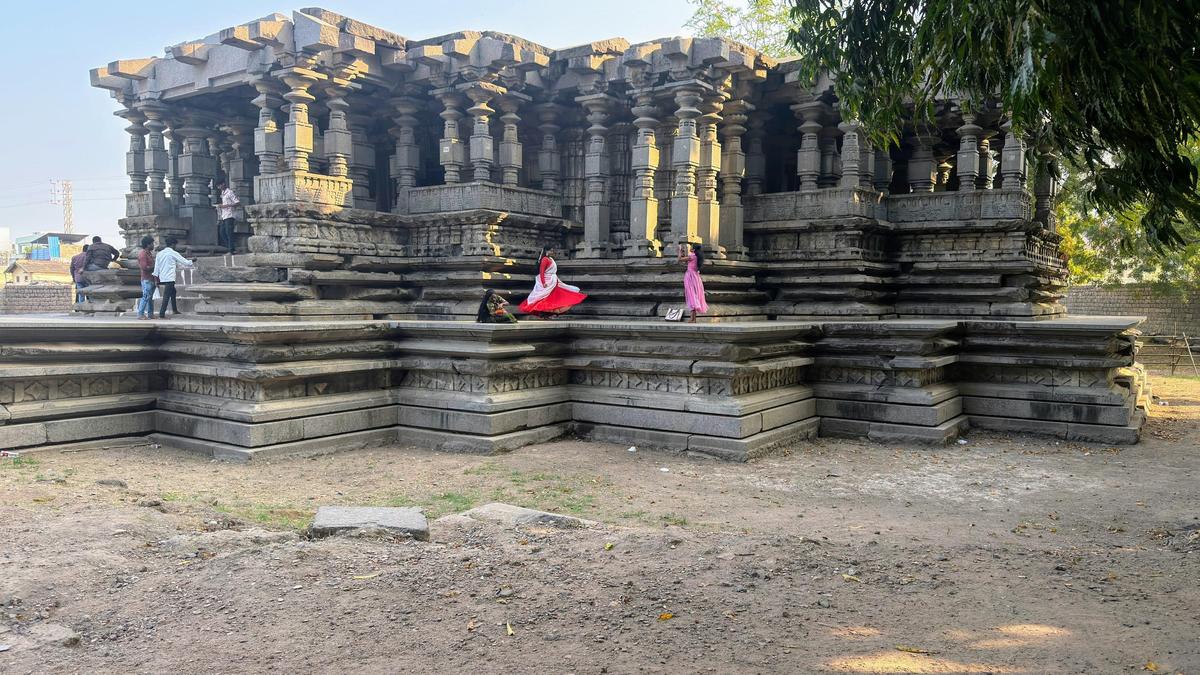
The next time you walk through a museum or pause before the weathered sculptures of an ancient temple, look closely at the dancers carved into pillars, ceilings, and walls. What appears to be an elegant pose could have been caught in the middle of a movement from a dance performed centuries ago.That is the premise of Speaking Sculptures: Karanas in Kathak, veteran Kathak dancer Shovana Narayan’s new book. Rather than treating temple sculptures as merely decorative art, she views them as repositories of movement, probing whether the karanas described in Bharata’s Natyashastra still survive in contemporary Kathak.The 108 Karanas have long been associated with temples such as Brihadeeswara in Thanjavur and Nataraja in Chidambaram, built in the Chola-era. “These temples largely depict the karanas as codified by Bharata Muni. But in northern and central India, the sculptures reflect a living dance tradition. They don’t illustrate the karanas literally; instead, they capture a variety of dance movements as they were actually performed on different occasions,” explains Shovana.
Fifth-century Deogarh dance panel.
| Photo Credit:
Courtesy: Speaking Sculptures
She consciously shifts the gaze towards the temples of the North by exmaining sculptures from the Indus Valley civilisation to the 17th century, spread across museums, temple complexes, and archaeological sites in northern and central India. Her journey moves from Mohenjo-daro and Harappa to Bharhut, Sanchi, Mathura, Khajuraho, Mount Abu and Vadnagar.The book challenges a common misconception. A Karana, Shovana reminds us, is not a frozen pose. Quoting the Natyashastra, she explains that it is created through a coordinated movement of hands and feet. Dance historian Kapila Vatsyayan’s observation runs like a thread through the book: sculpture can only preserve an “arrested moment” within a continuous sequence of movement. The sculptor freezes one frame; the dancer brings the remaining frames back to life. The word karana comes from the Sanskrit root kri,’ meaning to do.